
Sleeping pads, or camping mats, can make or break a cold night because the ground drains heat faster than most campers expect. This guide looks at what actually keeps you warm, which models sit at the top of the pile, and how to choose the warmest sleeping pad for British weekends, winter backpacking, and family trips. I’ll keep it practical: what the numbers mean, which products are worth the money, and where extra warmth is just dead weight.
The right pad is the one that matches your coldest night
- R-value is the number that matters. Higher numbers mean better insulation from the cold ground.
- For serious cold, look at R 7 and above. That is where true winter pads start to separate from three-season gear.
- NEMO Tensor Extreme Conditions is a standout ultralight winter option at R 8.5.
- Exped Ultra 10R, Exped Dura 10R, and Exped MegaMat Max push into expedition-level warmth, with the MegaMat Max reaching R 10.6.
- In the UK, many three-season campers are comfortable around R 4.5-6. Winter and frozen ground usually demand more.
- Layering a foam pad under an air pad can add real warmth without replacing your main mat.
How sleeping-pad warmth is measured
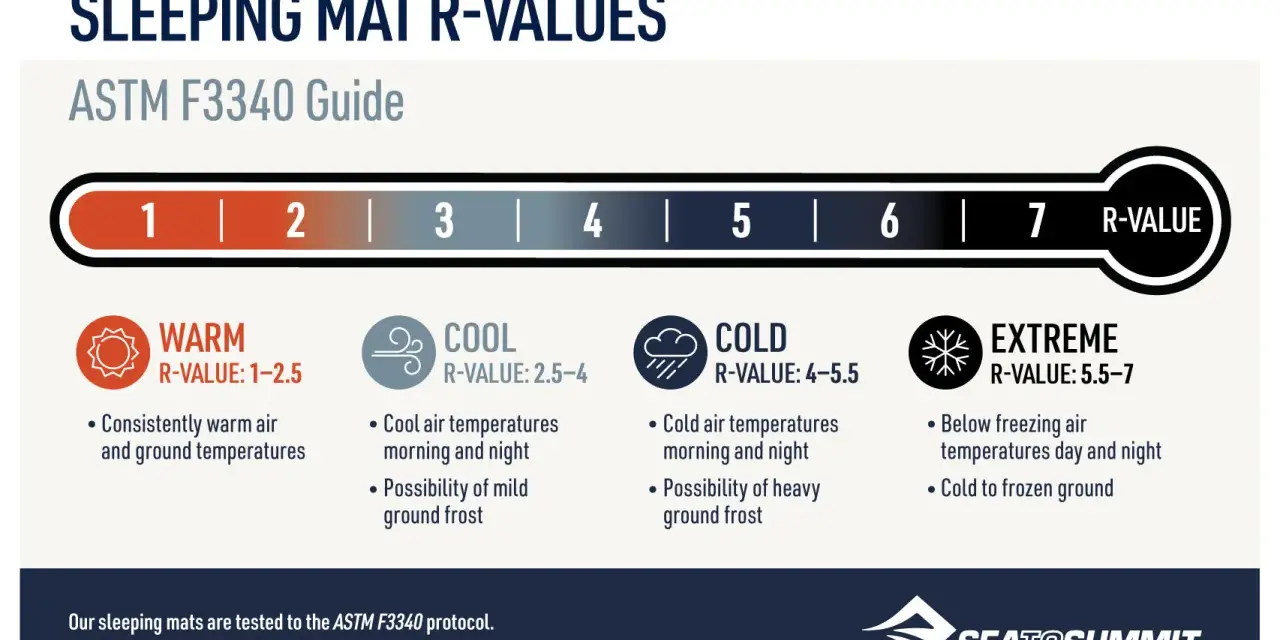
A lot of buyers chase the warmest sleeping pad they can find, but the useful question is where that warmth comes from and how much of it you really need. I read pad warmth through R-value, the thermal-resistance number used on modern mats under ASTM F3340. Higher numbers mean less heat loss into the ground; they do not always mean more comfort, and they definitely do not mean the same thing as thickness.
| R-value range | What it usually means | Typical use |
|---|---|---|
| 1-2 | Minimal insulation | Warm summer nights, indoor overflow, very mild camping |
| 2.5-3.5 | Basic three-season use | Spring and summer trips, fair-weather campsites |
| 4-5.5 | Comfortable shoulder-season insulation | Cool UK nights, autumn camps, many family trips |
| 6-7 | Proper winter-ready territory | Frost, cold sleepers, winter backpacking with some margin |
| 8+ | Expedition-level warmth | Snow, alpine ground, frozen soil, very cold sleepers |
My shorthand is simple: around 4 is the floor for cool shoulder-season use, 6 is genuine winter territory, and 8+ is where expedition gear starts to earn its keep. That does not mean every camper needs 8; it means the number tells you what kind of cold the pad is built to fight, which is the real question before you start comparing brands. Once that scale makes sense, the product shortlist becomes much easier to read.

The pads that stand out in 2026
If you want the short version, the market splits cleanly by use case. For ultralight winter backpacking, the NEMO Tensor Extreme Conditions leads the warmth-to-weight race. For maximum insulation regardless of bulk, Exped’s MegaMat Max is the clearest basecamp winner I found. The table below pulls the current standouts into one place so you can compare warmth, price, and real-world use without wading through marketing copy.
| Pad | R-value | Approx. UK price | Best for | What stands out |
|---|---|---|---|---|
| NEMO Tensor Extreme Conditions | 8.5 | about £201-£225 | Ultralight winter backpacking | Highest warmth-to-weight balance in the ultralight class |
| Therm-a-Rest NeoAir XTherm NXT | 7.3 | about £229-£268 | Cold-weather backpacking | Very warm, still relatively light, and proven in serious cold |
| Exped Ultra 10R | 10.0 | about £210 | Serious cold and alpine trips | Maximum insulation in a compact backpacking format |
| Exped Dura 10R | 10.0 | about £207-£285 | Expedition use and rough conditions | Same warmth as the Ultra 10R, but built tougher |
| Exped MegaMat Max | 10.6 | about £350 | Car camping and basecamp | The warmest, plushest option here |
| Therm-a-Rest MondoKing 3D | 7.0 | about £181-£217 | Comfort-first family camping | Warm, supportive, and easier to justify if pack size matters less |
For pure warmth, the Exped MegaMat Max is the biggest number on this list, but it is not the right answer for every trip. If I need winter insulation on my back, I start thinking about the Tensor Extreme Conditions, XTherm NXT, Ultra 10R, or Dura 10R instead. Knowing the leaders is useful, but the right level of insulation still depends on where and how you camp.
How much insulation you need for UK and alpine nights
British weather is annoying in a very specific way: damp ground, wind, and shoulder-season cold can make a decent-looking forecast feel much worse once you are lying on the tent floor. If you camp mostly in lowland England or Wales from late spring to early autumn, I would treat R 3.5-4.5 as a sensible comfort range; for autumn, cold sleepers, and exposed sites, R 4.5-6 is more realistic.
For proper winter use, I would not start below R 6.5, and if there is frozen ground, snow, or a proper alpine night on the plan, R 7+ is where I want to be. EXPED’s own guidance is useful here: the company recommends at least 6.5R so a winter-rated sleeping bag can perform as intended. That advice lines up with what I see in the field, because a very warm bag still feels disappointing on a cold pad.
| Trip type | R-value I would target | Why |
|---|---|---|
| Lowland UK summer and family campsite trips | R 3-4.5 | Usually enough unless you sleep cold or camp on very damp ground |
| Autumn weekends, exposed moorland, or cold sleepers | R 4.5-6 | A sensible comfort zone for many three-season trips |
| Winter tent camping, frozen grass, or frosty car-camping | R 6.5-8 | Where a winter bag starts to feel believable |
| Snow, alpine ground, or expedition use | R 8+ | Where I stop worrying about grams and start worrying about heat loss |
That brings us to construction, because the way a pad is built affects how warm it feels in the field, not just what the label says.
Which pad construction feels warmest in real life
In theory, the highest R-value wins. In practice, the construction matters because warm pads do different jobs. Insulated air pads are the lightest route to high R-values. Self-inflating foam mats feel more stable and are easier to live with in a family tent. Closed-cell foam is the least luxurious but the most dependable backup.
| Construction | Why it works | Trade-off | Best use |
|---|---|---|---|
| Insulated air pad | Best warmth-to-weight ratio and small packed size | More expensive and more vulnerable to punctures | Backpacking, winter trekking, alpine trips |
| Self-inflating foam mat | Stable, quiet, and usually easy to live with | Bulkier and heavier | Car camping, basecamp, family trips, camper vans |
| Closed-cell foam pad | Cheap, light, and nearly impossible to ruin | Less comfortable and usually less warm on its own | Backup layer, minimalist kits, extra insurance in winter |
NEMO’s own winter guidance makes a point I agree with: putting a closed-cell foam pad under an air pad can increase total insulation. That is not a magic fix for a poor mat, but it is the quickest way to stretch a decent shoulder-season setup into safer winter territory. For me, that matters more than brand loyalty.
With that in mind, the final question is which pad I would actually put in my own kit for specific trips.
What I would buy for different trips
- Fast-and-light winter backpacking: I would look first at the NEMO Tensor Extreme Conditions if I wanted the highest R-value in the ultralight class, or the Therm-a-Rest NeoAir XTherm NXT if I wanted a slightly lower R but a very proven winter shape.
- Harsh cold and rough ground: I would choose the Exped Dura 10R. It is not the lightest option, but it gives you expedition warmth with extra toughness that matters when the ground is harsh.
- Car camping and basecamp: I would go straight to the Exped MegaMat Max. The 10.6 R-value and thick foam core make it the clearest comfort-first choice on this list.
- Family camping or camper van trips: I would keep the Therm-a-Rest MondoKing 3D in the conversation. It is warm, supportive, and usually easier to justify when pack size matters less than sleep quality.
- Three-season UK trips where warmth matters but winter is unlikely: I would stop short of expedition weight and look for something in the R 4.5-6 range, because carrying extra insulation you never use is not a smart trade on family walks or mixed-weather weekends.
For most readers, the warmest sleeping pad is not the one with the biggest number on the box; it is the one that matches the coldest night they actually plan to spend outside. That is why I separate backpacking warmth from basecamp warmth instead of pretending one pad can win every category. The best buy is the one that solves your real trip, not the one that looks impressive in a product shot.
The small decisions that keep a warm pad warm
Once the insulation level is right, a few details decide whether the pad really performs. These are the things I would check before a cold-night trip, because they often matter more than another 0.5 on paper.
- Choose the right width. If your elbows or knees hang off the pad, you lose warmth at the exact spots that get cold first.
- Use a pump sack in freezing conditions. It keeps moisture out of the pad and avoids the small but real performance hit that comes from breathing warm, wet air into it.
- Inflate enough to avoid bottoming out. A warm pad cannot do its job if your hip still presses through to the ground.
- Put a foam layer underneath when the weather turns hard. This is the simplest way to add insurance without buying a completely new sleep system.
- Protect the pad from abrasion and condensation. A groundsheet, careful site choice, and a repair kit are boring additions that save a trip.
If I had to condense it to one line, I would say this: buy for the coldest ground you expect, not the mildest night you hope for. That approach saves money, avoids under-insulating, and gives you a pad that still feels genuinely warm when the forecast stops being kind.
