
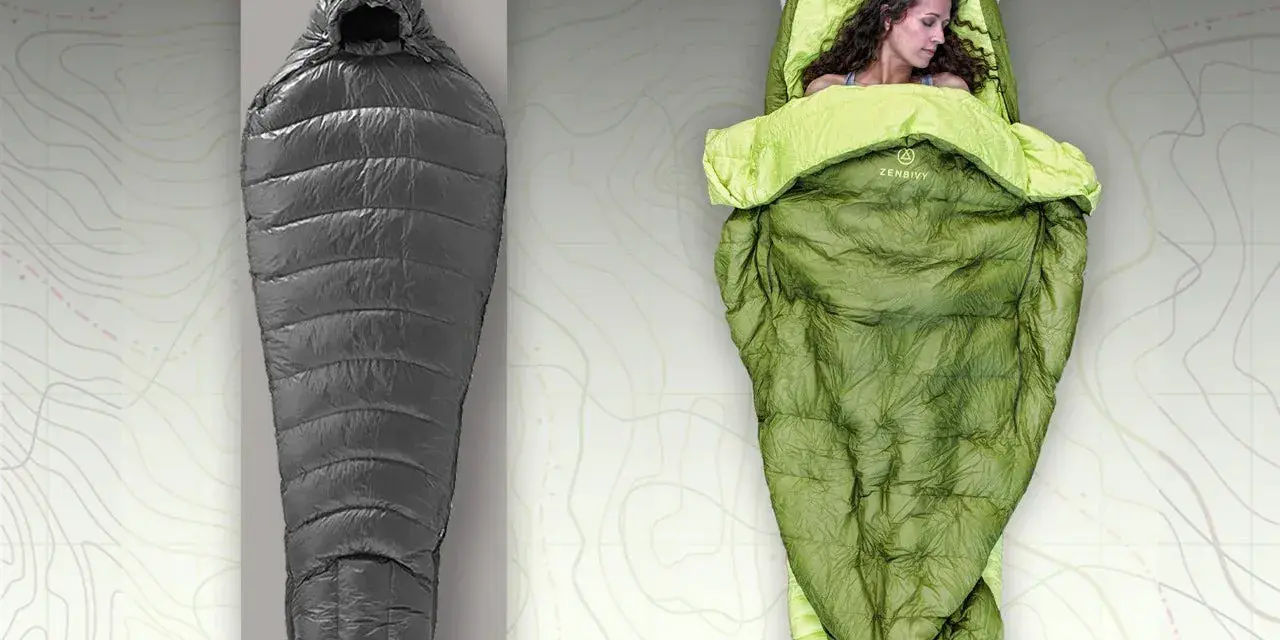
The choice between a quilt and a sleeping bag comes down to how you actually camp: how cold you sleep, how often the weather shifts, how much weight you want to carry, and how much fuss you can tolerate at night. In the quilt vs sleeping bag decision, the details matter more than the marketing. I’ll break down the practical differences, where each system shines, and where it falls short so you can pick the one that fits your campsite, not just the spec sheet.
What matters most when choosing your sleep system
- Quilts are lighter, easier to ventilate, and better for warm or well-controlled conditions.
- Sleeping bags are warmer-feeling, more forgiving, and easier to trust when the weather turns.
- Your sleeping pad matters as much as the top insulation, especially on colder nights.
- ISO and EN temperature ratings help, but they do not replace real-world judgment about wind, dampness, and sleep style.
- For British and European camping, a sleeping bag is usually the safer default unless you mainly camp in mild weather.

How quilts and sleeping bags actually differ
I treat the two systems as different tools, not rival versions of the same thing. A quilt is basically an insulated top layer with no full back panel, while a sleeping bag wraps around you with a hood, zipper, and more built-in draft control. In practice, that means the quilt trades some protection for freedom and weight savings, while the bag trades a little convenience for more reliable warmth.
| Feature | Quilt | Sleeping bag | What it means in real use |
|---|---|---|---|
| Coverage | Open underneath, with a top layer and footbox | Fully enclosed cocoon | Quilts rely more on your pad and campsite conditions; bags seal in warmth more effectively. |
| Warmth control | Easy to vent | Better draft protection | Quilts feel cooler and more breathable, while bags stay steadier through the night. |
| Weight and bulk | Usually lower | Usually higher for the same warmth | Quilts are attractive when every gram and litre in the pack matters. |
| Movement | Freer, less restrictive | More enclosed | Restless and side sleepers often prefer the open feel of a quilt. |
| Weather tolerance | Best in mild, predictable conditions | Better for variable, colder, or windier nights | Bags give you more margin for error when the forecast is not kind. |
If you want the shortest possible answer, this is it: quilts reward a well-tuned sleep system, and sleeping bags forgive a messy one. That distinction becomes more important once the temperature drops, so I look at warmth next.
Warmth depends on the whole sleep system
Temperature ratings matter, but only if you read them as part of a system. ISO and EN labels help you compare like for like, yet the real night depends on your pad, shelter, clothing, wind, and how much you move in your sleep. I also pay attention to the difference between comfort and limit ratings, because a bag that is merely survivable at a certain temperature is not the same thing as a bag that feels pleasant at that temperature.
- Sleeping bag ratings assume a pad with R-value 4, so a thin pad can make either system feel colder than the tag suggests.
- A liner can add roughly 5 to 15°F of extra warmth, depending on the material, which is useful when you are on the edge of comfort.
- Condensation, coastal humidity, and tent wall contact matter more in the UK and other damp climates than many first-time buyers expect.
That is why a quilt can feel perfect on a mild summer pitch and disappointing on a breezy shoulder-season night. Once warmth is the priority, the decision becomes less about weight and more about how much control you want over ventilation and draft protection.
When a quilt is the better choice
I reach for a quilt when the weather is mild, I know I sleep warm, and I want the simplest path to low weight and easy ventilation. For summer backpacking, bikepacking, and calm campsite nights, a quilt is genuinely pleasant because it lets you stick a leg out, open the top fully, and stop overheating at 2 a.m.
- Hot sleepers often prefer quilts because they can dump heat fast without fully leaving the bag.
- Lightweight travellers benefit from less fabric and usually a smaller packed size.
- Side sleepers and restless sleepers often like the open feel more than a zipped cocoon.
- Modular camp setups work well with quilts because you can layer them with a good pad or an extra insulating layer.
The tradeoff is real: a quilt asks you to manage drafts, especially around the shoulders and sides, and that takes better site choice and a better sleeping pad. If you want fewer variables, the sleeping bag is still easier to live with.
When a sleeping bag is the safer choice
A sleeping bag is the safer choice when the forecast is changeable, the campsite is exposed, or you simply do not want to think about drafts. A hood, full enclosure, zipper baffle, and draft collar all help trap warmth, and those features matter most when you roll over during the night or the temperature drops faster than expected.
- Mummy bags are the warmest and most efficient, which is why I like them for cooler nights and backpacking.
- Semi-rectangular or rectangular bags feel roomier, which makes them better for car camping and family trips.
- Draft collars are insulation around the neck that reduce heat loss when the bag is fully zipped.
- Zipper draft tubes cover the zip and stop warm air leaking out along the opening.
For beginners, that built-in structure is a benefit, not a limitation. It means fewer adjustments at bedtime and less chance of waking up cold because one strap, flap, or pad attachment slipped out of place.
What usually works best for UK and European campsites
For British and broader European camping, I usually think in terms of weather stability. If your trips are mostly summer, sheltered, and not especially windy, a quilt can be a smart choice. If you camp in spring, autumn, on coastal sites, or in the hills where conditions shift quickly, a sleeping bag gives you more margin for error.
| Camping scenario | Better pick | Why |
|---|---|---|
| Summer campsite in southern England or northern France | Quilt | Ventilation matters more than maximum insulation, especially on warmer nights. |
| Cool, damp shoulder-season trip in the UK | Sleeping bag | Better draft control and more predictable warmth when the weather turns. |
| Family car camping | Sleeping bag, often rectangular | Simpler setup, more comfort, and less temperature management for children. |
| Ultralight backpacking or bikepacking | Quilt | Lower bulk and less weight make a noticeable difference on the move. |
| Mixed trips with unpredictable weather | Sleeping bag | It is the safer all-round default when you do not know what the night will bring. |
If I had to buy just one system for general UK use, I would usually lean toward a sleeping bag unless most of the camping is warm-weather. That preference changes once you know exactly where your setup is failing, which is where the common mistakes come in.
The mistakes that make a good setup feel bad
Most disappointing nights come from a few predictable mistakes, and I see them again and again. The biggest one is treating the bag or quilt as if it works in isolation, when the pad and tent are part of the same thermal system. A second mistake is reading the temperature tag too literally and buying for your best-case forecast instead of the coldest realistic night you might face.
- Choosing by weight alone and ignoring pad insulation.
- Buying a quilt without a secure footbox or strap system, then fighting drafts all night.
- Using a limit rating as if it were a comfort rating, especially if you sleep cold.
- Expecting a hoodless quilt to behave like a sleeping bag in wind or condensation.
- Not testing the setup at home before a real trip.
If you fix those five issues, either system becomes much more usable. The last section is the rule I use when I want a clean decision without overthinking the spec sheet.
My simplest rule for choosing the right one
My rule is simple. Choose a quilt if you know you sleep warm, want the lightest and most breathable setup, and usually camp in milder weather. Choose a sleeping bag if you sleep cold, camp in mixed or damp conditions, or want one piece of kit that is easier to trust when the forecast changes.
- Choose a quilt for summer backpacking, hot sleepers, and minimalist kit.
- Choose a sleeping bag for three-season reliability, family camping, and colder shoulder-season trips.
- Buy warmer than you think if you are between sizes or you run cold, because comfort is easier to manage by opening a bag than by trying to create warmth that was never there.
In the quilt vs sleeping bag decision, I would not call either one universally better. I would call the sleeping bag the safer default and the quilt the more specialised, higher-comfort option when your conditions and sleep style suit it. If you match the gear to the night you actually expect, not the one you hope for, you usually sleep better before the first sunrise.
