
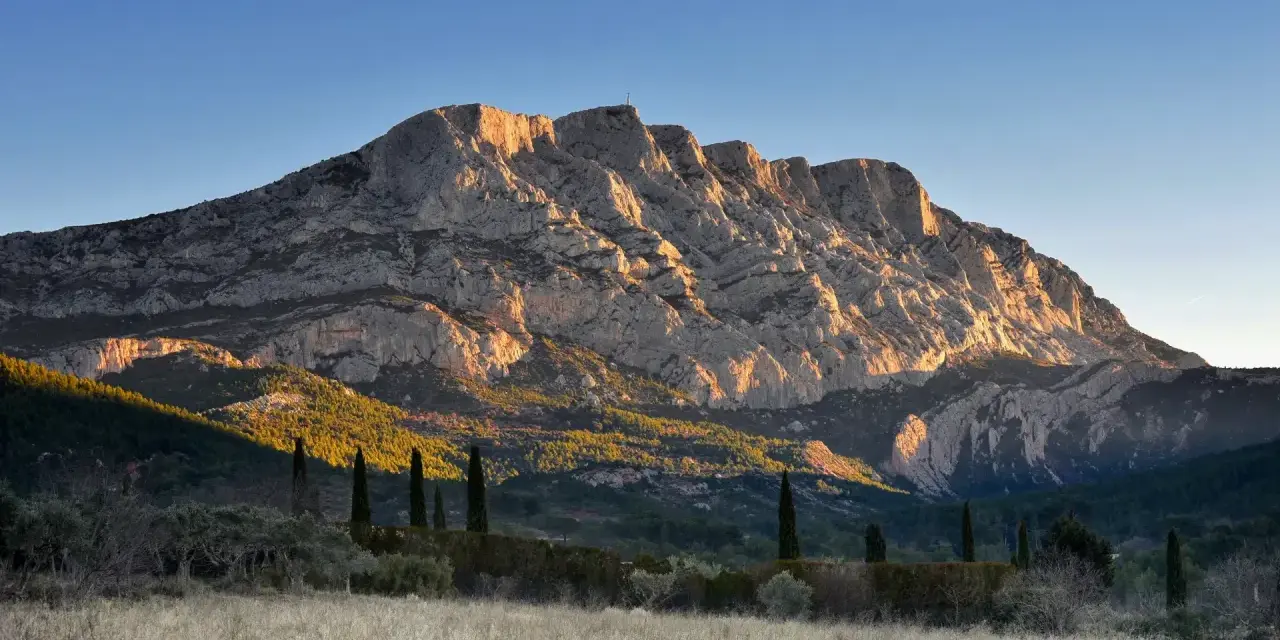
Sainte-Victoire is one of the few Provençal camping areas that gives you a real mountain break without cutting you off from culture, food, or easy logistics. You get limestone ridges, long walking routes, and the artistic pull of Cézanne, all within reach of Aix-en-Provence. This guide focuses on where to base yourself, which walks suit different energy levels, and how to plan for heat, shade, and fire-risk checks without overcomplicating the holiday.
Key facts for planning a camping trip
- It works best for campers who want hiking plus a cultural day out, not just a pitch in the countryside.
- The massif is roughly 18 km long, 5 km wide, and rises to 1,011 metres, so it feels bigger than a quick half-day walk.
- Spring and autumn are the sweet spots; July and August need early starts and more flexibility.
- Good bases are Beaurecueil, Puyloubier, Peynier, and the edge of Aix-en-Provence.
- For a full hiking day, I would carry 2-3 litres of water per adult.
- Fire-risk checks are part of the planning here, especially in dry, windy weather.
Why this Provençal ridge works so well as a camping destination
The first thing I like about Sainte-Victoire is that it is not a one-note destination. The mountain is dramatic enough to feel like a proper outdoor goal, but the area around it still gives you cafés, markets, museums, and easy day-trip options if you want a slower day. That mix is rare, and it is exactly why the area suits camping so well.
According to Provence-Alpes-Côte d’Azur Tourism, the massif is a Grand Site de France with around 250 kilometres of trails. That matters because it means you can shape the trip around your energy rather than forcing every day into the same pattern. One morning can be a family walk, the next can be a bigger ridge route, and the day after can be a cultural detour into Aix.
It also helps that the landscape has real visual identity. The mountain is limestone, open, and bright, so it feels very Provençal rather than generic alpine. For campers, that translates into long views, clean air, and a strong sense of place. If you want a trip that feels both outdoorsy and memorable, this area delivers that better than many more famous French spots.
That variety matters, because the right campsite depends on whether you care more about trailheads, city access, or quiet shade.

Where to stay if you want the right campsite base
I would not try to camp on the mountain itself. The smarter move is to choose a base in the Pays d’Aix and let the massif be your daily backdrop. That keeps the logistics simple and gives you more choice when the weather changes or the heat becomes a factor.
| Campsite | Best for | Why I would pick it | Trade-off |
|---|---|---|---|
| Camping Sainte-Victoire, Beaurecueil | Hikers who still want easy access to Aix | Shaded pitches, a calm setting, and a bus stop in front of the site make it practical as well as scenic | Less remote than a deep-nature site |
| Le Cézanne, Puyloubier | Quiet walking breaks and climbing-focused stays | Small, family-friendly, with direct access to hiking trails and climbing sites | Fewer resort-style extras |
| Le Devançon, Peynier | Families and people who like more greenery | Wooded edge-of-forest feel, a pool, and a peaceful atmosphere a few kilometres from the mountain | You will drive a bit more to the main trailheads |
| Camping d’Aix-en-Provence CityKamp | Visitors who want city-and-mountain flexibility | About 271 pitches, around 10 minutes from the city centre, and easy if you want restaurants and museums as part of the trip | Less of a pure mountain mood than Beaurecueil or Puyloubier |
One current listing puts low-season pitches at Camping Sainte-Victoire from about €25 per night, which is a useful benchmark when you compare smaller sites. I would treat that as a floor, not a promise, because month, pitch type, and facilities can change the final cost.
If I had to narrow it down, Beaurecueil is the best all-round base, Puyloubier is the quietest hiking base, Peynier is the family-friendly compromise, and Aix works best when you want transport and restaurants as much as trails. Once you choose the base, the mountain experience becomes much easier to shape around your pace.
What to do beyond the obvious summit push
The mistake many visitors make is thinking the only worthwhile goal is the top. I would not frame it that way. The area works better when you mix one meaningful walk with a second, lighter activity, so the trip feels full rather than exhausting.
Gentler days that still feel rewarding
For a first day, or for families with mixed energy levels, I would start with something short and scenic.
- Saint-Ser Hermitage is a good starter walk at about an hour, and it gives you a real sense of the mountain without demanding a big commitment.
- Bimont dam, with its 180-metre length and 87-metre height, gives you a strong landscape payoff with far less effort than a full ridge route.
- Lake Zola works well if you want water, views, and a slower pace rather than a summit attempt.
These are the kinds of outings I would choose after arrival day, because they let you settle in without burning the legs too early. For families, that balance matters more than ticking off elevation gain.
Bigger days when you want a proper hike
If you want the mountain to feel earned, there are harder routes, but they should be chosen carefully. The Crests Trail from the Saint-Ser parking area is about 9 kilometres with steep sections, so it is more than a casual stroll. A gentler alternative starts from Vauvenargues, where the ascent is longer but less abrupt.
What changes the experience here is exposure, which simply means open, sun-hit terrain with little shelter. That is why pace matters so much. In warm weather, I would leave early, keep the route realistic, and avoid assuming the ridge will feel the same at noon as it does at 8 am.
For stronger hikers, the reward is not just the view from the top. It is the full Provençal landscape under you: pine, pale rock, dry slopes, and long sightlines that make the effort feel worthwhile. That is also why the mountain stays attractive even for repeat visitors.
Read Also: Spanish Pyrenees Camping - Plan Your Perfect Hiking Trip
Bring the art into the trip
This is where the area becomes more than a hiking destination. Cézanne painted the mountain repeatedly, and that gives the landscape a different kind of weight. It is not just pretty; it is part of the visual language of modern art. Aix-en-Provence Tourism points visitors toward the Bibémus quarries as one of the clearest places to understand why the mountain kept drawing him back.
If you like that side of travel, I would build at least one half-day around it. Walk the route, look at the rock, and then see the mountain from the artist’s point of view. It adds context without slowing the holiday down, which is exactly what a good camping trip should do.
Once you know what you want to do, the next decision is timing, because weather and fire risk change the experience completely.
When to go and how to handle heat and fire risk
In 2026, I would still put late spring and early autumn at the top of the list. The mountain is beautiful all year, but not every season is equally forgiving for campers. If you want the trip to feel relaxed rather than tactical, season choice matters as much as campsite choice.
| Season | What it feels like | Best for | My take |
|---|---|---|---|
| Spring, especially April to June | Mild mornings, greener slopes, manageable heat | Hiking, climbing, and first family trips | The best overall balance |
| Summer, July to August | Hot, bright, busy, and more exposed | Pool time and very early starts | Good only if you plan around heat and restrictions |
| Autumn, especially September to October | Warm days, calmer roads, softer light | Hiking, photography, and slower camping | My favourite window |
| Winter, November to March | Quieter, cooler evenings, shorter days | Low-key stays and walkers who do not mind layering up | Good if you want space and do not need full holiday facilities |
The fire-risk point is non-negotiable. In dry Provençal terrain, access can change with temperature, wind, and humidity, so I would never build a trip around a single summit hike and assume it will always be available. Check the day’s conditions before you leave, and make sure your plan still works if the mountain is limited or closed.
For hiking days, I would carry 2-3 litres of water per adult, plus a hat, sunscreen, and a small snack. If you are walking anything exposed in July or August, 3 litres is the safer choice. I would also start before 9 am whenever possible, because the difference between an early start and a late one can be dramatic.
That is why the next step is not more ambition, but better packing and fewer avoidable mistakes.
What I would pack and the mistakes I would avoid
The biggest mistake here is treating the area like a shaded woodland escape. It is not. The terrain is bright, rocky, and often open, so the gear you choose makes a real difference to how the day feels.
- Trail shoes or light boots with real grip, because limestone can be dusty and slick underfoot.
- A wide-brim hat, sunscreen, and sunglasses, because the sun hits harder here than many first-time visitors expect.
- 2-3 litres of water capacity per adult, plus electrolytes if you sweat heavily.
- Offline maps or a paper map, because mobile signal and route confidence are not the same thing.
- A light layer for evening, especially if you are camping outside midsummer.
- Swim gear, if your campsite has a pool, which can become the difference between a tiring day and a good one.
The mistakes I see most often are predictable. People book the prettiest campsite without checking transport or trail access. They plan the hardest route on day one. They underestimate the exposure and then wonder why the walk feels harder than the map suggested. And they assume summer conditions will be stable, which is exactly how good plans turn brittle.
My rule is simple: if the campsite has shade, the route has flexibility, and the day starts early, the whole holiday gets easier.
With those details in place, the area stops being just a scenic ridge and becomes a stay you can actually enjoy from start to finish.
The three-day stay I would build around Sainte-Victoire
If I were planning this as a short camping break from the UK, I would keep it deliberately balanced. One hard day, one easy day, and one cultural or scenic day is enough to make the trip feel complete without turning it into a logistics exercise.
- Day 1: Arrive, check into a shaded base such as Beaurecueil or Puyloubier, and do a short evening walk or a quiet meal in Aix.
- Day 2: Start early for a proper hike, either Saint-Ser Hermitage as a warm-up or a longer ridge route if the weather is kind. Spend the afternoon at the pool or back at camp.
- Day 3: Add Bibémus, a Cézanne-linked viewpoint, or a lower-effort outing like Bimont dam or Lake Zola, depending on how the legs feel.
That pattern works because it respects the mountain instead of forcing it. For me, that is the real appeal of Sainte-Victoire: it gives you a camping stay with layers, not just a single summit objective. If you choose the right base, leave room for both trail time and quieter moments, and stay sensible about heat, the trip becomes far more rewarding than the map alone suggests.
