
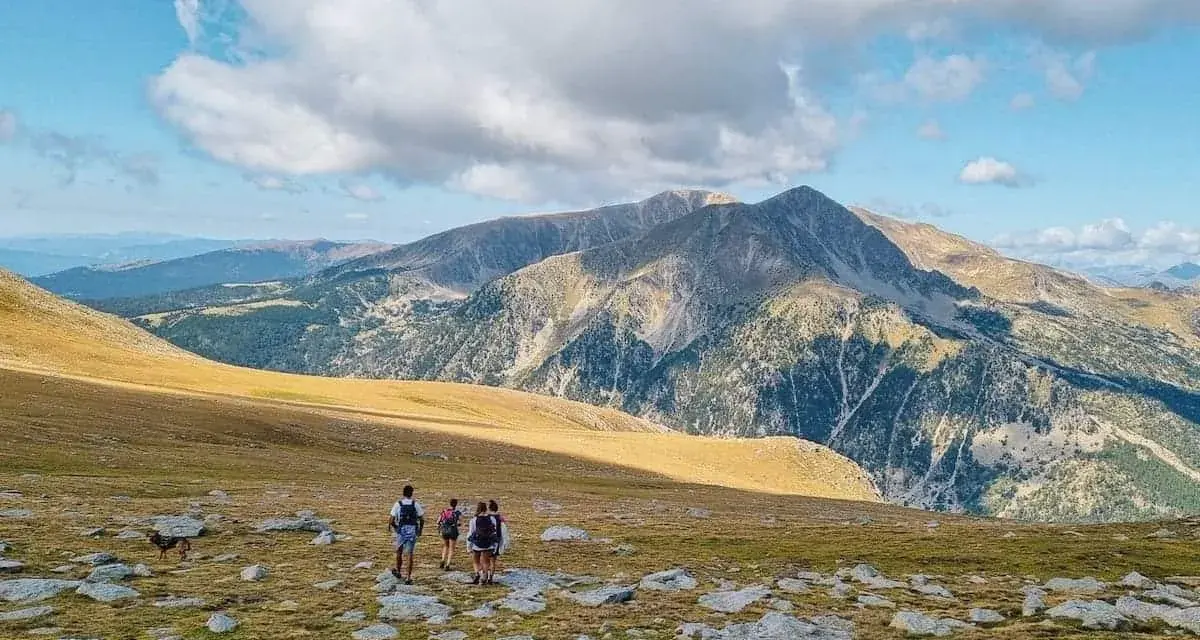
Multi-day trekking in the Pyrenees works best when you treat route choice, hut booking, and weather as one system. The appeal of pyrenees hut to hut hiking is simple: you get serious mountain scenery without carrying a full camping load every night, but that convenience only pays off if you choose the right trail, book the right refuges, and pack for high-altitude realities. In this guide I focus on the routes that make sense for different fitness levels, what mountain huts actually provide, and the mistakes that most often spoil an otherwise excellent trip.
The essentials for planning a Pyrenean hut-to-hut trip
- Most walkers do best with a 4 to 7 day loop or section, not a full traverse.
- Carros de Foc is the best-known starter loop; the HRP is for experienced hikers only.
- Expect dorm beds, early dinners, and shared facilities, not hotel-style privacy.
- Budget roughly €45-75 per person for half-board in staffed refuges, plus drinks and lunches.
- Bring a sleeping liner, headlamp, earplugs, a warm layer, and a payment method that works offline.
- For July and August, book ahead if you want the best beds and the cleanest route options.
What hut-to-hut hiking in the Pyrenees really feels like
At its best, hut-to-hut walking is a very efficient way to travel through the mountains. You still carry a pack, but you are not hauling a tent, stove, sleeping system, and several days of food. That changes the feel of the trip more than most first-timers expect: the days become lighter, the evening routine becomes simpler, and bad weather is easier to manage because you are heading toward a real roof, not just a flat patch of ground.The tradeoff is that refuges run on mountain time, not city time. Dinner is early, breakfast is early, and space is communal. In a staffed refuge, you are usually sleeping in a dorm, using shared washing facilities, and following house rules that keep things orderly for everyone. That is part of the charm if you like outdoor travel with a social edge; it is a poor fit if you want privacy and total flexibility.
For me, the clearest way to think about the Pyrenees is this: camping gives you freedom, but refuges give you momentum. If you want a trip where the logistics disappear enough for you to focus on ridgelines, lakes, and mountain passes, the refuge network is the reason the range works so well for multi-day hiking.
That said, not every route or season suits the same style of hiker, and that is where the real choice begins.

The routes I would shortlist first
There are many ways to do a Pyrenean trek, but a few names come up again and again for good reason. Some are classic end-to-end trails that you tackle in sections; others are compact refuge loops that are easier to fit into a week. The best choice depends on whether you want a first taste, a serious challenge, or a route that works well for a family or mixed-ability group.
| Route | Typical length | Best for | What stands out | Difficulty |
|---|---|---|---|---|
| Carros de Foc | About 55-65 km / 34-40 miles, usually 4-7 days | Strong first-timers, fit couples, older teens | A compact circuit linking multiple refuges in Aigüestortes with big scenery and flexible stage choices | Moderate to hard |
| Porta del Cel | About 62-65 km / 39-40 miles, usually 4-5 days | Experienced hikers who want a tougher mountain feel | High, serious, and exposed in places; a route that rewards strong legs and calm planning | Hard |
| Coronallacs | About 92 km / 57 miles, usually 5 days | Hikers who want a full-country loop in Andorra | Links the staffed refuges of Andorra in a neat circuit with reliable logistics | Moderate to hard |
| GR10 | About 900 km overall, best treated as section hikes | Walkers who want flexibility on the French side | Classic villages, valley exits, and a huge amount of route variety across the French Pyrenees | Varies by section |
| GR11 | About 820-840 km overall, again best in sections | Hikers who like the Spanish side and drier terrain | Often feels a little rougher and more rugged, with long high days in many stretches | Varies by section |
| HRP | About 800 km with around 40+ stages | Very experienced mountain walkers | The high route sits closer to the crest, so it is more committing and more demanding | Very hard |
If I had to simplify the choice, I would say this: pick Carros de Foc or a GR10/GR11 section if you want a first meaningful trip, choose Porta del Cel or the HRP only if you already know how you handle long climbing days, and look at Coronallacs when you want a compact, self-contained loop that feels complete without swallowing two weeks of holiday.
The common mistake is chasing the biggest name instead of the best fit. A good route is the one you can finish with enough energy left to enjoy the last day, not the one that sounds toughest on paper.
How to choose the right route length and difficulty
The Pyrenees punish lazy planning. I do not mean that in a dramatic sense; I mean that mountain days are dictated by ascent, exposure, altitude, and weather windows, not just kilometres. A 12 km day with 1,200 metres of climbing is a very different proposition from 12 km on rolling ground.
As a rough planning guide, these ranges are useful:
- 3 to 4 days for a first taste, with roughly 8 to 12 km and 500 to 900 metres of ascent per day.
- 5 to 7 days for a solid hut-to-hut holiday, with around 10 to 15 km and 700 to 1,200 metres of ascent.
- 8 days or more only if you want a genuine mountain routine and are comfortable with fatigue building over time.
I also look at three things that many hikers underestimate. First, route markings can be excellent on popular trails but less reassuring in bad weather or on high variants. Second, the descent often hurts more than the ascent because tired legs and loose rock make every step slower. Third, afternoon storms are a real planning constraint in summer, so early starts matter more than they do on lowland walks.
If you are travelling with family or a mixed-ability group, the safest approach is to choose a loop with a few possible escape valleys, keep the daily ascent modest, and leave one buffer day in the holiday. That buffer is usually the difference between a relaxing mountain trip and a stressful race against the forecast.
Getting to the trailheads from the UK
For UK hikers, the easiest access points are usually the main gateway cities rather than the trailheads themselves. On the French side, Toulouse, Lourdes, Pau, and Perpignan are common starting points. On the Spanish side, Barcelona, Bilbao, Pamplona, and sometimes Lleida make sense depending on which range section you want to walk. Andorra usually works best through Barcelona or Toulouse with a coach or pre-booked transfer after that.
If you want the simplest trip, fly in, sleep one night near the start town, and begin the hike fresh the next morning. That extra night is not wasted money. It reduces the chance of a bad first day caused by jet lag, delayed luggage, or a late airport arrival, and it gives you a margin if your bags are carrying the sleeping liner, poles, or layers you do not want to hike without.
Rail is possible for some French trailheads, but from the UK it tends to be slower and more complicated than most people expect once you add connections. I would use train travel only if it is part of the appeal, not because it is the most efficient choice.
For the majority of readers, the practical goal is simple: make the trail access feel boring. The more predictable the transfer, the more energy you have left for the mountain days that actually matter.
What to book, pack, and expect in the huts
A refuge is not a hotel, and that is worth accepting before you reserve anything. In the Pyrenees, staffed huts usually provide a bed in a dormitory, dinner, breakfast, and a communal atmosphere. Some also offer packed lunches, showers, and limited charging, but you should treat those as useful extras rather than guarantees.
| What refuges often provide | What you should carry |
|---|---|
| Dorm bed, blanket, dinner, breakfast, water refill, basic washing area | Sleeping liner, earplugs, headlamp, toiletries, quick-dry towel |
| Sometimes showers, packed lunches, charging points, and limited Wi-Fi | Power bank, cash, bank card, snacks, and a simple battery strategy for your phone |
| Occasional drying rooms and hut sandals or slippers | Warm layer, rain shell, hut shoes if you prefer your own, and spare socks |
I would not leave home without a sleeping liner, even if the refuge listing sounds relaxed. Some places require one, and in any case it is the cleanest way to make shared sleeping arrangements more comfortable. A headlamp matters more than it seems, because arrivals can be early, lights are often kept low in the evening, and moving around a dorm with a phone torch is never elegant.
Book earlier than you think you need to. For peak summer weeks, I would aim to reserve the most popular refuges well ahead of time, especially on compact loops where there are not many alternatives. If your route includes a national park or a busy valley, last-minute improvisation can turn into a forced reroute very quickly.There is also a social rhythm to hut life that people either enjoy or do not. Meals are served early, noise drops off early, and everyone is moving around the same bottlenecks at the same time. Once you accept that pace, the whole thing feels easier.
Costs and common mistakes that derail the trip
Budget is one of the few things that can still surprise experienced walkers. Refuge living is cheaper than a hotel-based mountain holiday, but it is not cheap in the way many campers expect. Food and logistics have to reach remote huts, and that cost is built into the nightly rate.
| Expense | Typical range per person | Notes |
|---|---|---|
| Half-board in a staffed refuge | €45-75 | Dinner, bed, and breakfast are often bundled together |
| Bed only | €20-35 | Not available everywhere and less useful if the hut is isolated |
| Packed lunch | €8-14 | Convenient on long stages and worth it when there are few resupply options |
| Shower | €2-5 | Often token-based or limited in supply |
| Drinks and small extras | €2-6 | Soft drinks, beer, wine, and snacks add up faster than people expect |
The mistakes are predictable, which is good news because they are easy to avoid. The worst one is planning by distance alone and forgetting elevation gain. The second is assuming every refuge will have the same level of comfort or the same payment options. The third is starting too late in the day, then arriving tired, hot, and apologetic when everyone else has already settled in.
Another common problem is pack weight. If you are carrying a heavy camera setup, oversized waterproofs, or extra layers you never actually use, the climb will feel steeper than the map suggests. I prefer to keep the pack simple and spend the saved energy on food, water, and recovery.
The last thing I would flag is route flexibility. Weather, snow patches, and occasional refuge closures can force changes, especially in higher or earlier-season itineraries. Build in margin, and you will enjoy the trip much more than the people trying to protect a rigid plan at all costs.
The smartest way to turn the Pyrenees into a trip you will remember
If I were planning this for a first-time Pyrenean trek, I would keep the formula tight: choose a 4 to 6 day route, favour a loop or a section with reliable refuge spacing, book the sleeping places before I commit to flights, and leave enough time on either side of the hike to absorb travel delays. That approach gives you the benefits of mountain travel without overloading the holiday with risk and logistics.
- Choose the route by daily ascent, not just distance.
- Prefer well-known refuge circuits for your first trip.
- Pack light, but do not omit safety basics.
- Expect shared spaces, early meals, and flexible weather plans.
- For families, keep the stages shorter and the exits simple.
That is why the Pyrenees work so well for hikers who usually camp: the range gives you wilderness, but the refuge network gives you structure. When those two things are balanced properly, the trip feels less like a test and more like a genuine mountain journey.
