
The smartest camping plan is flexible, not rigid
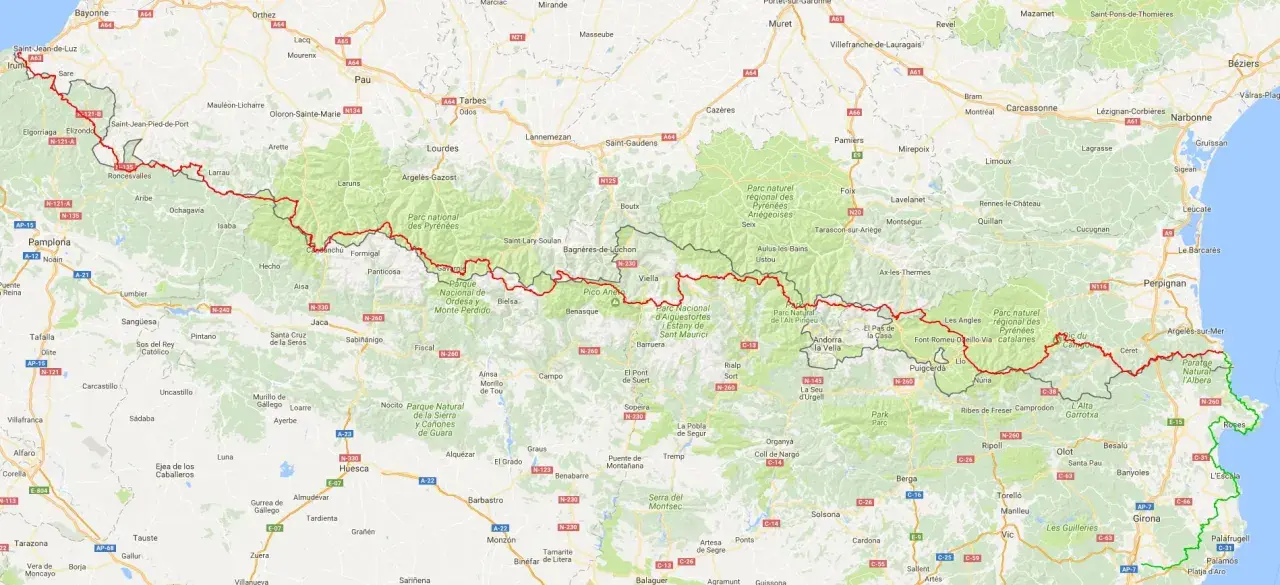
- The route is roughly 800 km of serious mountain travel, so camping decisions need to follow weather and terrain, not a fixed bedtime plan.
- Bivouac, mountain refuges, and valley campsites each solve a different problem on the Pyrenean High Route.
- In the French Pyrenees National Park, ordinary camping is restricted and bivouac is only allowed under specific conditions.
- The best camping bases are usually valley hubs such as Lescun, Gavarnie, Cauterets, the Val d’Aran, and the Benasque area.
- For a family-friendly Pyrenean trip, I would use shorter sections and valley campsites rather than trying to force the full traverse.
What makes this trek different from a normal Pyrenean walk
The first thing I would say about this route is simple: it is a mountain crossing first and a camping trip second. The path stays high, crosses rough ground, and often asks for strong navigation, because you are not following a gentle, fully waymarked holiday trail. Even in good weather, the daily effort is shaped by ascent, exposure, and the need to think ahead about water and shelter.
That matters because camping on this kind of route is not just about finding a flat patch for a tent. It is about choosing a night stop that keeps the next day realistic. A camp that looks beautiful at 2,200 metres can be a poor choice if it leaves you exposed to wind, short on water, or trapped above the tree line when storms build in the afternoon.
I also would not treat this as a beginner’s backpacking route. If you are used to lowland camping, or even to easy hut walks, the HRP will feel demanding very quickly. The trail rewards self-sufficient hikers who can read the weather, move efficiently, and accept that some of the best camping destinations are actually in valleys, not on the crest itself. Once you accept that, the next question becomes where camping is actually allowed and comfortable.
Where camping fits best on the route
On the Pyrenean High Route, the overnight strategy usually falls into three camps: bivouac in permitted high areas, refuge nights when you want certainty, and valley campsite nights when you need recovery. I would not build the whole trip around one of those options alone, because each one has a weakness. The best plans blend them.
| Camping option | What it gives you | Best use | Main trade-off |
|---|---|---|---|
| Bivouac | Maximum flexibility and the lightest feel on the route | High, remote sections where a one-night stop makes sense | Weather exposure and more rule-checking |
| Refuge | Predictable shelter, meals, and a dry reset | Stormy stretches, late-season snow, or morale-saving nights | More expensive and often needs booking |
| Valley campsite | Showers, laundry, easier resupply, and a softer landing | Rest days, family-friendly sections, and recovery after hard stages | Usually means dropping off the main line |
Bivouac is worth defining clearly here. It means a very light overnight stop, usually pitched late and packed away early, not a multi-night camp with chairs, tables, and a full domestic setup. In the French Pyrenees National Park, the rules are stricter than many walkers expect: ordinary camping in the core zone is not allowed, and bivouac is only permitted under specific conditions, including being more than one hour on foot from park boundaries or motor access and pitching only between 7 pm and 9 am.
That kind of rule is exactly why I like to keep a valley fallback in the plan. It gives you a legal, comfortable escape when the mountain weather turns awkward or when a long day leaves you too tired to hunt for a perfect high spot. From here, the practical question is not just what type of night to choose, but which places make the best camping bases.

The camping hubs I would use for a section hike
These are not all directly on the ridge. They are the valley hubs and access points I would use to make the route manageable, especially if you are breaking the traverse into sections or planning a camping-focused holiday rather than a full through-hike.
| Area | Why it works | Best for |
|---|---|---|
| Hendaye and the Basque coast | Easy arrival, simple first or last night, and a sensible place to test your kit | Shakedown camping and slow starts |
| Lescun and the Aspe valley | Strong mountain atmosphere without immediate chaos, plus good access to the western high country | First alpine camping base |
| Gavarnie and Cauterets | Classic central Pyrenean scenery, useful services, and a good weather buffer | Rest nights and storm-proof planning |
| Val d’Aran, Vielha, and Salardú | One of the best resupply and recovery valleys, with enough infrastructure to reset properly | Mid-route campsite stops |
| Benasque and the Maladeta side | Big scenery, serious mountain terrain, and a useful base if you want a hard section with a safe escape option | Ambitious camping blocks |
| Banyuls-sur-Mer and the eastern finish | Simple end-point logistics and a gentler way to finish after the high mountains | Final-night camping and short eastern sections |
The common thread is not glamour. It is utility. The best camping destinations on this route give you food, water, shelter, and a way back into the mountains without wasting a day. If I were planning a section hike rather than the whole traverse, I would use these hubs as anchors and build the days around them, not the other way around.
How I would plan nights, water, and food on a self-supported trek
For a full crossing, I would think in terms of roughly 4 to 6 weeks, with many strong hikers ending up somewhere around 30 to 45 days depending on weather, detours, and rest stops. That is not a fixed rule, just a realistic bracket for a camping-based trip. Daily distance is equally variable: on steep or exposed stages, 12 to 20 km can be a perfectly full day; on easier linked sections, 20 to 25 km may be comfortable if the ascent is moderate.
Water planning matters more than many first-time trekkers expect. I would carry enough for a dry ridge section and refill whenever the route gives me a clean chance, usually around 1.5 to 3 litres depending on heat, altitude, and source reliability. A filter or tablets are worth carrying because high-mountain water is not something I would treat casually. The same logic applies to food: resupply means topping up in a village or valley town, and on this route I would never assume a tiny shop will be open exactly when I need it.
Weather should shape the timetable more than ambition does. I would cross exposed passes early, keep a spare meal in reserve, and leave space for one weather delay in the middle of the trip. If I was cooking, I would also check fuel availability before I relied on a town stop, because small Pyrenean shops do not always stock the same camping supplies as larger centres in the UK. This is where a good itinerary starts to feel less like a list of nights and more like a survival of the smartest choices.
The mistakes that turn a great route into a slog
The biggest error I see is treating the high route like a standard marked trail and assuming the night will sort itself out. It usually does not. The terrain is too variable, the weather changes too fast, and the best camping spot is often the one that gives you a safe morning rather than the prettiest sunset.
- Trying to camp high every night just because the map looks elegant.
- Ignoring the difference between legal bivouac and full camping in protected areas.
- Underestimating how much harder eastern heat and dryness can feel after days in the high country.
- Booking a refuge as if it removes the need for a tent, then discovering the weather or your pace has changed.
- Carrying too much gear. A heavy pack punishes every ascent on this route.
- Assuming the trek is family-friendly in its full form. It is not, although shorter valley-based sections can absolutely work for a camping holiday.
The more subtle mistake is emotional, not technical: people sometimes decide that camping on a famous mountain route must mean sleeping high and roughing it every night. In practice, the best trips mix a few memorable wild stops with practical valley nights. That balance keeps the body fresher and the mind less brittle, which is exactly what a long Pyrenean crossing demands. From there, the smartest approach is to build your own itinerary around recovery, not ego.
A camping plan that keeps the route enjoyable
If I were building a first camping itinerary on this route, I would split it into three broad ideas: a softer western start, a serious central mountain block, and a more flexible eastern finish. I would use one valley campsite every few nights, keep one refuge as a backup option, and avoid making every evening a summit-level target. That is how you keep the trek adventurous without making it miserable.
- Start with a low-stress night near the Atlantic or in the Basque foothills to check your kit.
- Use places like Lescun, Gavarnie, or Cauterets as reset points when the weather turns.
- Plan at least one mid-route valley stop with showers, laundry, and a proper resupply.
- Keep your final nights simple so you arrive at the Mediterranean still enjoying the walk.
If you are planning the Haute Route Pyrenees as a camping trip, I would prioritise flexibility over perfection. The route becomes much better when you treat campsites, refuges, and bivouacs as tools rather than as a fixed identity. That approach gives you a safer crossing, better sleep, and a far higher chance of actually enjoying the long walk from the Atlantic to the sea.
