
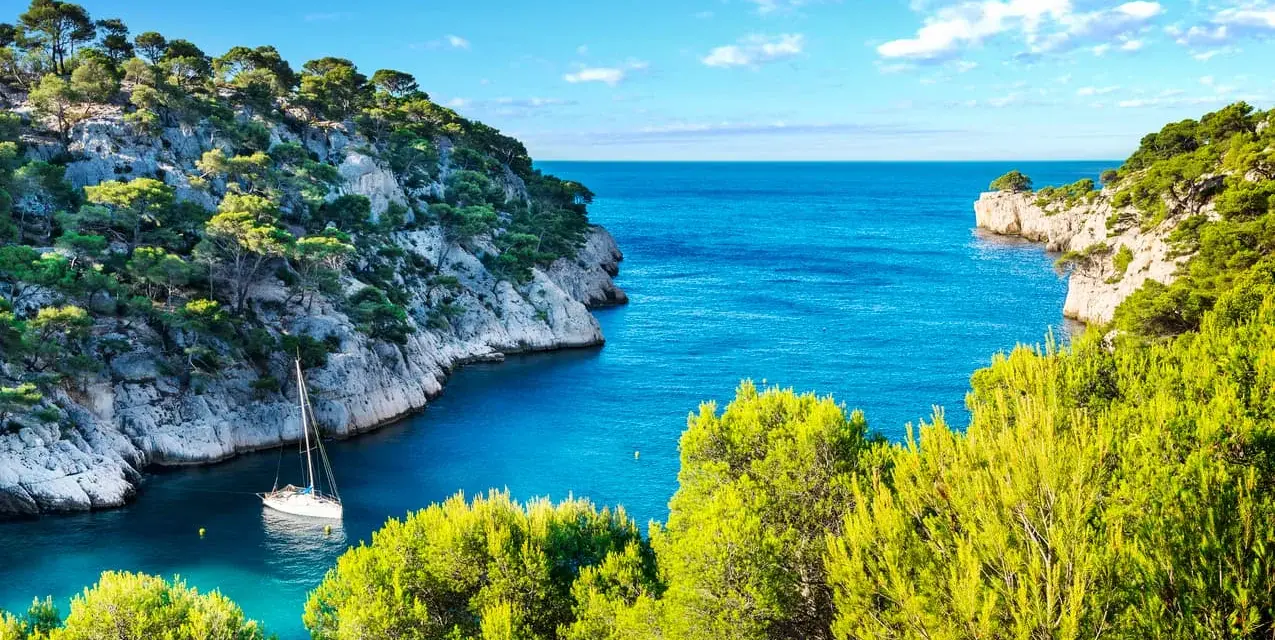
Cassis is one of those places where the campsite choice matters more than in a generic seaside town. The right base gives you easy access to the harbour, the beaches and the calanques, while the wrong one adds extra driving, parking stress and a lot of wasted time. This guide focuses on the practical decisions that make a stay smoother: where to sleep, which activities are worth your time, when to go, and how to plan around the summer access rules.
What matters most before you book a stay in Cassis
- The best camping base is often just outside the old harbour rather than right in the centre.
- Choose your site around parking, shade, pool access and shuttle options, not just star ratings.
- The calanques are the headline attraction, but summer fire-risk rules can change your plans quickly.
- For hiking and quieter beaches, spring and early autumn usually work better than peak August.
- Families tend to do best with a pool, on-site services and an easy drive into town.

Why Cassis works so well as a camping base
I like Cassis as a camping destination because it gives you a tight, useful mix of sea, cliffs and a walkable harbour town. You are not booking a stay here for endless resort infrastructure; you are booking it because the landscape does the heavy lifting. That is the real appeal: one day can be a harbour stroll, the next a proper calanques walk, and the day after that a lazy beach session or a boat trip out of the port.
For me, that variety is what lifts Cassis above many other Riviera stops. It is scenic without feeling detached from daily life, and it is compact enough that you can fit a lot into a short break without turning every plan into a long transfer. If you want a holiday that feels active but still relaxed, this part of Provence makes a strong case.
The only catch is that Cassis rewards planning. The town itself is small, the popular routes can get busy fast, and the protected coastline is governed by rules that matter more in summer than many first-time visitors expect. That is why the next decision is not whether to camp, but how close to the centre you really need to be.
Where to stay if you want convenience without sacrificing space
When I compare camping options around Cassis, I start with location rather than facilities. A campsite right in town gives you the easiest access to the port, but it can also mean tighter pitches, more noise and less breathing room. Sites just outside Cassis often solve that problem by giving you more space, easier parking and a calmer evening, while still keeping the harbour within a short drive.
| Stay style | What it gives you | Trade-off | Best for |
|---|---|---|---|
| In Cassis itself | Walkable access to the harbour, restaurants and the beach | Less space, fewer large pitches, more competition for bookings | Couples and short stays that prioritise convenience |
| Just outside town | Better pitch sizes, easier parking and often a quieter setting | You will usually need the car for most outings | Families, motorhomes and travellers who want a calmer base |
| Resort-style campsite with a pool | More on-site comfort, pool time and services for children | Less of the small-town feel, sometimes a longer drive into Cassis | Families and longer summer holidays |
| Pitch-focused site | More flexibility and usually a lower-cost stay | Less comfort if the weather turns hot or windy | Experienced campers who spend most of the day out |
If I were travelling with children, I would usually choose a site just outside the centre rather than fight for a central location. You get a better balance of space and access, and that matters more once you are carrying towels, beach gear and half the contents of a family cupboard. Once that trade-off is clear, it becomes much easier to plan what to do each day.
The days out that make the trip worthwhile
Cassis is one of those places where the surrounding scenery is the main event, so I would build the itinerary around a few strong outings rather than trying to tick off everything in one go. The harbour is worth an early or late visit, when the light is softer and the crowds are smaller. The beach works well as an easy half-day. And the calanques are the reason many people come in the first place.
- The old harbour is best early in the morning or after dinner, when the atmosphere feels local rather than packed.
- Plage de la Grande Mer is the simplest beach stop if you want a low-effort swim close to town.
- Port Miou, Port Pin and En Vau are the classic calanques to know. In practice, Port Miou is the gentlest introduction, Port Pin is a natural swim-and-walk combination, and En Vau is the more demanding outing that rewards the effort.
- Boat trips are useful when the land routes are too hot, too busy or restricted for the day.
The Parc national des Calanques is clear that boat tours are possible, but landing is forbidden in protected zones, so I would not treat a cruise as a substitute for a hike. It is a different experience, and that distinction matters. If you want a full day outdoors, you still need proper shoes, water and a realistic pace.
This is also where Cassis becomes more than just a pretty stop. The town gives you enough structure for meals and easy evenings, while the coastline gives you real outdoor substance. With the landscape sorted, the campsite details start to matter more than the postcard view.
How to choose a campsite that fits your style
I usually ignore glossy photos first and look at the practical details instead. A pool is useful, but only if it is paired with enough shade and a layout that does not feel cramped. A great view is nice, but not if you are dragging kit uphill every time you return from the beach. The small things are what decide whether a stay feels easy or tiring.
For families
Families should look for a pool, clear safety rules, a decent grocery option and a shuttle or straightforward drive into Cassis. Shade is not a luxury here; in summer it can make the difference between a pleasant afternoon and a day you end up cutting short. I would also check the size of the accommodation, because family gear expands quickly once you add beach toys, shoes and cooking equipment.
For walkers and couples
If you are mainly coming for scenery and trails, I would prioritise quiet evenings, easy access to the coast and a campsite that lets you leave the car parked for a while. Couples often value a smaller, calmer site more than entertainment, and that is sensible in Cassis. The town already gives you enough atmosphere without needing a full animation programme.
Read Also: Provence Holiday Park Guide - Choose Your Perfect Stay
For pitch campers and motorhomes
Pitch campers should be fussy about ground quality, spacing and access roads. A beautiful setting means very little if the pitch is too narrow, the ground is uneven or the manoeuvring space is poor. I would also ask about electricity, water points and vehicle access before booking, because those details are what keep the stay comfortable when the weather gets hot.
In practice, the best campsite is rarely the one with the most features on paper. It is the one that matches the way you actually travel. That becomes especially important once you factor in the seasonal rules around the coastline.
When to go and how to stay on the right side of the rules
For most travellers, the sweet spot is late spring or early autumn. April to June and September to October usually bring better walking conditions, fewer crowds and a more relaxed pace around town. July and August are still attractive if you want a pure beach holiday, but they are the months when heat, traffic and access restrictions are most likely to shape your day.
Cassis Tourisme notes that access to the calanques and surrounding massifs is regulated in summer because of fire risk, and the rules can change depending on the day. The Parc national des Calanques also reminds visitors that land access can be unauthorised in certain conditions, while boat tours remain possible but landing is forbidden. That is the kind of practical detail that looks minor until it changes your plans at the last minute.
- Check access conditions before you leave for the trailhead, not after you have already parked.
- Start hikes early and carry more water than you think you need.
- Book summer stays several months ahead if you want the best pitch or the most useful rental layout.
- Keep one flexible day in the itinerary in case the calanques are closed or the heat makes a long hike unrealistic.
- If you are coming from the UK by car, build in a buffer so the holiday does not begin with a rushed arrival.
Once you get used to that rhythm, Cassis becomes much easier to enjoy. The planning is not difficult, but it does need to be deliberate, and that is exactly why a first trip benefits from a simple booking rule.
The booking rule I would use for a first Cassis stay
If I were planning a first camping holiday here today, I would keep the decision tree very simple. I would stay just outside the centre, choose a site with shade and a pool, and make sure I had an easy way into town without relying on parking luck. That combination gives you the best balance of comfort and access.
- Book early if you want July or August.
- Choose convenience over a perfect view if you are travelling with children.
- Leave room in the schedule for one calanques day, one harbour day and one slower day.
Cassis is at its best when you let the coastline set the pace instead of trying to overpack the holiday. If you build the trip around access, shade and realistic day plans, you get the scenery without the stress, which is exactly what a good camping break on the Mediterranean should deliver.
