
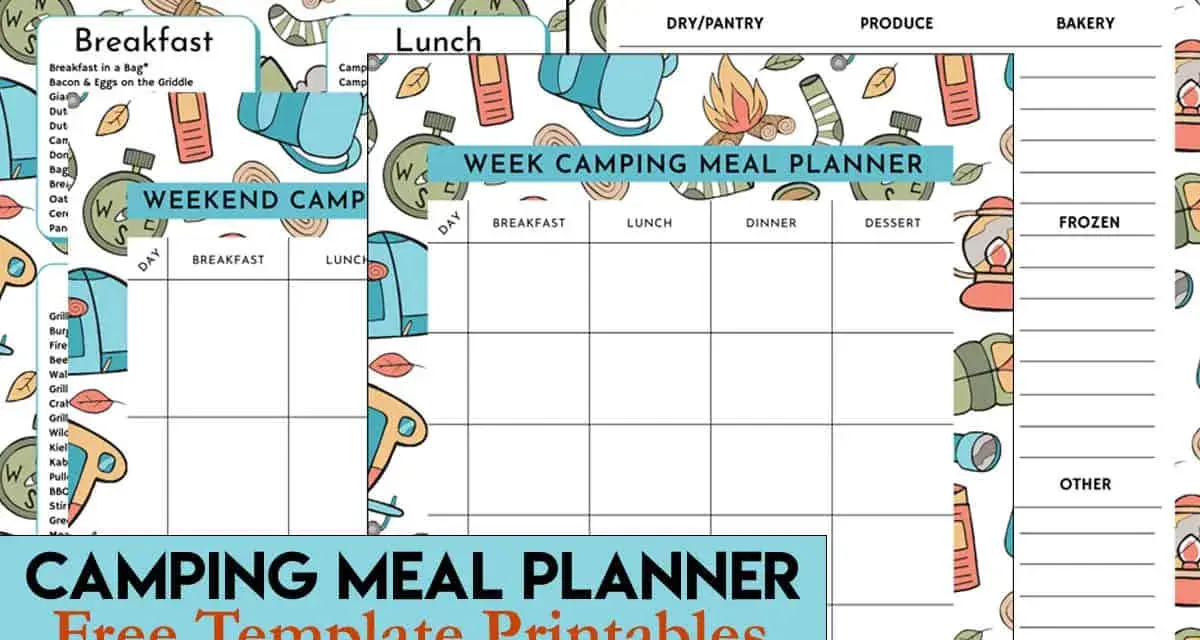
A good camping meal plan template keeps breakfast, lunch, dinner, snacks, and shopping in one place, so the whole trip feels easier before you even leave home. For a UK campsite stay, that matters because weather, pitch facilities, and cooler space can change what is realistic by the hour. I prefer a simple planning sheet that works on paper or on a phone, because the best system is the one you actually use at the table, not the one that looks clever in theory.
Here is what matters most
- Plan meals by day and by cooking method, not just by recipe title.
- Keep separate lines for fridge items, cupboard staples, snacks, and prep at home.
- For short trips, a cool box is fine; for longer stays, chilled storage needs much more care.
- One-pot dinners and simple breakfasts usually save the most time and washing up.
- A fillable grid works best when you leave one meal slot flexible for weather or delays.
- Notes from the last trip are worth keeping, because they make the next plan faster.
What a camping meal plan template should actually include
I build the page around trip logistics first and recipes second. The useful fields are the ones that stop you from buying the wrong food, forgetting the wrong pan, or discovering on day two that the eggs never fit the cool box.
| Field | What to write | Why it matters |
|---|---|---|
| Trip dates and number of nights | Arrival and departure days | Sets the number of breakfasts, lunches, and dinners you need |
| Group size | Adults, children, and any dietary needs | Helps with portions and meal choices |
| Cooking setup | Gas stove, fire pit, electric hook-up, or no-cook only | Determines which dishes are realistic |
| Storage | Cool box, fridge, ice packs, pantry box | Decides how much fresh food you can safely carry |
| Meals | Breakfast, lunch, dinner, snacks | Keeps the whole day covered, not just evening food |
| Prep at home | Chop, marinate, portion, freeze | Reduces work at camp and cuts down mess |
| Shopping list | Fridge, cupboard, fresh produce, drinks | Prevents duplicate buying and forgotten basics |
| Backup meal | One no-fuss meal for bad weather or late arrival | Saves the trip when plans change |
If I only have room for one page, I keep these eight fields and leave decoration out of it. That keeps the planner useful rather than pretty, and it is a much better fit for family camping where the real win is less faff and fewer forgotten items. Once the structure is fixed, filling it in becomes much easier.
How to fill it in without overplanning the trip
The fastest way to ruin a meal plan is to design dishes before you know how many mouths you are feeding and what kit is coming with you. I start with the trip shape, then I narrow the food choices until the plan feels almost boring, which is usually a good sign.
- Count the meals, not the days. A Friday-to-Monday trip is not three meals; it is usually one arrival dinner, two full breakfasts, two lunches, two dinners, and a departure meal that may be half breakfast, half lunch.
- Pick one or two repeatable breakfasts. Porridge, eggs, toast, yoghurt, fruit, or cereal usually cover most family camping mornings without much effort.
- Build dinners around a simple formula. One-pot pasta, traybakes, chilli with rice, soup with bread, or jacket potatoes all travel well because they do not demand precise timing or fancy kit.
- Keep lunches low-effort. Wraps, sandwiches, cheese, fruit, hummus, crackers, and leftovers are better than trying to cook a second round of hot meals in the middle of the day.
- Add a backup meal slot. I always leave one slot open for late arrival, bad weather, or tired children; that single spare meal is often what makes the plan feel calm.
- Assign prep tasks to the right place. Anything that can be chopped, portioned, mixed, or frozen at home should be done before departure.
The other trick is to match the menu to the campsite. If the pitch has electricity, I am happier planning yoghurt, cheese, eggs, and fresh salad. If it does not, I lean harder on dry staples and meals that can survive a warm afternoon in a well-packed cool box. That decision affects almost everything that comes next, which is why I like to show the actual menu grid before I talk about storage.

A 3-day menu grid you can copy into a printable sheet
I like to keep the grid simple enough to fill in by hand. If you are using it as a document, copy the structure below and replace the sample text with your own meals, then print it on A4 or keep it in a notes app.
| Day | Breakfast | Lunch | Dinner | Snacks | Prep at home |
|---|---|---|---|---|---|
| Day 1 | [ ] | [ ] | [ ] | [ ] | [ ] |
| Day 2 | [ ] | [ ] | [ ] | [ ] | [ ] |
| Day 3 | [ ] | [ ] | [ ] | [ ] | [ ] |
If you want to make the grid more useful, add a small note beside each meal for the cooking method. I use labels such as stove, fire, or no-cook, because that saves me from packing the wrong fuel or assuming the weather will cooperate. The next step is making sure the food itself can actually be stored safely.
How to keep food safe when you are camping in the UK
The Food Standards Agency’s camping advice is straightforward: keep chilled food below 5°C, separate raw and ready-to-eat foods, and do not rely on a cool box for extended storage. That matters because many camping kitchens are warmer, busier, and less predictable than a home fridge, especially when the sun comes out or the tent is packed tight.
| Food type | Best approach | Camping note |
|---|---|---|
| Raw meat, eggs, dairy, cooked leftovers | Keep cold, sealed, and separate from ready-to-eat food | Best for short stays or pitches with reliable electricity |
| Dry goods | Store in airtight boxes or zip bags | Most reliable option for longer or warmer trips |
| Fresh produce | Choose hardier items first, like apples, carrots, onions, potatoes | These survive travel better than soft fruit and delicate salad leaves |
I also keep the washing-up line in the template. Clean hands for 20 seconds, clean boards, separate tongs for raw and cooked food, and a bin bag that gets emptied before it turns into a pest magnet all make a bigger difference than people expect. If you have no sink, wet wipes and hand gel help, but they are a fallback, not the first choice. If you remember only one thing, make it this: safe storage and clean hands are part of the menu, not separate from it. Once that is sorted, the shopping list becomes much easier to write.
The shopping list and prep system that saves time at camp
When I build the list, I separate food into fridge, cupboard, fresh produce, and emergency meal items. That stops me from packing the same ingredient twice and makes it obvious which foods need the most protection on the journey.
- Fridge or cool box items: butter, cheese, milk, yoghurt, eggs, sausages, burgers, cooked meats, and anything with a short shelf life.
- Cupboard items: oats, pasta, rice, couscous, tinned beans, passata, wraps, crackers, peanut butter, tea, coffee, sugar, and cereal bars.
- Fresh items that travel well: apples, oranges, bananas, carrots, cucumbers, peppers, onions, and potatoes.
- Prep-at-home items: chopped veg, pre-mixed spice blends, portioned sauce ingredients, frozen water bottles, and any marinade that can be poured straight into a bag or tub.
- Emergency food: one meal that needs almost no effort, such as soup, pesto pasta, or beans on toast ingredients.
As a rough planning range, I usually see a simple family camping menu land around £5 to £8 per person per day when it leans on oats, wraps, pasta, beans, and a few fresh items. Once you move towards steak, multiple chilled desserts, or lots of convenience food, it is easy to drift towards £10 to £15 per person per day. Those are planning estimates rather than fixed prices, but they are useful if you want the template to double as a budget tool.
The last thing I add is a note on leftovers. If a meal produces extra food, I mark how it will be reused the next day, because leftovers are only helpful when they have a job. That leads naturally into the question of which dishes deserve space on a camp menu in the first place.
Which camp dishes are worth the effort and which are not
Not every recipe earns its place on a campsite. I am far more interested in dishes that survive variable weather, modest kit, and a slightly distracted cook than in anything that looks impressive on social media and collapses in real life.
| Meal type | Best for | Strengths | Limits |
|---|---|---|---|
| One-pot stove meals | Family campsites and short breaks | Low washing up, easy timing, forgiving recipes | Needs a single pot and some simmer time |
| Open-fire meals | Camps with a fire pit and plenty of time | Social, simple, and satisfying | Weather, fuel, and heat control are less predictable |
| No-cook lunches | Travel days and hot afternoons | Fast, cheap, and easy to pack | Can feel repetitive if you do not vary the fillings |
In practice, I steer new campers towards meals with a clear formula: carb + protein + vegetable + sauce. That might be pasta, beans, and cheese; wraps with hummus and chicken; or jacket potatoes with tuna and sweetcorn. If you cook over a fire, keep it to simple, fire-friendly food such as foil packets, sausages, corn, or kebabs. More delicate dishes are possible, but they are usually more trouble than they are worth unless you are already comfortable managing heat and timing. A campsite is not the place to prove you can do risotto by firelight.
That editorial rule is simple: if a dish needs constant attention, it probably belongs in the home kitchen, not the campsite. The final piece is keeping a record of what actually worked so the next plan becomes easier, not just different.
The notes I would keep before the next trip
I always leave room in the file for a post-trip note. The most useful lines are the ones nobody thinks to write before departure: which meal got eaten first, what came home untouched, whether the cool box was too small, and which pans were annoying to wash.
For a repeat trip, I would keep two versions of the same planner: one for serviced pitches with electricity and one for simpler off-grid stays. A summer version can lean more heavily on salads, yoghurt, and chilled snacks, while a shoulder-season version should rely more on soup, pasta, porridge, and hot drinks. That small bit of version control saves a surprising amount of effort later.
A good camp menu document is not meant to impress anyone. It is there to make family camping calmer, cheaper, and easier to repeat. Keep it simple, keep it honest, and keep the best meals in the file so the next trip starts with fewer decisions and better food.
