
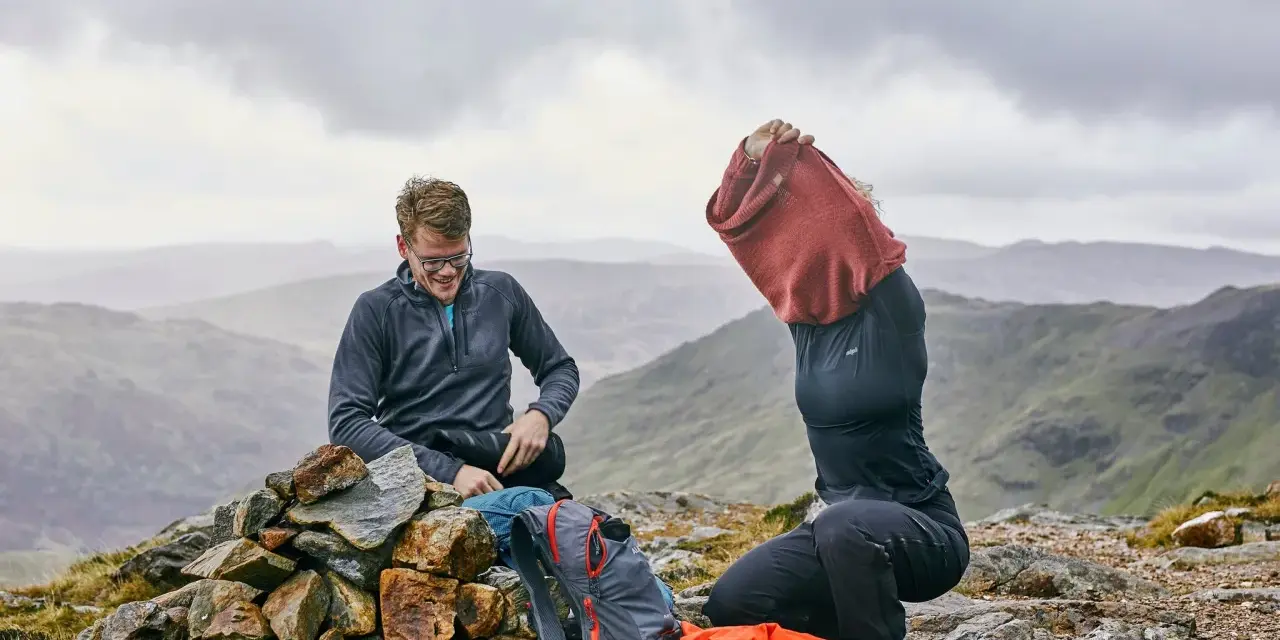
Long-distance hiking is won or lost in the small decisions: the top that dries before lunch, the trousers that still move well after ten hours, and the shell that keeps a steady rain from turning miserable. The right backpacking clothes need to do three jobs at once: manage sweat, handle wind and rain, and stay comfortable under a loaded pack. In the UK, where the forecast can change faster than the plan, a simple layered kit usually beats a bulky wardrobe.
The essentials that do the heavy lifting
- Build around layers, not one all-purpose outfit.
- Use merino or synthetic fabrics next to skin; avoid cotton for anything that has to dry fast.
- A fleece and a waterproof shell cover most three-season UK conditions.
- One good pair of hiking trousers often does more than carrying several “backup” outfits.
- Spend more on the shell, socks, and base layers; save on simple mid-layers if the fit is right.
- Fit matters more than chasing the lightest tag on the rack.

How I think about a trail clothing system
I plan clothing for a pack-heavy walk as a system, not as separate outfits. One layer should move moisture off the skin, one should hold warmth when I stop, and one should protect me when the weather turns.
That sounds basic, but it changes the way I shop. A warm jumper that dries slowly can be fine at camp and annoying on a climb. A fully waterproof jacket that feels clammy may work for a short walk in town, then feel wrong after an hour on a windy ridge. The best kit is not the kit with the most features; it is the kit that keeps working while I am moving, pausing, and starting again.
- Base layer manages sweat and keeps skin drier.
- Mid-layer traps warmth without becoming a heavy burden.
- Outer layer blocks wind and rain when the conditions get worse.
Once that framework is clear, fabric choice becomes much easier to judge, because each piece has a job instead of just a label.
Which fabrics earn a place in my pack
When I am choosing hiking clothing, I usually start with fabric before colour, cut, or brand. For long-distance walking, the fabric decides how quickly I dry out, how much I smell after two days, and whether the garment still feels comfortable under a pack.
| Material | Why I use it | Main trade-off | Best use |
|---|---|---|---|
| Merino wool | Comfortable against skin, naturally better at resisting odour, and useful when you will wear the same layer for several days. | Usually costs more and dries a little slower than synthetic fabric. | Base layers, socks, and a light camp top for mixed UK weather. |
| Synthetic polyester or nylon | Dries fast, often lighter, and usually cheaper than merino. | Can hold odour sooner on multi-day trips. | Hard-working base layers, running-style tops, and kit that may get soaked repeatedly. |
| Fleece | Breathable warmth that still works when you are moving uphill. | Not as wind-resistant as a shell and can feel bulky if you overpack it. | Mid-layer insulation for spring, autumn, and cool summer evenings. |
| Woven nylon with DWR | Tough, stretchy, and usually more durable than soft everyday trousers. | DWR means “durable water repellent”, not waterproof, so it only sheds light rain. | Hiking trousers and shorts that need to handle brush, sweat, and frequent wear. |
| Waterproof shell fabric | Blocks steady rain and wind when the sky opens up. | Breathability varies a lot, so a great shell is not just about the headline waterproof number. | Rain jackets and waterproof trousers for wet, windy UK days. |
For most three-season trips, I still lean toward a merino or synthetic base, a fleece, woven hiking trousers, and a proper shell in the pack. That combination handles far more weather than a wardrobe full of heavier layers, which is why the next step is matching the kit to the season rather than building one giant do-everything outfit.
What I pack for different UK conditions
British walking trips are rarely about one stable forecast. A dry morning can become a wet afternoon, and a mild valley can feel very different once the wind hits an exposed ridge. I pack for that kind of change, not for the best hour of the day.
| Condition | What I wear | Why it works | What I keep in reserve |
|---|---|---|---|
| Spring and autumn | Merino or synthetic base top, fleece, hiking trousers, waterproof shell, beanie, thin gloves. | This is the most useful UK setup because it covers cool starts, windy lunch stops, and surprise showers. | A dry base layer for camp and a spare pair of socks. |
| Summer | Light base top, shorts or thin trousers, cap, ultralight shell. | You can hike cool and still have a rain layer when the weather shifts, which matters more than carrying a heavy warm jacket. | A light fleece if evenings are cool or if you are camping high up. |
| Cold and wet | Thermal base layer, fleece, insulated layer for breaks, waterproof shell, waterproof trousers, warm hat, gloves. | You need enough insulation to stop the chill building when pace slows, especially during stops, food breaks, or kit changes. | Extra socks and a dry layer reserved only for sleeping or camp. |
I still keep the system simple even in rougher weather. If a clothing choice only works when the sun behaves, it is not a very good choice for British trails.
Where I would spend more and where I would not
Not every item deserves the same budget. In 2026, typical UK retail prices vary a lot, but the pattern is fairly consistent: spend more on the pieces that protect you from bad weather or sit directly against your skin, and save where a basic version performs almost as well.
| Item | Typical UK price range | When to spend more | When budget is fine |
|---|---|---|---|
| Base layer top | £20-£90 | If you want better odour control, softer fabric, or a cut that works for several days without irritation. | If you mainly need a simple quick-drying trail shirt. |
| Hiking trousers | £35-£140 | If you need durable fabric, articulated knees, or a cut that still feels good under a pack. | If the fit is right and the material is plain woven nylon or polyester. |
| Fleece | £30-£120 | If you want lower weight, better breathability, or a hood and zip that feel comfortable on long days. | If it is a straightforward mid-layer for camp and breaks. |
| Waterproof shell | £80-£350+ | If you walk in real rain, strong wind, or long days where ventilation and hood design matter. | Only if it is for occasional use and actually fits over your layers. |
| Socks | £10-£25 per pair | Always, if you want better fit, cushioning, and less rubbing. | There is little point going ultra-cheap here if blisters matter to you. |
| Insulated jacket | £60-£250 | If you want a lighter piece that packs smaller and works better around camp. | If it is only a backup warmth layer and you do not expect heavy use. |
The biggest money mistake I see is buying a great-looking jacket and then pairing it with poor socks or an ill-fitting base layer. That order is backwards; comfort begins where the fabric touches your skin and ends where the weather hits your shell.
Fit details that stop small annoyances becoming big ones
Fit sounds dull until you carry a pack for six hours. Then tiny details start to matter: a shoulder seam in the wrong place, a hem that rides up under the hip belt, or trousers that tug every time you step high onto wet rock.
- Shoulder seams should sit away from the top of the shoulder so they do not rub under pack straps.
- Articulated knees are pre-shaped knees that make stepping, crouching, and scrambling easier.
- Gusseted crotch means an extra fabric panel in the seat area, which improves stride and reduces tearing stress.
- Longer hems help a top stay in place when you bend, reach, or climb.
- Adjustable cuffs and hoods matter because wind and rain are much less annoying when they cannot sneak in at the edges.
I always test a shell over the mid-layer I actually plan to wear, not over a T-shirt in a warm shop. A jacket that fits on the hanger can become useless once you add a fleece and start moving your arms for poles or scrambling. That is why fit deserves as much attention as fabric, especially for long-distance walking.
The mistakes I see most often on long walks
The wrong clothing kit usually fails in predictable ways. People do not tend to buy one disastrous item; they assemble several almost-right pieces that work fine in the house and then become annoying on the trail.
- Using cotton as a main layer because it feels soft in the shop. Cotton holds moisture and stays uncomfortable when the weather changes.
- Packing for the warmest hour and forgetting that the first hour, lunch stop, and final descent can all be colder and wetter.
- Carrying too many “just in case” tops instead of one spare dry layer and one reliable weather shell.
- Buying a shell without testing the hood and hem. If the hood moves badly or the hem lifts every time you reach, the jacket will annoy you quickly.
- Choosing fragile ultra-light pieces for rough terrain. Low weight is useful, but not if the garment tears on bracken, rock, or repeated washing.
- Ignoring camp comfort. A single dry layer for evening can completely change how the trip feels after a wet day.
The fix is usually simpler than people expect: fewer items, better layers, and a clearer plan for what each piece is supposed to do. That brings me to the kit I would trust if I were walking for several days in Britain.
The small kit I would trust for three-season walks
If I were packing for a week on mixed UK ground, I would keep the wardrobe brutally simple. The aim is not to cover every possible weather mood; it is to stay dry enough, warm enough, and comfortable enough to keep moving.
- 1 merino or synthetic base top.
- 1 spare base top or light tee for camp and rotation.
- 1 fleece as the main warm layer.
- 1 lightweight insulated jacket if evenings are cold or stops are long.
- 1 waterproof shell with a hood that actually fits over your layers.
- 1 pair of hiking trousers or shorts, depending on season and terrain.
- 2 pairs of hiking socks, plus a dry pair kept back for camp or sleeping.
- 2-3 sets of underwear that dry fast.
- 1 beanie, 1 pair of light gloves, and a buff or neck gaiter.
- Waterproof trousers if the route is likely to be wet, boggy, or exposed.
From there, I only add clothing that solves a real problem: extra warmth for a cold campsite, more rain protection for a grim forecast, or a second dry layer because the route is long and remote. That is the most reliable way I know to build hiking clothing that feels calm, light, and genuinely useful when the weather stops co-operating.
