
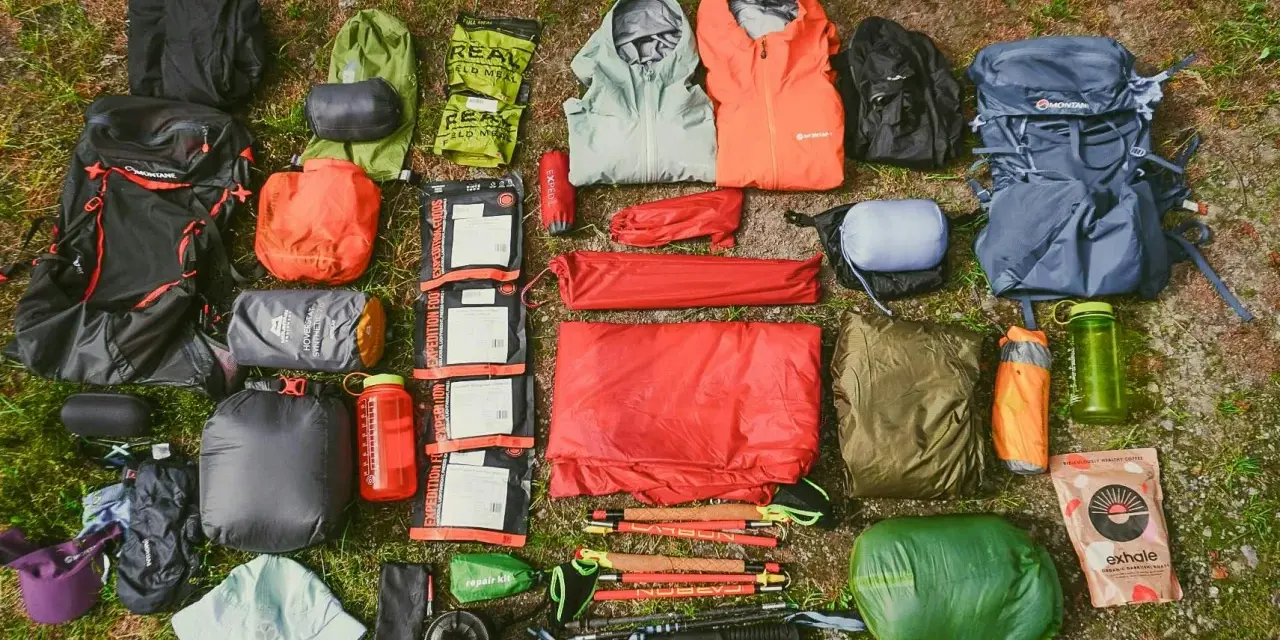
A good fastpacking kit is small, but it is not random. The best setup balances movement, shelter, food, and safety so you can cover ground quickly without feeling like you are gambling on perfect weather. This fastpacking gear list focuses on the items that earn their place, with UK conditions in mind, where rain, wind, and short evenings punish overconfidence.
What matters most before you start buying lighter gear
- For most overnight trips, a base weight around 4-7 kg is realistic; colder shoulder-season routes can sit a little higher.
- Build around the big four: pack, shelter, sleep system, and clothing.
- In Britain, a waterproof shell, map, compass, and offline navigation are not extras.
- Carry enough calories and water capacity to handle dry stretches between refills.
- Test the full system on a short trip before trusting it on a bigger route.
What fastpacking really asks your gear to do
Fastpacking sits between trail running and lightweight backpacking. I think of it as a movement-first style of travel: the kit has to feel stable while I am running or power-hiking, but still keep me warm, dry, and properly fed when I stop. That balance is what separates a useful setup from a collection of clever but fragile parts.
The gear needs to do four jobs well:
- Stay comfortable while moving, especially on climbs and uneven ground.
- Let me reach water, snacks, navigation, and a shell without emptying the pack.
- Protect sleep quality, because poor rest wrecks the next day faster than most people expect.
- Cover the "what if" moments, such as sudden rain, a wrong turn, or a colder-than-planned night.
If you start with those priorities, the rest of the choices become much easier to judge. Next, I would break the kit down into the items that carry the most weight, because that is where the biggest gains usually live.

The core kit I would not leave behind
This is the backbone of the setup. If a piece of kit does not improve movement, sleep, or safety, I would question whether it deserves space in the pack. A lean system is not about suffering; it is about removing dead weight.
| Item | What I would look for | Why it matters | Practical UK note |
|---|---|---|---|
| Pack | 15-30 L for most overnights, with a close fit and front pockets | Keeps snacks, water, and layers within reach while moving | Wet weather means frequent layer changes, so easy-access pockets are worth more than fancy features |
| Shelter | Light tent, tarp plus bivy, or a minimalist shelter that still handles wind | Dry, calm sleep is what lets the next day happen | On exposed hills or coastal routes, a slightly sturdier pitch is often the better trade-off |
| Sleep system | Quilt or sleeping bag matched to the coldest expected night, plus an insulating pad | Bad sleep breaks fastpacking faster than extra miles do | For spring and autumn, I would want a pad with an R-value around 3 or better, unless the rest of the system is clearly warm |
| Camp clothing | Dry base layer, warm mid-layer, hat, gloves, and dry socks | Lets me recover instead of just shivering through the evening | This is where many light kits become too optimistic for British weather |
| Cooking or meal setup | Simple stove, pot, spoon, lighter, and an easy meal plan | Hot food improves morale and recovery on multi-day trips | A small wind-shielded stove usually matters more than a complicated cook set |
| Water capacity and treatment | About 1.5-2 L carried capacity, plus a filter or tablets | Lets you move through dry sections without worrying about every stream | Some UK routes have plenty of water, but ridges and dry summers can change that quickly |
That is the core of the pack. If I had to simplify further, I would remove comfort extras before I touched any of those items. The next layer is clothing, because the wrong layer choices turn a light trip into a cold one very quickly.
Clothing that works when the weather turns
Fastpacking clothing should be built around moisture management and fast adaptation. A base layer is the layer worn next to the skin, and its job is to move sweat away instead of holding it. That sounds simple, but it is the difference between feeling dry on a climb and feeling chilled the moment you stop.For British conditions, I would keep the clothing system intentionally small but complete. I do not want a pile of spares; I want the right pieces in the right order.
- Running shorts or tights, plus a moisture-wicking top.
- A technical base layer for camp or colder starts.
- A light insulated jacket, synthetic or down, for stops and evenings.
- A waterproof shell with a hood that stays put in wind.
- Waterproof trousers or overtrousers when the route is exposed or the forecast is poor.
- Hat and gloves, even in months when they feel unnecessary at the car park.
- One dry sleep layer that never gets worn during the day.
- Trail shoes with enough grip for wet ground, mud, and rock, plus socks that do not slide around.
Food and water that keep pace with the miles
I do not treat fastpacking food like a normal camp menu. I want calories that are easy to reach while moving and a proper meal waiting at the end of the day. On big efforts, I think in terms of steady intake rather than heroic snacking late in the evening.
A practical approach looks like this:
- Breakfast: instant oats, muesli, or another low-fuss carb-heavy option.
- On-trail fuel: bars, flapjacks, gels, chews, dried fruit, nuts, or small wraps that can survive a pack.
- Evening meal: dehydrated food, couscous, noodles, or rice with a simple protein add-on.
- Electrolytes: useful on warmer days or long climbs when sweat loss starts to stack up.
- Caffeine: worth planning, not improvising, if you rely on it to stay sharp late in the day.
For many people, a rough target of 200-300 calories per hour of active movement is a useful starting point, then adjusted for heat, terrain, and personal appetite. Water is simpler: 1.5-2 L carried capacity is a good baseline, while 2-3 L makes more sense if the route has long dry gaps. I prefer to know exactly where my next reliable refill is before I leave the last one. After food and water, the only thing that can still undo a good day very quickly is weak navigation or a thin safety margin.
Navigation and safety are weightless until you need them
There is no sensible fastpacking setup that depends on a phone alone. A downloaded map on a phone is useful, but it should sit beside a paper map and compass, not replace them. In bad visibility, wet weather, or a dead battery situation, that backup stops being theoretical very fast.
My minimum safety kit would include:
- Paper map and compass.
- Offline maps on a fully charged phone.
- Headtorch with fresh batteries or a clear charging plan.
- Whistle and a tiny first aid kit.
- Blister treatment, because foot problems are far more common than dramatic emergencies.
- Emergency bivvy or bothy bag for exposed routes or unexpected stops.
- Power bank if the phone is doing double duty for navigation, photos, and messaging.
My own rule is simple: if I would feel nervous losing it halfway through the route, I should not be relying on a single device for it. That mindset makes the next section easier, because once the non-negotiables are protected, weight trimming becomes much more honest.
How I would trim the pack without making it fragile
This is where many people get the balance wrong. They cut the obvious comfort items, then leave themselves with an awkward kit that is light on paper but poor in the field. I would rather carry one sensible layer or one slightly heavier shelter than build a trip around a fragile compromise.
When I am trimming a fastpacking setup, I usually start with these cuts:
- Leave camp luxuries behind unless the trip is deliberately relaxed.
- Choose one insulation layer that actually works, not two mediocre ones.
- Use one cooking system, not a scattered collection of kitchen extras.
- Keep toiletries tiny and multi-use where possible.
- Replace duplicate items with one reliable version that serves more than one job.
And these are the items I almost never cut too far:
- Shelter that can handle the forecast.
- Warmth for the coldest part of the trip, not just the warmest.
- Navigation backup.
- Enough food to avoid running on fumes.
If your pack is drifting past 30 L for a normal overnight in mild weather, that is usually a sign that something in the system is doing too little work for its weight. The goal is not to carry the least possible gear; the goal is to carry only the gear that keeps the whole trip dependable. The final check is less about equipment and more about whether the setup behaves well in real life.
The last check before the trip starts
I always do one short rehearsal with the same clothing, food, and sleep system I plan to use on the longer route. It exposes the annoying things immediately: a pack that bounces, snacks that are awkward to eat on the move, a jacket that feels fine standing still but clumsy on a climb, or a sleep setup that looks warm on the label and feels drafty at 2 a.m.
- Can I reach water, snacks, shell, and map without stopping?
- Does the pack stay stable when I run or power-hike?
- Would I still be comfortable if the weather turned colder and wetter?
- Do I have a real backup for navigation and power?
If any of those answers feel shaky, I do not add more gear first. I simplify, test again, and only then commit to the bigger route. That is the practical way to build a fastpacking system that stays light, safe, and usable when British weather stops being polite.
