
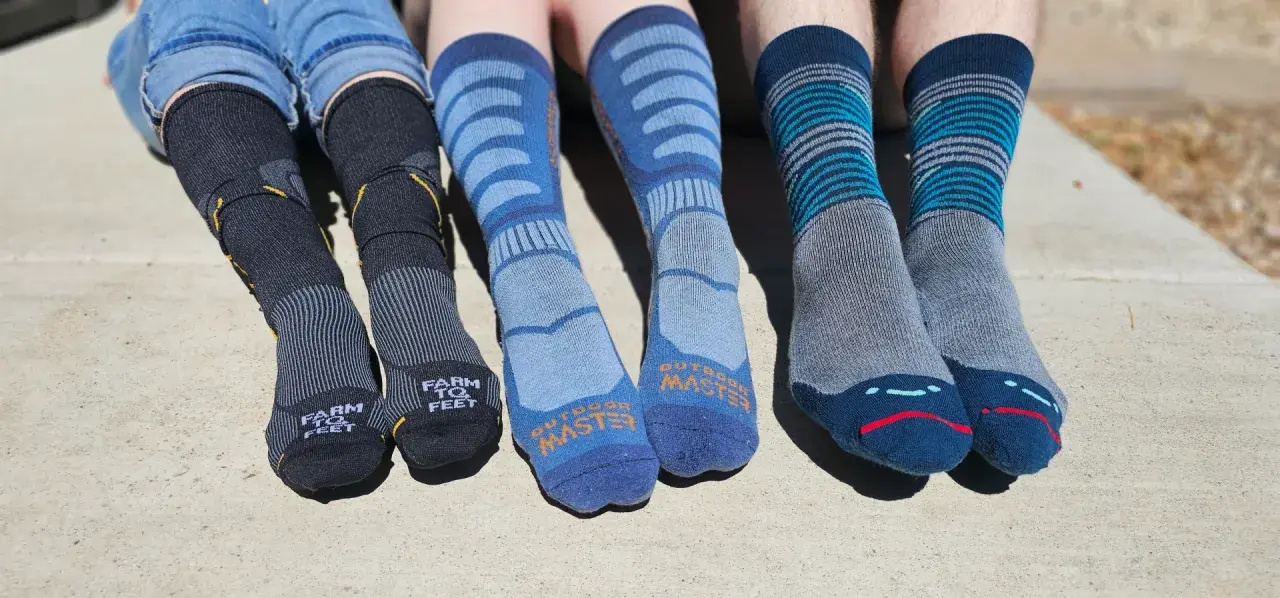
The essentials that make a hiking sock worth wearing
- Moisture management keeps sweat moving away from the skin instead of trapping it inside the fabric.
- Friction control matters just as much, because blisters start when the sock slips, folds, or overheats.
- Merino blends are the most versatile choice for the UK because they stay comfortable across shifting temperatures and still feel acceptable when damp.
- Cushioning level should match the hike and the shoe; more padding is not automatically better.
- Height should follow your footwear, with crew or boot lengths making the most sense for many walkers.
- Fit and wear matter at least as much as fibre, so a packed-out heel or loose cuff is a sign to replace them.
What hiking socks are designed to do
I think of hiking socks as a control layer, not a comfort extra. Their job is to manage sweat, cushion pressure points, and stay put when your foot moves inside the shoe. That combination is what helps prevent hot spots, blisters, and the cold, clammy feeling you get when an ordinary cotton sock gives up halfway through a hill.
In practical terms, a good pair should do three things well: move moisture away from the skin, reduce friction where the foot works hardest, and protect the heel, ball of the foot, and toes from repeated impact. On a long descent, that small amount of engineering is often what saves the day. Once that role is clear, the next question is simple: which fibres do it best?
The materials that matter most
I look at fibre first, because it decides how the sock behaves once your feet warm up and the weather changes. The best hiking socks are usually blends rather than single-fibre socks, because each material solves a different problem.
| Material | What it does best | Best for | Trade-off |
|---|---|---|---|
| Merino wool blend | Breathes well, manages moisture, feels softer next to the skin, and resists odour better than most other options | Most UK hikes, mixed weather, multi-day trips, and anyone who wants one reliable all-rounder | Usually costs more than basic synthetics and can feel warmer than expected on very hot climbs |
| Synthetic blend | Dries quickly, handles repeated washing well, and often costs less | Warm-weather walks, sweaty feet, budget buys, and hikers who prioritise fast drying | Can hold odour more readily than merino if worn hard for long periods |
| Waterproof membrane sock | Helps keep external water out in very wet conditions | Boggy winter routes, streamy paths, and situations where the ground is constantly soaked | Less breathable and usually bulkier, so it is a niche solution rather than a default one |
| Cotton-heavy sock | Feels soft at first and is cheap | Everyday wear, not hiking | Holds moisture, increases rubbing, and is the fastest route to cold feet and blisters |
In practice, nylon and elastane are usually added to merino or synthetic socks to improve durability and help the sock keep its shape. That blend is the sweet spot for most walkers. In the UK, a realistic price band for a solid pair is often around £15 to £25, while more technical or premium models commonly sit around £25 to £35. I would rather pay for a pair that fits well and dries properly than save a few pounds and spend the day thinking about my feet. That balance leads straight into cushioning and fit, which are what you actually feel inside the shoe.
Cushioning and fit are not the same thing
Cushioning changes the feel of the sock; fit decides whether it works. I have seen heavily padded socks cause problems simply because they were too bulky for the shoe, while lighter socks performed beautifully because they hugged the foot correctly.
| Cushioning level | What it feels like | Good choice when | Watch out for |
|---|---|---|---|
| Light | Thin, cooler, and closer to the foot | Warm days, trail shoes, faster walking, or snug footwear with little extra room | Less insulation and less impact padding on rough ground |
| Medium | Balanced and versatile | Most day hikes, mixed weather, and walkers who want one dependable pair | Not as airy as light cushioning and not as plush as heavy cushioning |
| Heavy | Thicker, softer, and more protective | Colder conditions, rough terrain, and sturdier boots with enough internal volume | Can feel bulky in close-fitting shoes and may trap more heat |
Fit details matter just as much. A good hiking sock should hug the heel, stay smooth across the arch, and leave the toes free to move without bunching. A seamless toe, meaning the toe seam is flattened or moved away from the pressure point, can make a real difference on long descents. If the sock twists, slips, or wrinkles under the forefoot, it is wrong for that shoe, even if the label says otherwise. That is why height matters next, because it affects both protection and compatibility with your footwear.
Why sock height matters
Height is not just a style choice. It changes how much the sock protects the ankle, how well it pairs with the collar of the shoe or boot, and how much debris it keeps out. On UK trails, where wet grass, grit, bracken, and muddy edges are common, that extra coverage is often useful.
- Low or quarter length works well with trail shoes and warm-weather walking, especially when you want more freedom around the ankle.
- Crew length is the most forgiving all-round choice for many walkers because it helps protect against boot collars, dirt, and light brush.
- Boot or over-calf length makes sense with taller boots, colder days, and rougher routes where extra coverage helps keep the lower leg more comfortable.
For most people, crew length is the safest starting point because it balances coverage and versatility. If you are wearing low-profile trail shoes on a dry summer path, a shorter sock can feel better. If you are heading into muddy fields, damp woodland, or a colder hillside, a taller sock is usually the more sensible call. That local context matters, which is why the next section turns this into practical choices for British conditions and family outings.

How to choose a pair for British trails and family days out
British weather rewards socks that keep working after the forecast changes. If I were choosing one pair for general hiking in the UK, I would start with a merino blend, medium cushioning, and a crew height. That combination handles damp mornings, cool evenings, and the sort of mixed terrain you get on a family loop near camp or a longer weekend walk.
- For summer woodland or coastal walks, choose light cushioning and a lower profile if your shoes are already roomy and breathable.
- For damp autumn hills, go with medium cushioning and a crew height so the sock still feels comfortable when the day turns colder.
- For winter mud or rougher paths, a slightly thicker merino blend with more coverage can help, especially inside walking boots.
- For backpacking or multi-day camping, favour durability and odour control, because the sock may be worn for longer stretches and washed less often.
I also think footwear volume should lead the decision. Trail shoes usually pair better with lighter socks, while walking boots often leave enough space for medium cushioning and a taller cuff. If you are buying for children or for casual family hikes, keep the priorities simple: comfort, fit, and easy drying beat fancy features every time. That said, even a good sock can be undermined by avoidable mistakes, and that is where many walkers go wrong.
Common mistakes that create problems before the hike even starts
Most sock problems come from small decisions that look harmless in the shop. I see the same errors again and again, and they are easy to avoid once you know what to watch for.
- Choosing cotton because it feels soft often leads to damp feet, more rubbing, and a higher blister risk.
- Buying by shoe size alone ignores how much internal volume the sock adds inside the shoe.
- Pairing thick socks with snug footwear can make the whole setup feel tight and unstable.
- Ignoring sock movement means you miss the real warning sign: a sock that wrinkles or slides is already working against you.
- Walking in damp socks from the day before is one of the quickest ways to start a hike with a problem you do not need.
- Layering two random socks usually creates more friction, not less, unless the system was designed to work that way.
The simple rule is this: one well-fitted hiking sock almost always beats two improvised layers. A dedicated double-layer system can help in specific situations, but only if the shoe has enough room and the pair was designed to move together. Once the fit issue is sorted, good care is what keeps the performance consistent.
How to wash them and know when they are worn out
A decent pair of hiking socks should not be treated like disposable kit. With the right care, they can stay comfortable for a long time, and that matters when you are walking regularly through a season of wet paths and repeated washing.
| Care step | Why it matters |
|---|---|
| Wash them soon after a muddy or sweaty hike | Prevents dirt, salt, and sweat from breaking down the fibres |
| Follow the label rather than using hot water by habit | Different blends handle heat differently, and the label is the safest guide |
| Avoid fabric softener | It can coat the fibres and reduce moisture movement |
| Air dry when possible | Helps preserve elasticity and avoids unnecessary heat damage |
| Rotate between pairs if you walk often | Gives the fibres time to recover and extends useful life |
| Replace them when the heel packs out or the cushion goes flat | Loss of shape usually shows up as slipping, rubbing, or less comfort on long walks |
Signs of wear are usually obvious if you know where to look: thinning under the heel, loose elastic at the cuff, flattened cushioning under the ball of the foot, or seams that start to irritate. If a sock no longer springs back after washing, it has probably crossed the line from reliable to tired. That is the point where replacing it is cheaper than paying for comfort in blisters.
The simple rule I use before buying
I keep it simple: match the sock to the shoe, the weather, and the amount of movement you expect. A light sock for warm trail shoes, a medium merino blend for most British day hikes, and a taller, more durable pair for boots and rougher routes will cover the vast majority of situations without overcomplicating the choice. If your feet sweat easily, prioritise moisture management first and warmth second.
That is the difference between a sock that merely looks technical and one that actually earns its place in the pack, whether the next outing is a family loop near camp or a long day on a wet hillside.
