
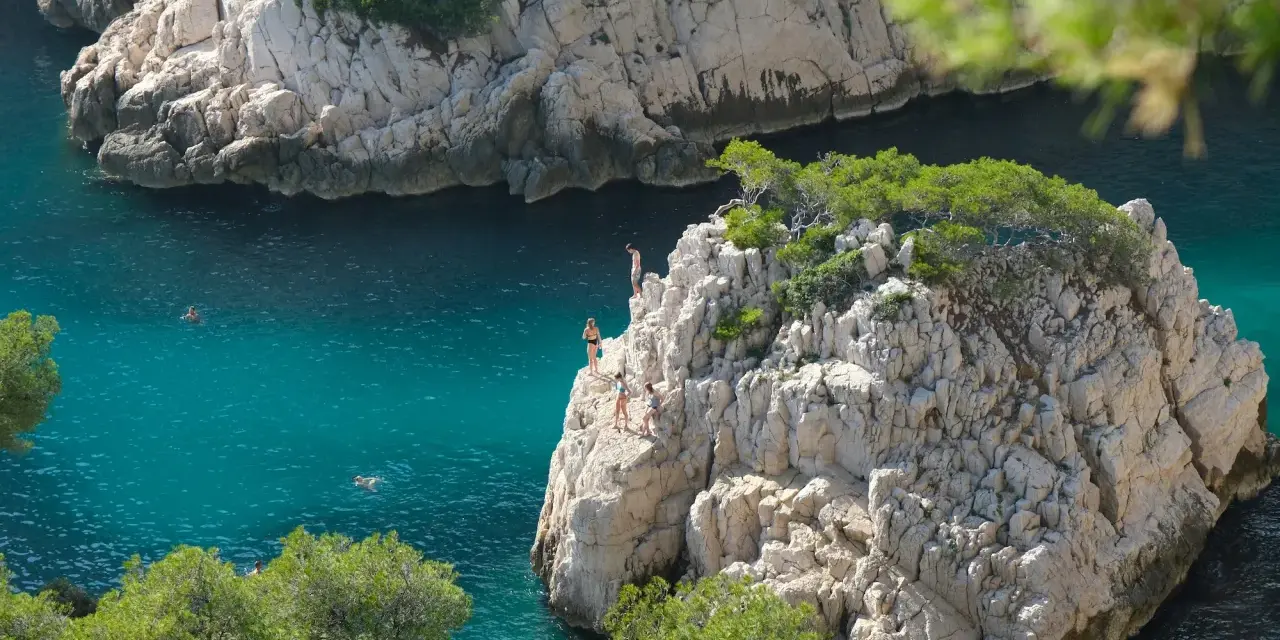
The limestone coves around Cassis are best treated as a base-and-explore destination: sleep at a campsite nearby, hike out early, and leave room for heat, crowds, and access restrictions. The calanques of Cassis are dramatic enough to anchor a whole trip, but they only work well when you plan them like a mountain day, not a casual beach stop. In this guide I focus on the routes that matter, where to stay outside the park, and the practical details that make the difference between a smooth outing and a frustrating one.
The essentials for a smooth Cassis camping trip
- Camp outside the park because overnight camping, bivouacking, and caravanning are not allowed inside the protected area.
- Start early if you want the best walking conditions and fewer crowds on the main paths.
- Choose your first cove wisely: Port-Miou is the easiest introduction, Port-Pin is the most family-friendly swim stop, and En-Vau is the big effort reward.
- Carry real hiking kit, especially proper shoes, sun protection, snacks, and at least 2 litres of water.
- Keep a backup plan for fire-risk closures, road restrictions, or a day when the heat makes walking a bad idea.
- Use the sea when it helps: a boat trip or kayaking can be a smarter choice than forcing a full hike.
Why this coastline suits campers better than day-trippers
What makes this area work so well for camping is the rhythm. The coves are close enough to visit in short bursts, but the terrain is steep enough that a rushed visit usually feels incomplete. I would never treat this as a “see everything in one afternoon” coastline. It is much better as a place where you arrive, settle into your campsite, then pick one good walk or one sea activity per day.
That matters because the landscape is fragile and the rules are strict. Summer fire risk can change access quickly, some roads are closed seasonally, and the footpaths are not set up like a seaside promenade. This is a destination for active travellers who are happy to slow down, not for anyone who wants to park beside a beach and drift in and out all day.
For families, that can actually be an advantage. The best days here are simple: an early start, a shaded lunch back at the campsite, then a gentler evening in Cassis or by the sea. Once you accept that pace, the rest of the trip becomes much easier to plan.
That leads naturally to the question that matters most: which route should you actually walk first?

The main routes from Cassis and which one to choose first
If you only do one walk, make it a route that matches your energy, not your ego. The three best-known coves each offer something different, and the right choice depends on whether you want an easy warm-up, a swim stop, or the big dramatic payoff.
| Route | What it feels like | Typical access from Cassis | Best for |
|---|---|---|---|
| Port-Miou | The easiest introduction, with a wide inlet and a gentler approach. | Around 35 minutes on foot from the centre of Cassis, or by shuttle from the Gorguettes park-and-ride. | First-morning walks, families, and anyone easing into the area. |
| Port-Pin | A smaller cove with a sandy feel, turquoise water, and a more intimate swimming stop. | About 30 to 40 minutes from Port-Miou on a stony path. | Short hikes with a clear reward at the end. |
| En-Vau | The wildest and most dramatic of the classic trio, with steep cliffs and a narrow pebble beach. | Roughly 90 minutes to 2 hours from Cassis, depending on the route and pace. | Strong walkers, early starts, and travellers who want the iconic view. |
| By boat | The easiest way to read the scale of the cliffs without the climb. | Departures from the port in Cassis. | Hot days, mixed-age groups, or a backup plan when walking is too much. |
Cassis Tourisme notes that there are no restaurants, accommodation, or water points on the footpaths, and that is exactly why I treat these routes as self-sufficient outings. Bring proper shoes, a snack, sunscreen, and at least 2 litres of water even if you think the walk looks short. I also like to start with Port-Miou and Port-Pin on day one, because that keeps the outing flexible and leaves En-Vau for a cooler morning or a stronger day later in the stay.
En-Vau is the one people underestimate most. It is stunning, but it is also busy in summer, and the famous cove can feel crowded very quickly. The official guidance is blunt for a reason: the area can comfortably take about 400 towels, yet summer numbers can rise to around 1,200 people at once. That is why I would treat En-Vau as a reward for getting up early, not as a casual late-morning wander.
When you match the route to your energy level, the whole trip becomes more enjoyable. The campsite then stops being just a place to sleep and becomes part of the strategy.
Where I would camp for the best balance of access and comfort
Overnight camping inside the park is not allowed, so the smart move is to base yourself just outside the protected zone and use that as your launch point. For this kind of trip, I prefer a campsite that gives me shade, an easy exit in the morning, and enough comfort that the family is happy coming back after a long walk.
| Base | Why it works | Trade-off | Best fit |
|---|---|---|---|
| Cassis town area | Closest to Port-Miou and the port, so you can walk or use local shuttles more easily. | Higher demand, tighter availability, and less room for spontaneous decisions in peak season. | Short stays, car-light trips, and travellers who want to be near the action. |
| La Bédoule or Ceyreste | Practical bases with easier driving access and a calmer feel. | You will rely more on a car or shuttle to reach the coast. | Families, longer holidays, and anyone who wants a quieter campsite. |
| La Ciotat | Good for mixing the calanques with beach time and broader seaside activities. | Less immediate for the classic Cassis walks. | Travellers who want variety rather than just one coastline. |
| South Marseille | Useful if you also plan to explore the wider national park area and use public transport. | Less of a “camp and coast” feel than staying near Cassis itself. | Longer itineraries and visitors who want more urban services. |
As a price anchor, Marseille Tourism lists 2026 rates at Les Cigales in Cassis from €12.90 per adult per day, with tent or car pitches at €7.90 and motorhome space at €9.90. I would use that as a reality check rather than a rule, because the most convenient campsites are usually the first to fill in peak weeks.
If I were planning this for a family, I would choose the campsite that makes the morning easiest, not the one that looks closest on a map. A few extra minutes by car is usually a better trade-off than starting the day stressed, parked badly, or already tired before the walk begins.
That practical mindset matters even more once you deal with the local rules and the summer heat.
A realistic day plan that keeps the trip enjoyable
The biggest mistake people make here is assuming they can keep a normal holiday schedule. They cannot. The cliffs, the heat, and the access rules all push you toward earlier starts and simpler days.
- Check access before breakfast so you do not waste time driving to a closed road or a restricted massif.
- Leave early, especially from June to September, when fire risk and crowding make late starts less comfortable.
- Keep the first walk short and let the scenery do the work. Port-Miou to Port-Pin is usually enough for one outing if you are travelling with children.
- Save En-Vau for the right day rather than forcing it into a hot, busy afternoon.
- Return to the campsite before the hottest part of the day, then use the pool, shower, or shade to reset for the evening.
The access rules are straightforward but they matter. Fires, barbecues, and cigarettes are not part of the plan here, drones are restricted, dogs need to stay on a lead, and you should stay on marked paths. I would also avoid pretending that a short route means easy conditions. The ground is stony, the sun is strong, and the scenery can distract you just enough to underestimate the climb back.
One more thing I would not ignore: summer road closures still affect the Cassis side, so do not assume you can drive right up to the best trailhead. A campsite base helps here because it gives you more flexibility. If the massif is closed or the roads are restricted, you can switch to a village walk, a beach stop, or a sea trip without losing the day.
That is the kind of flexibility that makes the whole stay feel relaxed instead of controlled by the weather.
When the sea is the better way to see the inlets
There are days when walking is the wrong tool. Strong heat, tired legs, windy weather, or young children can all make a boat trip or a paddle a better option than a long ascent. I actually think that is one reason this destination works so well for camping: you can pivot without feeling like you have wasted the holiday.
From Cassis, boat trips are the simplest alternative. They show the cliffs in context, make the scale easier to understand, and remove the pressure of the return climb. If you want something more active, kayaking and paddling also work well, provided the sea conditions are calm enough and you are comfortable spending time on the water. For a lower-impact option, boats with soft propulsion or hybrid systems are a sensible choice.
The sea-based plan is especially useful in three situations: when the park is under fire-risk restrictions, when the family wants a less demanding day, or when you simply want the cliffs without the workout. It is not the same experience as hiking, but that is the point. It gives you a different angle on the same landscape.
When I plan a stay here, I do not choose between land and sea. I use both, and that balance usually makes the whole trip better.
How I would shape a three-night stay around Cassis
If I only had three nights, I would keep the plan deliberately simple. Day one would be a short local walk to Port-Miou and Port-Pin, just to settle in and get a feel for the paths. Day two would be the main effort day, with an early start for En-Vau or, if the conditions looked poor, a boat trip instead. Day three would be the lighter day: the village, the beach, a slower lunch, or a scenic drive above the coast if the family still had energy.
That mix gives you the best of the area without trying to squeeze too much into one schedule. You get the cliffs, you get the swimming, and you still have space for the campsite to do what it should do, which is make the trip comfortable rather than complicated. For me, that is the real appeal of camping near the Cassis calanques: not just seeing a famous landscape, but giving yourself enough time to enjoy it properly.If you want the trip to feel memorable rather than rushed, keep one day for the classic hike, one for the sea, and one for whatever the weather or the family needs. That is usually enough to make the coastline feel generous instead of demanding.
