
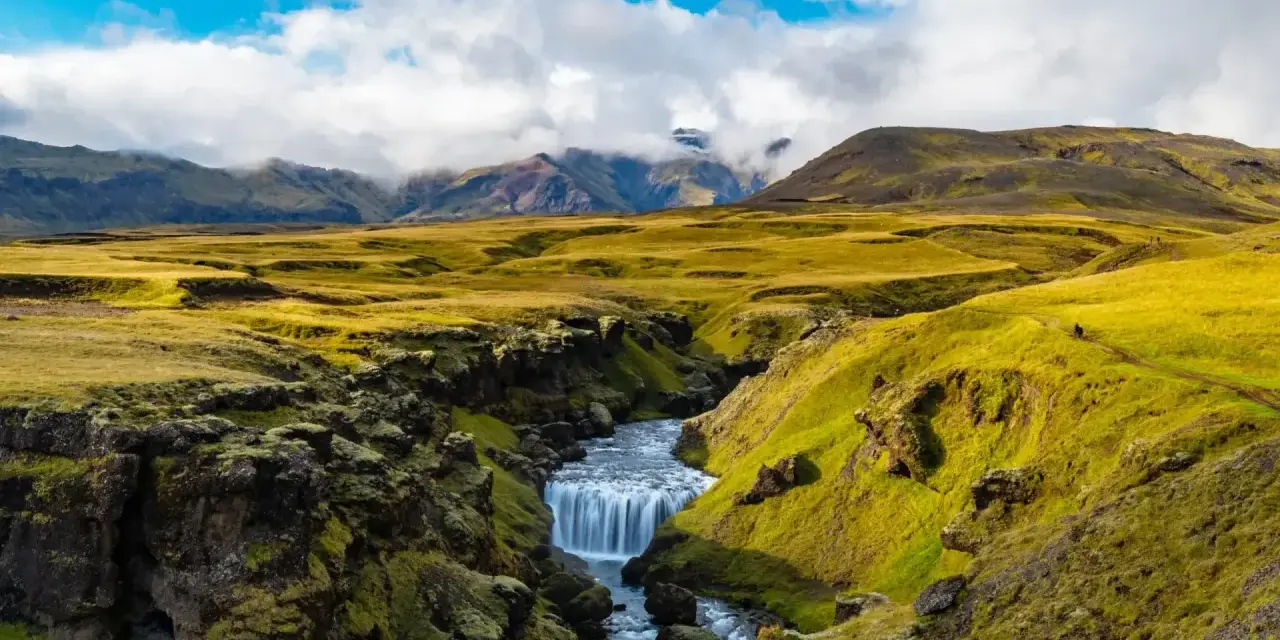
The Laugavegur trail in Iceland is one of the few long-distance hikes where the camping setup shapes the whole experience. The route moves through colourful rhyolite hills, lava fields, glacial valleys and sheltered forest, so each night stop feels earned rather than incidental. In this guide I focus on the details that actually help on the ground: where you can camp, how the hut system works, how to book transport, and what to carry so the trip stays enjoyable.
What matters most before you start
- The core trail is officially 54 km, although many descriptions round it to 55-56 km when route variants are included.
- Most hikers take 4 days; stronger walkers sometimes compress it to 3, but that leaves less room for weather delays.
- Camping is only realistic in designated areas by the huts, and bookings are expected before you start.
- Buses usually run from late June to early September, which is the practical hiking window for most campers.
- For summer 2026, private or hire cars arriving at Landmannalaugar between 9:00 and 16:00 need a parking reservation in advance.
- Pack for wind, rain, river crossings and unreliable phone signal rather than for an easy summer hill walk.

Why this route works so well as a camping trip
I like this trail because it rewards a proper campsite mindset. You are not just ticking off kilometres; you are moving through a landscape that changes every day, and the camp stops give the hike a rhythm that feels natural. If you enjoy outdoor trips where the journey matters more than the luxury level, this is one of Europe’s most satisfying highland experiences.
Landmannalaugar is a strong destination on its own. The area has a natural warm pool, a campsite and the kind of vivid volcanic scenery that makes people want to stay longer than planned. If you have time, I would treat the opening and closing points as part of the holiday rather than as simple logistics.
The scenery does a lot of the work: geothermal ground at the start, obsidian and lava, pale ash plains, glacial water, and then the softer, greener finish in Þórsmörk. That mix matters because camping here is not about convenience alone. It is about waking up close to the terrain you came to see, rather than rushing in and out of it.
Because the weather and terrain can shift quickly, I would not treat this as a casual family campground weekend. It is better suited to hikers who are comfortable carrying their own kit, accepting rougher facilities and adjusting plans when wind, rain or river levels say so. That practical realism is what makes the route enjoyable instead of frustrating. From there, the real question becomes where you actually sleep each night.
What the route looks like from camp to camp
The classic trail is officially 54 km, but some descriptions round it up because of route variations and the Fimmvörðuháls link. Most hikers take four days, and that structure works because the days are long enough to feel like real trekking without becoming a punishing grind. The important part is not only the distance; it is where those distances place you at the end of each day.
| Stage | Distance | What to expect | Camping note |
|---|---|---|---|
| Landmannalaugar to Hrafntinnusker | 12 km | Steep opening climb with around 470 m of ascent | A good first night if you want a shorter start, but it still feels exposed. |
| Hrafntinnusker to Álftavatn | 12 km | Wider, colder ground with a real sense of moving deeper into the Highlands | One of the most popular camp stops because the scenery changes quickly here. |
| Álftavatn to Emstrur | 17 km | The longest classic leg, with open terrain and several river crossings | This is the day where an overpacked rucksack starts to feel expensive. |
| Emstrur to Þórsmörk | 15 km | A greener, more sheltered finish as the landscape softens | The last camp feels like a reward, especially after the exposed middle section. |
If you prefer a different rhythm, the Hvanngil variation can redistribute the effort and make the classic crossing feel less aggressive. If you want a bigger finish, the Fimmvörðuháls extension turns the hike into a more demanding point-to-point crossing and should be treated as a separate commitment, not an afterthought. Whichever version you choose, the sleeping setup matters as much as the mileage.
How the hut and campsite system works
Camping is possible by all the huts, but it is a managed system, not a free-for-all. That distinction matters in Iceland, because this trail runs through a protected Highland landscape where designated sites exist to control impact and protect fragile vegetation. In practice, that means you book ahead, keep to the marked camping area and check in with the warden before pitching your tent.
At the campsites you can expect bathrooms and drinking water, and in some places there are sinks, tables and benches as well. What you should not assume is hut access: campers generally cannot use the kitchen or other indoor facilities. If you book a hut bed instead of a tent pitch, bring your own sleeping bag, because the huts are basic dorm-style accommodation rather than hotel rooms.
One small detail worth planning for: the ground at Landmannalaugar can be stubborn enough that tent pegs may not bite properly, so rocks are often used to secure shelters. If your tent needs perfect soil to stand up, I would rethink the setup before you get there.
| Option | Best for | Pros | Trade-offs |
|---|---|---|---|
| Hut bed | People who want the lightest pack and the most weather protection | No tent to carry, warmer nights, easier in bad weather | Sells out quickly, and you still need a sleeping bag and early booking |
| Tent camping | Hikers who want more flexibility and lower accommodation cost | Works well if huts are full and gives you more independence | Heavier pack, colder nights and less comfort in wind or rain |
In my view, tent camping makes sense when you are already used to alpine or wilderness trips and you pack accordingly. If this is your first serious Highland hike, a hut booking removes a lot of friction. Either way, the trail is built around planning, which leads straight to transport and timing.
Getting there without wasting energy on logistics
The Laugavegur is a point-to-point trek, so transport is part of the hike. Most people start at Landmannalaugar and finish in Þórsmörk, with buses handling the in-and-out journey during the hiking season. Several operators run services from late June to early September, which is the realistic window for most camping trips on this route.
If you want to drive, do not treat it like an ordinary Iceland road trip. You need a 4x4 that is permitted on F-roads, and in summer 2026 private or hire vehicles arriving at Landmannalaugar between 9:00 and 16:00 need a reserved parking space in advance. That sounds like a small detail until you try to improvise it on the day, so I would lock it in early.
- Decide whether you are doing the classic four-day route or adding Fimmvörðuháls.
- Book huts or campsites before you confirm transport.
- Reserve the bus to Landmannalaugar and the return from Þórsmörk, or arrange a 4x4 if you are self-driving.
- Build in a buffer day in Reykjavík, especially if you are flying in from the UK.
- Keep the finish flexible, because weather and river levels can change the pace more than any timetable does.
If you extend the trek to Skógar, the return changes again and you will need to plan your transport around a different exit point. That is still manageable, but it is another reminder that this is a route where the finish line is part of the planning, not just the reward. Once those bookings are pinned down, the only thing left is to pack for the conditions you will actually meet.
What I would pack for the Highland weather
The trail is not technically complicated, but it is unforgiving of poor kit. The biggest mistake I see hikers make is packing for a British summer hill walk rather than an exposed Icelandic crossing with wind, rain and cold mornings. If you keep your load disciplined and your layers dry, the route is much more manageable.
- Waterproof layers with a shell that can take prolonged wind-driven rain.
- Insulating mid-layers that still work when temperatures drop at camp.
- Sturdy waterproof boots plus lightweight river-crossing shoes or sandals.
- A 60-70 litre pack if camping; official guidance points hikers toward a 50-60 litre pack, but camping usually pushes you into a larger range.
- Sleeping bag and sleeping mat suited to cold nights, even in peak season.
- Map, compass or GPS, plus a power bank and headlamp.
- Food and snacks for the full day, because on-route buying options are limited and weather can slow you down.
Two small details matter more than most first-timers expect. First, there are at least three river crossings that require wading, and the water level can rise fast after rain. Second, phone signal is unreliable, so you should not rely on live navigation or constant contact with the outside world. That does not make the trail dangerous by default; it simply means you need to behave like a self-sufficient hiker, not a day visitor.
Once the kit is sorted, the last decision is how to sequence the trip so it stays calm rather than crowded.
The booking order that keeps this Highland trip calm
If I were planning this from scratch, I would make three decisions first: route length, sleeping style and transport. Everything else hangs off those choices. The reason is simple: on this trail, your weakest link is usually not fitness but friction, and friction comes from late bookings, unrealistic daily distances and too much gear.
- Book the most difficult nights first, especially Landmannalaugar and any stop you want as a hut rather than a tent.
- Choose shorter daily legs if you are carrying a full camping pack; the four-day structure is popular for a reason.
- Leave room for weather. A schedule that looks efficient on paper can become exhausting if wind or rain steals a few hours.
- Keep expectations honest if you are travelling with family. I would treat this as an adventure for experienced older teenagers and adults rather than a casual family camping break.
That is the version of the trail I would recommend to most readers: book early, keep the pack light and let the Highlands set the pace. If you do that, the Laugavegur becomes less of a checklist hike and more of the kind of camping journey people remember for years.
