
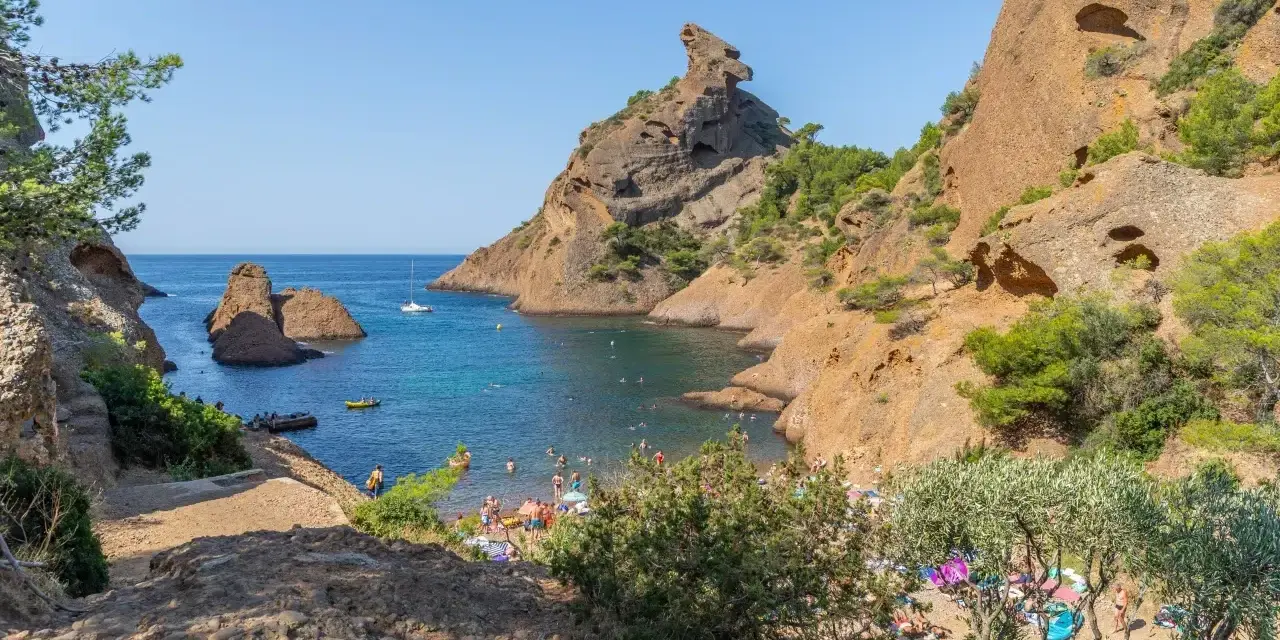
The Calanques region rewards a very specific kind of camping holiday: one based around nearby campsites, early starts, and careful timing rather than sleeping inside the massif itself. In this guide I focus on the rules, the best nearby bases, the activities that actually work well, and the practical details that save time, energy, and frustration.
What matters most before you book a stay here
- Overnight camping and bivouac are not allowed inside the park core, so plan to stay nearby instead.
- Access can close between 1 June and 30 September when fire risk is high, and decisions are updated daily.
- Marseille, Cassis, La Ciotat, and the wider Blue Coast are the most practical bases for a Calanques break.
- Hiking is the main activity; swimming is possible, but the best spots are often crowded and harder to reach than they look.
- The official My Calanques app is worth checking before every visit because conditions can change quickly.
Why the park itself is not a camping ground
According to the Calanques National Park, the main rule is simple: you cannot camp, bivouac, caravan, or light fires inside the core area. That matters because a lot of visitors assume the coves work like a wild coastal campsite, when in reality this is a protected landscape that is managed more like a day-visit destination.
| Activity | Inside the park core | What it means in practice |
|---|---|---|
| Overnight camping or bivouac | No | Sleep in a nearby town or campsite instead. |
| Fires and gas stoves | No | Plan cold meals or only cook where the rules clearly allow it. |
| Day hiking and regulated outdoor sports | Yes, when conditions allow | Check access status, trail conditions, and fire alerts first. |
The penalties are not symbolic either: the park states fines of €135 for fire use and €68 for bivouacking per person. I also make a point of checking the official My Calanques app the evening before a trip, because summer access can change quickly and the English-language app is genuinely useful for visitors. Once you accept that the park is for day use, the rest of the planning becomes much easier, which is why the next decision is choosing the right base.

Where to base yourself for a Calanques trip
If I were planning a stay from the UK, I would think in terms of base towns, not an actual campsite inside the park. Marseille Tourism's campsite list is a useful starting point, but the real decision is whether you want city access, harbour atmosphere, or a quieter coastal base.
| Base | Best for | Why I would pick it | Watch-outs |
|---|---|---|---|
| Marseille | First-time visitors and mixed city-nature trips | Best transport links and the easiest option when you want beaches, culture, and hiking in one stay | Traffic and parking are the least forgiving |
| Cassis | Classic Calanques scenery | Strong harbour feel and a natural fit if you want the iconic coves as your main focus | Very busy in peak season, so book early |
| La Ciotat | A calmer seaside break | A good balance if you want a beach holiday with hiking nearby | Some of the best-known spots still need an early start |
| Blue Coast and Martigues side | Longer, quieter road trips | Useful if you want a broader Provence loop and a less crowded base | Not as direct for the most photographed coves |
For most readers, the choice comes down to this: Cassis for atmosphere, Marseille for logistics, La Ciotat for balance. If you are travelling with children or a lot of gear, I would lean toward the easiest base rather than the most dramatic one. That decision frees up energy for the part that actually matters, which is the time you spend outside.
What you can realistically do once you are there
The Calanques are not just a scenic backdrop; they are an active landscape. In practice, I treat them as a place where one solid walking day and one sea-level activity are enough for most people, especially if you want the trip to feel relaxed rather than rushed.
- Hiking is the main draw. The park says this is the primary activity, and that matches the experience on the ground: the views, geology, and coves make the most sense on foot.
- Swimming is beautiful but less convenient than the photos suggest. Many access points are difficult, crowded, and short on facilities.
- Boat tours work well when you want a lower-effort overview of the coastline. I prefer sail, electric, or hybrid options when they are available.
- Kayak and paddleboard suit confident visitors who are comfortable reading sea conditions and planning around wind.
- Climbing, diving, biking, and mountain biking are all worthwhile, but they make most sense once you already understand the park rules and your own limits.
If swimming is your top priority, I would not build the whole holiday around the most famous coves. The park itself is honest about this: the main swimming spots are hard to reach and often crowded, while the urban beaches in Marseille, Cassis, and La Ciotat are much easier. That is the kind of practical distinction that saves a family day from turning into a slog.
How I plan a safe day in the park
This is the part that makes the biggest difference. The Calanques can feel straightforward online and surprisingly demanding once you are there, so I plan them like a mountain day, not a lazy beach walk.
- Check the access status the evening before. Between 1 June and 30 September, closures can be announced daily because of fire risk.
- Use the official app or map. I like having live trail and access information, especially if I am choosing between hiking, a boat trip, or a cliffside route.
- Match the route to your fitness. The elevation gain is what catches people out, not the map distance.
- Carry at least 1.5 litres of water per person per half-day. Add food, a hat, sunglasses, and proper sun protection. I never assume I will find water or shade when I need it.
- Wear real walking shoes. The limestone terrain is unforgiving when people try to manage it in casual trainers or sandals.
- Keep dogs on a leash and pack out everything you bring in. There are no fountains, springs, toilets, or waste bins where you would most want them.
I also avoid trying to fit too many famous places into one day. If you are with children, one major walk plus one easier sea-level stop is usually the sweet spot. That approach gives you enough structure to feel organised without draining the fun out of the day.
A first-trip rhythm that keeps the holiday enjoyable
For a short break, I would keep the rhythm simple: arrive, settle into your campsite or nearby base, and save the main Calanques hike for the next morning. Three nights is the sweet spot for most travellers because it gives you one serious walking day, one lighter sea or boat day, and one slower slot for a harbour dinner or recovery time.
- Choose the most convenient base if you are travelling with children or a lot of camping gear.
- Start early, finish early, and treat water and shade as non-negotiable.
- Keep one backup plan in reserve, because fire-risk closures can change the day very quickly.
That is the version of the Calanques holiday I would choose myself: less chasing, more time on the ground, and enough flexibility to enjoy the landscape instead of fighting it.
