
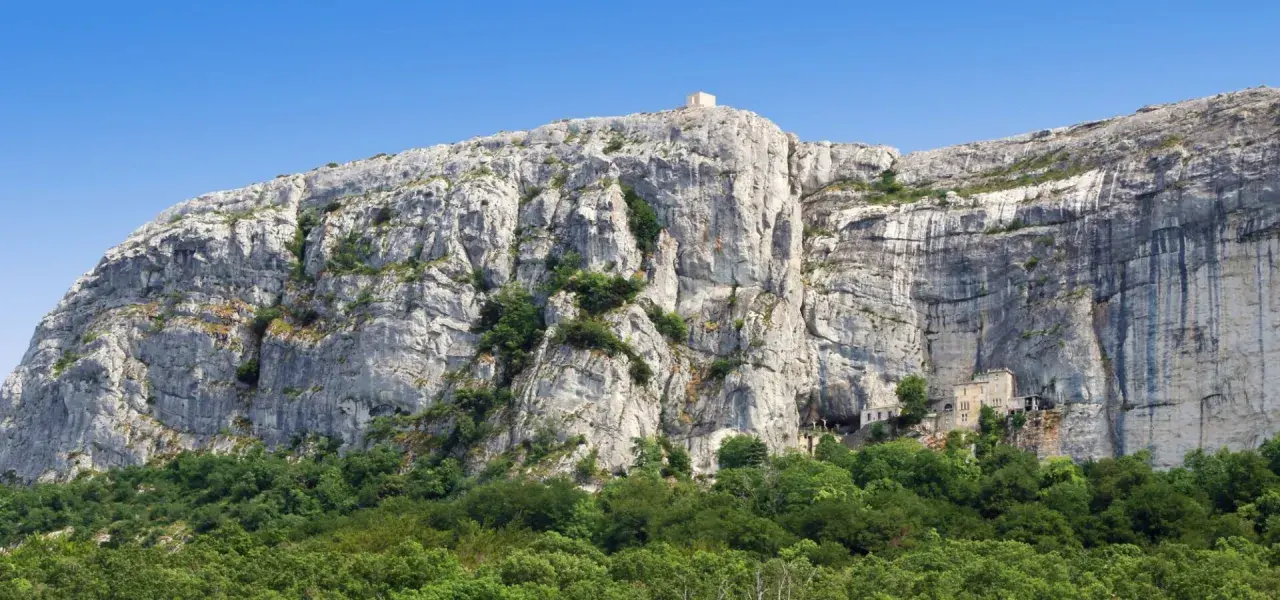
The Sainte-Baume massif is one of those places that works best as a camping base rather than a quick stop. You get shaded forest walks, limestone ridges, a famous grotto, and Provençal villages close enough for an easy supply run, but you also need to understand the fire rules and the protected nature of the landscape. This guide focuses on where to stay, what to do once you are there, and how to plan a trip that feels relaxed instead of improvised.
What matters most before planning a campsite near Sainte-Baume
- The massif sits in southern France and combines mountain scenery with Provençal access, which makes it a strong camping destination.
- For overnight stays, a proper campsite outside the protected forest is the practical choice; wild camping is not the norm here.
- Spring and autumn are the most comfortable hiking seasons, while summer works best with early starts and daily fire-risk checks.
- Plan d’Aups Sainte-Baume, Nans-les-Pins, and Saint-Maximin-la-Sainte-Baume are the most useful bases, depending on how close you want to be to trails or services.
- The grotto, old forest, ridge routes, and Huveaune sources are the core experiences that make a stay here feel worthwhile.
Why this mountain range works so well for campers
What I like most about this part of Provence is the contrast. The Sainte-Baume massif rises to about 1,147 metres, stretches across roughly 81,000 hectares, and sits between the Var and Bouches-du-Rhône, so you get a real mountain feel without losing touch with the everyday comforts that make camping easier. In one day, you can move from cool woodland paths to open ridge viewpoints and then back to a village for dinner, which is a stronger mix than many coastal campsites offer.
For British travellers, that balance matters. It is a destination that suits a road-trip holiday, but it also works if you want a base for walking, family time, and a slower pace rather than a packed itinerary. The trade-off is simple: this is a protected natural area, so you gain atmosphere and space, but you have to accept more rules than you would at a typical holiday park. That is why choosing the right base is the next decision that really affects the trip.

Where I would stay for the easiest access
If I were picking a camping base here, I would choose according to the type of holiday, not just the map. Some places put you closer to forest trails, others make food shopping and evening meals easier, and the best option depends on whether you are travelling as a couple, a family, or a group of walkers. The table below is the simplest way to compare the main bases around the massif.
| Base area | Best for | Why it works | Trade-off |
|---|---|---|---|
| Plan d’Aups Sainte-Baume | Walkers and quiet stays | Closest practical base for the old forest and the grotto area, with a very nature-first feel | Fewer services, so you need to plan food and supplies more carefully |
| Nans-les-Pins | Camping stays with easy trail access | Useful for starting hikes without a long transfer, and often the most sensible option if you want to stay near the massif rather than inside it | Less dramatic than staying higher up, so it feels more like a gateway town |
| Saint-Maximin-la-Sainte-Baume | Families and longer stays | Better for supermarkets, bakeries, restaurants, and general logistics when you want comfort between hikes | You are a little farther from the quietest trailheads |
| Gémenos or Auriol | Mixed trips and short breaks | Good if you want to combine mountain walks with easier access from the Marseille side | Less immediate if your priority is the higher forested part of the massif |
My rule of thumb is straightforward: stay higher up if walking is the point of the trip, and stay lower down if you want a more comfortable base with better everyday facilities. That choice becomes even more important once you start planning which hikes and visits actually deserve your time.
What to do once the tent is up
You do not need a complicated programme here. The area is strong because it offers a few genuinely good outings rather than dozens of mediocre ones, and that makes planning much easier. I would build a camping break around one short sacred-site walk, one proper forest or ridge hike, and one slower scenic day, especially if children are coming along.
| Activity | What it feels like | Best for | What to watch |
|---|---|---|---|
| The grotto and the old forest | A short but memorable climb through shaded woodland to a place that feels both natural and spiritual | First-time visitors, families, and anyone who wants a half-day outing | The site is respected as a place of worship, so dress and behave accordingly |
| Chemin des Roys and the higher ridges | A more serious walk with classic summit-style views and a stronger sense of wilderness | Experienced walkers who want a rewarding hike rather than an easy stroll | Heat, loose footing, and exposure make early starts much wiser |
| Sources of the Huveaune | A scenic forest walk to one of the most talked-about natural spots in the park | Families, photographers, and walkers who like a destination with water and shade | In dry periods the water can be very low, so do not expect a dramatic flow every month |
| Col de l’Espigoulier | A good scenic drive with big views and easy access to the massif from the Gémenos side | Mixed groups and travellers who want the scenery without a long hike | It is a viewpoint option, not a substitute for a proper walking day |
If you are camping with children, I would keep the main walk short and let the landscape do the work. A shaded forest trail, a picnic stop, and one viewpoint are usually enough to create a real memory. If you are here for hiking, on the other hand, the ridges earn an early alarm and a day packed with water, sun protection, and enough margin to get back before the heat peaks. That brings us to the part many visitors underestimate: the rules.
Camping rules that matter more here than elsewhere
The biggest mistake I see people make in protected mountain areas is treating them like ordinary countryside. Sainte-Baume is not the place for casual improvisation, and that is especially true in summer. The practical rule is simple: use a real campsite unless you have checked that a specific overnight option is authorised, because wild camping is not the default here.
- Do not assume wild camping is allowed. In the protected forest areas, camping sauvage is generally prohibited.
- Bivouac is not the same as camping. It may be tolerated only under strict conditions, usually with the landowner’s agreement, and only for a single night around dusk to dawn.
- Fire-risk rules can change access. From early summer into early autumn, forest access may be restricted or closed on risky days.
- No fires and no careless smoking. This is not a suggestion here; it is a basic safety requirement.
- Stay respectful at the grotto and on religious paths. It is both a natural site and a place of worship.
In practice, that means I would never arrive with a spontaneous “we’ll just find a spot” plan. I would choose a campsite outside the most sensitive areas, check the daily fire-risk situation before heading into the forest, and keep an alternative low-altitude plan ready in case access changes. Once that habit is in place, the region becomes much easier to enjoy.
A three-day stay that balances walking, shade and downtime
Three days is enough to understand why this area works for camping, provided you resist the urge to cram in too much. I would structure it like this:
- Day 1 - Arrive at your campsite, stock up in a nearby town, and do a short afternoon walk so you can settle into the climate without tiring everyone out. Keep the first evening simple: a local meal, an early night, and a quick check of the next day’s route.
- Day 2 - Start early for the grotto and the surrounding forest. This is the day to give the massif your full attention, because the shaded climb and the atmosphere around the site explain the character of the place better than any brochure could.
- Day 3 - Choose a longer hike, the Huveaune sources, or a scenic pass if your group prefers lighter walking. If the weather is hot, shorten the route and keep the afternoon for swimming, village time, or a quiet campsite afternoon.
That simple rhythm works because it gives the holiday contrast. You are not trying to “conquer” the mountain range; you are using it as a landscape to stay in, move through, and come back from. If you have a week instead of a weekend, I would simply repeat that pattern with one extra rest day in the middle.
The details that turn a decent Provence stop into a better one
If I had to narrow the advice down to a few things that genuinely improve a stay here, I would start with timing and packing. Spring and autumn are the sweet spot, with cooler hiking temperatures and more comfortable evenings, while summer is best handled with early starts, strong sun protection, and a campsite that offers real shade. I would also pack for two climates at once: warm sun on the ridges and noticeably cooler air under the trees.
For a family trip, I would keep the daily walking distance modest and prioritise one clear highlight over a long list of stops. For an adult walking holiday, I would book accommodation early, especially if I wanted a quiet pitch or a site with good access to the forest. And for anyone travelling from the UK, the biggest practical win is to think of Sainte-Baume as a destination where preparation pays off quickly: once you know where you can stay, when you can enter the forest, and which walks suit your energy level, the whole trip becomes calmer and more rewarding.
