
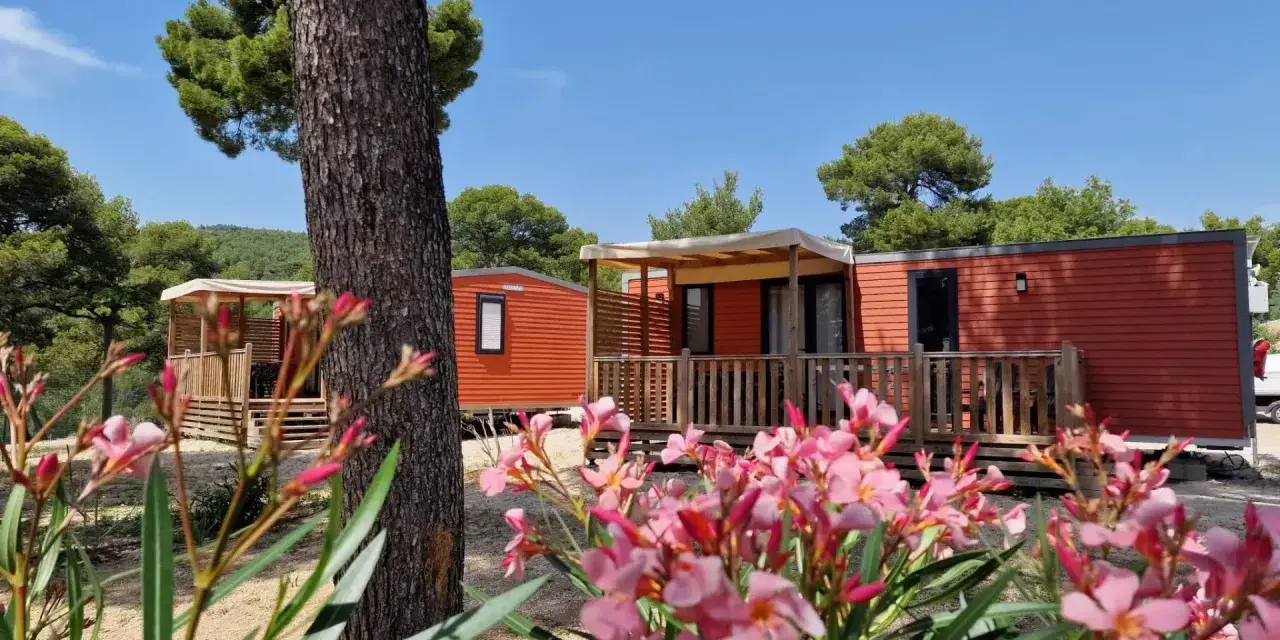
I like Cassis as a base for a mobile-home holiday because it gives you a rare mix of sea views, easy self-catering, and enough room to travel with children without turning the trip into a hotel routine. The real decision is not whether the area is beautiful, because it is, but whether you want to be close to the port or a little outside town with more space and easier parking. This guide covers what to expect, what to compare, and how to decide whether a quieter site or a more central stay fits your trip.
The essentials before you book
- Most mobile-home stays near Cassis work best as self-catered, family-friendly bases rather than pure beach lodging.
- Space, air conditioning, and parking matter more than a pretty headline photo.
- One nearby campsite lists units for 2 to 6 people, with 1 to 3 bedrooms and terraces.
- In summer, fixed arrival days and 7-night minimums are common.
- The easiest way into Cassis centre is usually the Gorguettes park-and-ride and shuttle.
- For the calanques, plan for walking, boats, or public transport rather than casual car access.
Why a mobile home is a smart base for Cassis
A mobile home solves the two biggest Cassis problems at once: space and logistics. You get a kitchen, a place to dry beach gear, and enough separation between sleeping and living areas that a family can actually relax after a day in the sun. That matters because Cassis itself is compact and beautiful, but peak-season traffic and parking can make a simple town stay feel more complicated than it should.
According to Cassis Tourisme, the commune has only one campsite inside Cassis itself, which is why many of the strongest mobile-home options sit just outside the centre. I see that as a feature, not a flaw, for most visitors. If you are arriving by car from elsewhere in France or flying in from the UK and renting one, a short drive often buys you better space, calmer evenings, and a more realistic price.
The basic trade-off is simple: central Cassis gives you atmosphere, while a nearby campsite gives you comfort and flexibility. Once that is clear, the next question is what the accommodation actually includes.

What the accommodation usually includes
In this part of Provence, a good mobile-home rental is less about luxury branding and more about practical comfort. One nearby campsite lists homes for 2 to 6 people, with 1 to 3 bedrooms, a fitted kitchen, a bathroom, a separate toilet in many layouts, a semi-covered terrace, and reversible air conditioning, which means it can cool the cabin in summer and take the edge off cooler evenings. Premium versions often add more floor space, sometimes up to around 40 m², plus extras such as a dishwasher.
| Feature | What to look for | Why it matters |
|---|---|---|
| Bedrooms | 1 for couples, 2 for small families, 3 for larger groups | Sleep quality usually matters more than squeezing everyone into one larger room |
| Terrace | Semi-covered if possible | It turns breakfast, lunch, and evening drinks into usable outdoor time even on hotter days |
| Air conditioning | Reversible AC | In summer, this is one of the few upgrades that really changes the feel of the stay |
| Kitchen | Hob, fridge, microwave, coffee maker, crockery | It keeps the budget under control and makes short stays easier with children |
| Parking | Space beside or close to the unit | It saves you from dragging bags and beach gear across a large site |
The small print matters too. Bedding, towels, Wi-Fi, baby kits, and even pet supplements are often separate charges, so I always check the final total rather than the headline rate. That brings us to the bigger decision: how much space you actually need.
How to choose the right size and layout
I would not pay for more floor space than a trip needs, but I would pay for the right layout without hesitation. If you are a couple, a one-bedroom unit is usually enough because your real living space is the terrace and the coast. If you are a family of four, two bedrooms is the sweet spot because it reduces bedtime friction, and that is worth more than an extra decorative feature.
| Traveller type | Best layout | What I would prioritise |
|---|---|---|
| Couple | 1 bedroom, about 20 to 24 m² | Quiet setting, AC, terrace, and easy check-in |
| Family of 3 to 4 | 2 bedrooms, roughly 24 to 34 m² | Sleeping separation, storage, and a kitchen that can handle breakfast and quick dinners |
| Family of 5 to 6 | 3 bedrooms, up to around 40 m² | Enough space for bags, wet gear, and a bit of privacy |
| Mixed-age group | 2 to 3 bedrooms with a larger terrace | Seating outside, easy access, and a layout that does not force everyone into the same routine |
My rule is blunt: choose air conditioning before you choose decorative extras. In July and August, that decision usually matters more than a slightly larger lounge. If mobility matters, ask specifically for a PRM unit; some campsites do offer adapted two-bedroom homes. Once the unit is right, the next big choice is where you want to base yourself around Cassis.
Where to stay if you want beaches, the village, or the calanques
If your ideal day ends with a walk through the port and dinner in the village, stay as close to Cassis as you can. If your ideal day starts with easy parking, a quieter pitch, and a little more breathing room, choose a campsite just outside town. For many travellers, that second option is actually the better one, because it removes the stress that can creep into a compact coastal resort.
The physical geography also matters. The only calanque inside the commune is Port-Miou, and from there the protected path network opens toward Port-Pin and En-Vau. That makes a nearby mobile-home base especially useful if you plan to combine beach time with walking, because you can leave early, return for lunch, and head back out without packing the car again.
- Choose village-side accommodation if evening strolls and restaurant access matter most.
- Choose a site just outside town if you want better parking and a calmer base.
- Choose a shuttle-connected campsite if you expect to use the car sparingly once you arrive.
- Choose a unit near the coast if your trip will revolve around the sea rather than shopping or nightlife.
That choice on location is what separates a smooth stay from a frustrating one, which is why parking and access deserve their own section.
Parking, shuttles and the rules that shape a smooth stay
Cassis has a habit of looking effortless until you arrive in summer. Cassis Tourisme says the Gorguettes park-and-ride, about a 30-minute walk from the centre, is the easiest way to avoid the worst of the congestion, with free parking and a shuttle into town; the return fare is €1.70 in season. The same advice applies to the calanques: car access can be limited depending on the season, visitor pressure, and local rules, so I would treat the shuttle and footpaths as part of the holiday, not as backup plans.
That also changes how I think about booking. Some nearby sites use fixed summer arrival days, often Wednesday, Saturday, and Sunday, with a 7-night minimum, while low season can be as short as 2 nights. A few practical extras are worth checking before you pay:
- Whether sheets and towels are included or charged separately.
- Whether the deposit is about €200 and how it is returned.
- Whether Wi-Fi is free or paid, and if paid, what the daily or weekly rate is.
- Whether pets are accepted, and if there is a nightly supplement.
- Whether a second car can be parked on site.
On one nearby site, the add-ons are not symbolic: sheets are €15 for a double bed, €12 for a single bed, towels are €10, a baby kit is €5 a night, Wi-Fi is €4 a day or €20 a week, and a small dog costs €4 a night. A €200 deposit is also common, so I always check the full total before I commit. Once the logistics are clear, it becomes much easier to picture the stay itself, which is where the best parts of Cassis really come into focus.
How I would spend three or seven days from a mobile-home base
If I had only three days, I would keep the plan tight: one day for the village and port, one early start for the calanques, and one sea-focused day. That gives you enough variety without spending half the trip in transit. Cassis works particularly well for this because the coast, the paths, and the boat trips all sit close together.
| Time available | Best plan from a mobile-home base |
|---|---|
| 3 days | Port and village stroll on day one, Port-Miou and a calanque walk on day two, boat trip or snorkelling on day three |
| 7 days | Add a slower beach day, a Route des Crêtes or Cap Canaille outing, one market morning, and one lazy pool day at the campsite |
For active travellers, the sea gives you more than just swimming. The official tourism office highlights boat trips, kayaking, paddleboarding, snorkelling, and even electric boats without a licence, which is useful if you want a calmer day between hikes. My only firm advice is to respect the protected setting: stay on marked paths in the Calanques, carry water, and do not assume there will be services on the trail.
That balance between movement and rest is what makes Cassis work so well for a family-friendly camping break.
The four checks I would not skip before booking
- Air conditioning and terrace should be non-negotiable in summer, because they shape how much time you actually enjoy at the unit.
- Final price extras and deposit matter more than they first appear, especially for sheets, towels, Wi-Fi, and baby equipment.
- Access and parking matter if you are travelling with a car, surfboards, or children who need quick unloading.
- Stay rules matter if you are travelling in peak season, because minimum nights and arrival days can narrow your options fast.
If I were booking for a family from the UK, I would choose a slightly quieter base outside the centre, make sure the unit has proper air conditioning, and use Cassis itself for the atmosphere rather than for daily parking battles. That is the combination that usually delivers the best version of a mobile-home holiday here: practical, comfortable, and close enough to the sea that the logistics never dominate the trip.
