
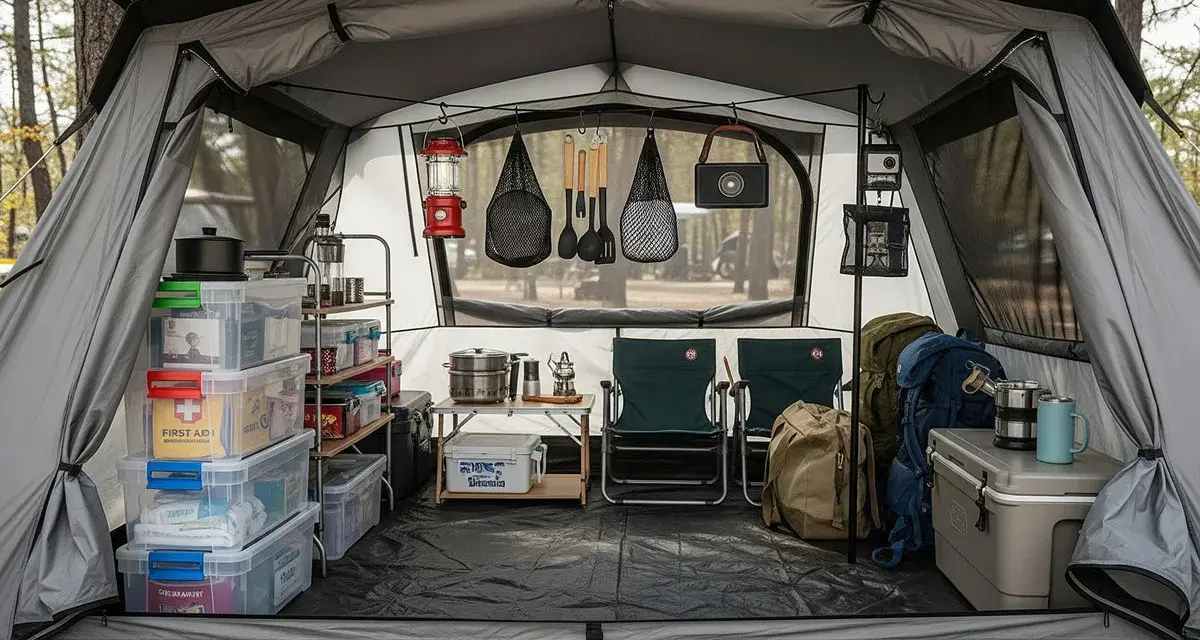
Good camping storage is less about buying more boxes and more about building a setup that keeps gear dry, findable, and quick to load when the weather turns. For family trips, the difference shows up fast: fewer duplicate items, less rummaging at the tent door, and less chance of muddy kit invading clean sleeping space. I focus on simple systems that work in British weather, fit smaller car boots, and stay useful after a long weekend, not just on the first tidy unpack.
The fastest way to keep camp kit under control
- Split gear into categories first, then choose containers that fit each category.
- Use hard boxes for food and hardware, soft bags for clothes, and dry bags for anything that must stay waterproof.
- Keep wet shoes, muddy layers, and cooking gear in separate zones from sleeping kit.
- A 45-60L box is a useful middle ground for most family trips; smaller 15-30L containers work best for toiletries and repair items.
- Dry and relabel everything before you pack it away at home, or the next trip starts with missing kit and damp smells.
What organised gear changes on a campsite
The real value of a tidy setup is not cosmetic. It saves time, reduces stress, and stops small problems from spreading. If the torch is always in the same place, if pegs do not vanish into a clothing bag, and if wet boots never share space with sleeping bags, the whole trip feels calmer.
I also think storage matters more in the UK and northern Europe than many people expect. Weather changes quickly, pitches can be tight, and a campsite can go from dry to muddy in a single afternoon. When gear has a clear home, you spend less time protecting it and more time using it.
That is the main job here: make the campsite easier to run. Once that is clear, the next question is how to divide the kit so the same mess does not repeat every time you pack.
Build a packing system that scales with family trips
I prefer to pack by function rather than by day. The minute you pack “Monday clothes” or “Friday snacks,” you end up opening every bag to find one item. Functional packing is more durable because it works for a weekend break, a two-week tour, or a stopover on the way to France.
A simple family system usually has four layers:
- Personal kits for each person’s clothes, sleepwear, toiletries, and a small comfort item like a book or head torch.
- Shared kitchen kit for stove gear, utensils, washing-up items, food storage, and tableware.
- Weather kit for waterproofs, extra layers, hats, gloves, and spare socks.
- Repair and safety kit for tape, cord, batteries, first aid, tent pegs, and a multitool.
For children, I like one small bag or pouch each. It gives them a place for a torch, a water bottle, and a toy or book, which means fewer interruptions when they need something at night. For adults, a labelled personal pouch prevents the classic problem of toiletries spilling across the boot.
One practical rule helps a lot: keep the most-used things closest to the top, and the least-used things at the bottom. Once that pattern is in place, the container choice becomes much easier.

Choose containers that suit the job
Not every container needs to do everything. The best setup is usually a mix of rigid boxes, soft bags, and one or two purpose-built organisers. If you buy the wrong type, you either waste space or end up rebuilding the system every trip.
| Storage type | Best for | Strengths | Trade-offs | Typical UK price range |
|---|---|---|---|---|
| Lidded plastic box | Kitchen gear, pegs, games, spare toiletries, small tools | Stackable, cheap, easy to label, good for car boots | Bulky when empty, not fully waterproof if the lid is loose | £8-£20 |
| Collapsible crate | Boot loading, food top-ups, campsite carry-ins | Folds flat, lighter than a hard trunk, quick to store at home | Less protective, can wobble if overloaded | £15-£35 |
| Folding camping cupboard | Awnings, family kitchens, clothes storage inside larger tents | Keeps kit off damp ground, easy access, feels more organised | Slower to set up, needs space, costs more than a basic box | £40-£100 |
| Dry bag | Spare clothes, electronics, towels, anything that must stay dry | Water-resistant, compact, useful in wet weather | Awkward for rigid items, can trap damp if you pack wet kit inside | £10-£40 |
| Hanging organiser | Tent wall space, children’s bits, toiletries, day-to-day small items | Uses vertical space, keeps small things visible, easy to access | Needs a decent hanging point and a tent that can support it | £10-£35 |
| Heavy-duty trunk | Van trips, long holidays, bulky communal kit | Rugged, stackable, good for transport and home storage | Heavier, can be overkill for short weekends | £25-£70 |
If I were starting from scratch, I would buy two medium lidded boxes, one soft organiser for clothes, and one dry bag for anything that must not get wet. That combination covers far more situations than one oversized container ever will. It also keeps the system flexible, which matters when the trip changes from campsite to campervan to cabin.
Labels help more than most people expect. I put them on the short side of a box as well as the lid, because stacked containers are easier to identify that way. Once the containers are sorted, the next win comes from placing them in the right physical zone at camp.
Set up the tent, awning, and boot as separate zones
The cleanest campsites I have seen usually follow the same pattern: sleeping space stays calm, wet or muddy items stay out of the way, and the car boot acts as the reserve warehouse. In practice, that means giving each zone one job and resisting the temptation to let everything spill everywhere.
I think of it like this:
- Inside the sleeping area belongs only to dry, light, low-traffic items: a torch, glasses, a book, charger cables, spare socks, and water.
- The porch or vestibule is the covered entrance area at the tent door. It suits shoes, wet coats, a boot tray, and anything likely to carry dirt.
- The awning or kitchen corner is for cooking gear, food crates, and a folding cupboard if you have one.
- The car boot holds backstock: spare bedding, refill food, bulk water, recovery kit, and anything you do not need every hour.
This is where a tent cupboard or small hanging organiser earns its keep. It does not need to hold everything; it just needs to stop the most annoying items from drifting into the sleeping space. A vestibule is especially useful for shoes and rain layers because it protects the inner tent from the worst of the mess without stealing precious sleeping room.
When the layout is clear, the trip feels easier to live in. The next issue is what to do with the messier categories that can damage clean gear if they are left together.
Keep food, wet kit, and dirty items apart
This is the section I would not skip. Food spills, damp clothes, and sandy shoes are the fastest way to ruin a neat setup. Food, wet kit, and dirty items should never share the same container. They behave differently, smell differently, and fail differently.
For food, I prefer a sealed crate and a separate cool box for perishables. If the trip is longer than a day or two, it helps to split drinks from meal ingredients so the main box does not get opened every time someone wants a bottle. Frozen water bottles are useful because they act like ice blocks first and drinking water later. That saves space and reduces meltwater mess.
For wet kit, breathable storage is better than airtight storage. A mesh laundry bag, vented crate, or open basket gives damp items a chance to dry instead of trapping moisture. That matters in British weather, where a “slightly damp” jacket can become a mould problem by the end of the week.
For dirty kit, I use a separate laundry bag and, if the trip is family-sized, a second bag for shoes. Mud, grass, and sand are not just untidy; they are abrasive. Once they get into clean clothing or bedding, they spread quickly and make the next unpacking session more annoying than it should be.
Safety matters too. Fuel, cleaning products, and food should not sit together in the same crate, even if they are technically sealed. The practical next step is to make sure the whole system still works once the holiday is over and everything goes back into storage.
Store it properly between trips
The off-season is where a lot of camping gear gets quietly damaged. If you pack a tent damp, store boxes in a humid garage, or shove everything into one cupboard without checking it, the next trip starts with problems you could have avoided. I treat post-trip storage as part of the trip, not as a separate chore.
My basic routine looks like this:
- Dry the tent, awning, and any wet fabric until they are completely moisture-free.
- Brush off mud and grit before it has time to harden.
- Leave sleeping bags, mats, and clothing loose or lightly stored rather than compressed for months.
- Keep boxes in a cool, dry, dark place, ideally off a damp floor.
- Check pegs, batteries, lighters, soap, fuel, and first-aid items before they are put away.
I am strict about drying. If a tent still feels cool and damp at the seams, I leave it out longer. Moisture is the fastest way to create mildew and smells that are difficult to remove later. The same rule applies to soft organisers and laundry bags: if they were used for damp kit, they should not go back into a closed cupboard until they are fully dry.
It also helps to keep one “ready box” separate from the rest. That box can hold the items you always need first on arrival: pegs, mallet, torch, tape, matches, bin bags, spare batteries, and a small first-aid pouch. Once that is set up, the final layer is the small habits that save the most time on the next departure.
The habits that make the next departure easier
The most efficient setups are rarely the fanciest. They are the ones that can be reset quickly after a trip and loaded just as fast the next time. I like to keep a simple photo of the boot layout once everything is packed well; it is a useful reference when the family is standing in the driveway and asking where the kettle went.
- Put items back in the same box every time instead of creating a new “temporary” pile.
- Keep one repeat-use pouch for pegs, tape, lighters, batteries, and small tools.
- Restock consumables as soon as you unpack, not the night before the next trip.
- Use clear labels or coloured tags so children and guests can find their own things.
- Do a two-minute exit check before the car is closed: food, fuel, keys, chargers, and torches.
That is why I see storage as a system, not a shopping list. The right boxes help, but the real gain comes from repetition: the same place for the same item, the same routine after every trip, and the same willingness to keep wet, dirty, and clean gear apart. When that happens, camping feels less like controlled chaos and more like a setup you can trust.
