
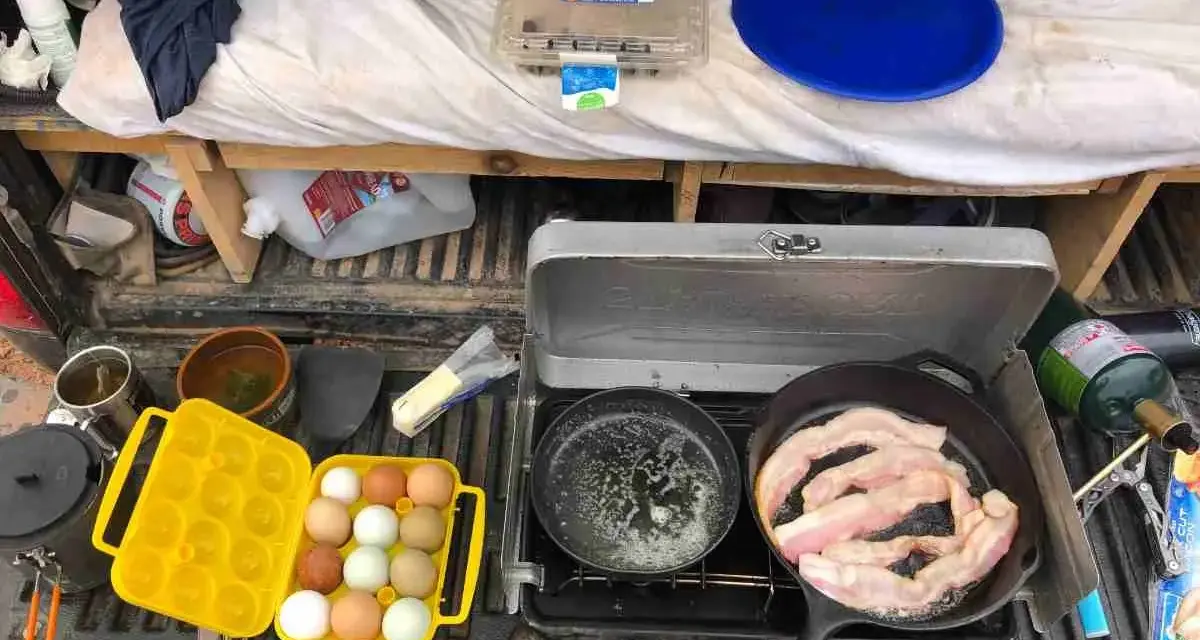
A good camp kitchen is less about owning every gadget and more about packing the right pieces in the right order. This guide breaks down a practical camp kitchen checklist for UK trips, from cooking and washing-up gear to storage, food safety, and the small extras that stop a simple meal turning into a faff. I’m keeping it focused on what actually works at a campsite: compact, weather-aware, family-friendly kit you can use again and again.
The essentials that make campsite cooking work
- Start with the cooking core: stove, fuel, ignition, and one reliable pan or pot.
- Add the cleaning basics: washing-up bowl, soap, sponge, tea towel, and rubbish bags.
- Keep food cold and dry: use a cool box, ice packs, food tubs, and a waterproof storage box.
- Pack for the weather: in the UK, wind protection, a torch, and dry storage matter more than people expect.
- Choose gear that nests: fewer loose items means faster setup, less clutter, and less chance of forgetting something.
- Build around your menu: the best kit is the one that matches the meals you actually cook, not the one with the most parts.
What a campsite kitchen has to do
When I plan camp cooking, I think about four jobs: making heat, preparing food, serving food, and cleaning everything afterwards. If one of those jobs is awkward, the whole campsite routine feels harder than it should. That is why a good setup is not just about pans and plates; it is about flow, storage, and keeping the mess under control.
For a family trip or a relaxed weekend in the countryside, I want a kitchen that can handle breakfast, a simple lunch, and one proper evening meal without constant rummaging. That usually means a small but complete system rather than a random pile of kitchen bits. Once you understand that, the rest of the packing list becomes much easier to trim down.
The gear I would pack first
The fastest way to build a reliable kit is to start with the items you will use every day. I group them by task, because that makes it obvious what is essential and what is only there for comfort.

| Category | What to pack | Why it matters |
|---|---|---|
| Cooking | Camp stove, fuel, lighter or waterproof matches, and a wind shield if your stove supports one | Heat is the foundation of everything else. In the UK, wind can waste fuel fast, so ignition and shelter matter more than people expect. |
| Cookware | One medium pot, one frying pan or skillet, kettle, pot lid, and heatproof handle or gloves | These cover most meals without filling the car with extra metal. A lid saves fuel and shortens cooking time. |
| Prep | Chopping board, sharp knife, vegetable peeler, tin opener, measuring spoon set, and a mixing bowl | Prep gear keeps food handling safe and speeds up cooking. A proper knife beats struggling with blunt home cutlery. |
| Eating | Plates, bowls, mugs, cutlery, serving spoon, tongs, and a bottle opener if needed | It sounds basic, but the campsite always feels more organised when everyone has one complete set. |
| Food storage | Cool box, ice packs, sealed tubs, zip bags, and a dry food crate | Separate chilled food from dry stores so breakfast oats do not end up beside raw meat or a leaking sauce pot. |
| Water and cleaning | Water carrier, washing-up bowl, biodegradable soap, sponge, tea towel, cloth, and bin bags | This is the part many people underpack. If you cannot clean up properly, the kitchen stops being usable very quickly. |
| Lighting and safety | Headtorch, spare batteries, first-aid basics, and a small fire blanket if you cook near a tent or awning | Camp cooking often stretches into the evening, and good light makes the whole setup safer and calmer. |
If I had to cut this down even further, I would still keep the stove, fuel, lighter, one pot, one pan, a knife, a board, a cool box, and a washing-up kit. That is the minimum that still feels like a real kitchen rather than survival cooking.
How I scale the kit for different trips
Not every camping trip needs the same level of equipment. A two-night break for two adults is one thing; a week with children, wet weather, and more elaborate meals is something else entirely. I like to scale the kit to the menu, the length of the trip, and how much space I actually have in the car.
| Trip type | What I add | What I leave behind |
|---|---|---|
| Short weekend | One pan, one pot, simple spices, a small cool box, and prepped ingredients | Extra cookware, specialty tools, and anything I would only use once |
| Family camping | More mugs and bowls, a larger prep board, serving dishes, labelled tubs, and a second tea towel | Fragile crockery and oddly shaped gadgets that do not stack well |
| Longer stay | Spare fuel, extra washing-up supplies, a drying rack, seasoning kit, and backup storage bags | Single-use items that create clutter by day three |
| Windy or wet weather | Extra pegs, a table shelter or awning space if you have it, dry bags, and a torch with strong batteries | Anything that only works well in perfect conditions |
If your pitch has mains hook-up, you can add an electric kettle or a small hot plate, but I still prefer a gas stove as the core of the kit. Power points are useful, not guaranteed to be convenient, and camp cooking should not depend on one plug working well.
How I pack it so the kitchen stays usable
The neatest camp kitchens are usually not the ones with the most gear; they are the ones organised into clear zones. I split mine into cook, food, and wash. That sounds almost too simple, but it saves a lot of time when you are tired, hungry, or trying to cook while one child is asking where the mugs went.
One box for cooking, one for food, one for washing up
Put stoves, fuel, pans, utensils, and heat tools in one crate or bag. Keep dry food in a second container, ideally with all the breakfast items together and all the dinner items together. Then give washing-up kit its own bag or caddy so soap and cloths do not get mixed in with food.
Use nesting and labels
Nesting pots are worth it because they save space and cut down on loose lids. I also like a few simple labels on tubs or resealable bags, especially for family trips, because it stops everyone opening the wrong container just to find the biscuits.
Read Also: Cozy Camping Meals - UK Campsite Food That Warms You Up
Keep clean and dirty separate from the start
I keep a spare bag for dirty cutlery, one cloth for drying, and a separate sponge for washing up. If raw meat or oily food is part of the menu, I also pack a second chopping board or at least treat the first one like it needs proper cleaning before it touches anything else. That small discipline keeps the whole setup easier to manage.
Food safety and washing up in a campsite setting
Food safety matters more outdoors because you are dealing with temperature swings, insects, dust, and fewer storage options. The Food Standards Agency recommends keeping chilled food between 0 and 5°C, and I treat that as the target for any cool box that carries meat, dairy, or cooked leftovers. If I cannot keep food properly cold, I change the menu rather than take the risk.
As a rule of thumb, I plan for at least 2 litres of drinking water per person per day, then add more for cooking and washing. That is not luxurious, but it is enough to stop the kitchen from grinding to a halt. On hot days or with a more ambitious menu, I go higher.
For washing up, a small bowl, biodegradable soap, and a drying cloth are usually enough if the campsite has a proper sink or disposal area. I always check the site rules before tipping out wastewater, and I keep raw-food prep separate from serving and eating gear. It is a simple habit, but it reduces mess and cross-contamination quickly.
The mistakes that make camp cooking harder than it needs to be
- Packing too much home kitchen clutter - random spatulas, oversized pans, and mismatched bowls usually add weight without improving the meal.
- Forgetting ignition - a stove without a lighter or matches is just dead weight, so I always keep a backup in a separate pocket.
- Ignoring the wind - in Britain, this is one of the most common reasons food takes longer to cook and fuel disappears too fast.
- Buying cookware that is too large - it feels practical at home, but at camp it wastes space and makes cleanup slower.
- Leaving washing-up until later - a pile of dirty kit turns a tidy kitchen into a headache by the second meal.
- Not testing the kit before leaving - if the stove, kettle, or cooler has a weak point, it is much better to find out in your driveway than on arrival.
These are small mistakes, but they add up. If the stove is awkward, the storage is messy, and the washing-up kit is incomplete, camp cooking starts to feel harder than it should be. The good news is that every one of those problems is easy to fix before the trip.
The lean kit I would take on a damp UK weekend
For a straightforward family break, I would keep the final pack deliberately lean: one stove, fuel, lighter, one pot, one pan, a kettle, a knife, a board, a spatula or spoon, plates, bowls, mugs, a cool box, a water carrier, washing-up gear, bin bags, a torch, and a dry storage box. That set covers breakfast, lunch, dinner, and cleanup without turning the boot of the car into a moving kitchen showroom.
- Cooking core: stove, fuel, lighter, pot, pan, kettle
- Prep kit: knife, board, peeler, tin opener, spoon or spatula
- Eating kit: plates, bowls, mugs, cutlery, serving spoon
- Storage: cool box, ice packs, sealed tubs, dry crate
- Cleaning kit: washing-up bowl, soap, sponge, tea towel, cloth, bin bags
- Safety kit: torch, spare batteries, first-aid basics
Use this camp kitchen checklist as a base, then trim it to the meals you actually want to cook and the space you really have. That is the difference between a setup that looks good on paper and one that makes camp cooking calm, quick, and genuinely enjoyable.
