
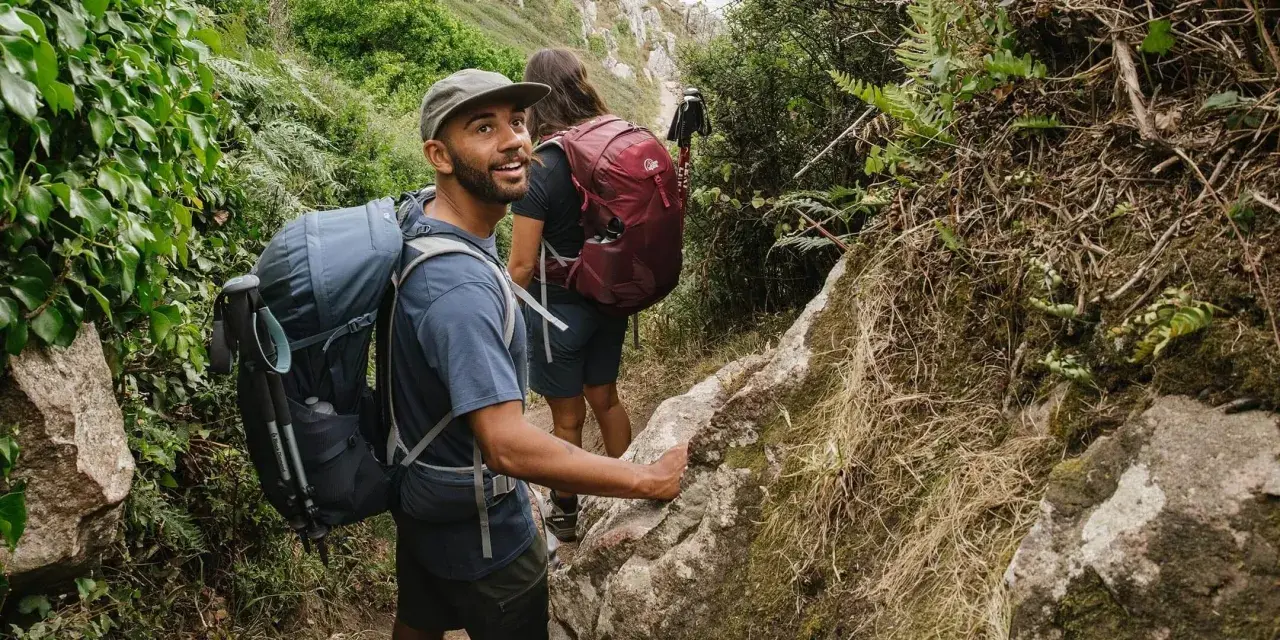
The essentials for a comfortable summer hike
- Choose quick-drying, moisture-wicking fabrics instead of cotton for anything more than a very short stroll.
- Use lightweight long sleeves when the sun is strong; they often feel cooler than bare skin after a few miles.
- Keep a light waterproof shell in your pack, because summer weather in the UK can change fast.
- Prioritise shoes and socks that prevent rubbing, blisters, and hot spots before you think about fashion.
- Build sun protection into the outfit with a brimmed hat, sunglasses, and UPF-rated clothing where possible.
- Match the outfit to the route: low-level walks, exposed hills, and woodland trails all ask for slightly different choices.
Start with breathability and sun protection
When I plan summer hiking clothes, I start with two things: how the fabric handles sweat, and how much skin it leaves exposed. The Met Office recommends lightweight, light-coloured clothing, a wide-brimmed hat, SPF 30+ sunscreen, and wrap-around sunglasses, while Ordnance Survey and Mountain Rescue warn that a calm valley forecast can still become a cold, wet summit within minutes. That is the mindset to keep in 2026: don’t dress for the morning car park, dress for the part of the day when you are tired, warm, and still three miles from the end.
Breathable does not automatically mean minimal. A lightweight long-sleeve top can be more comfortable than a sleeveless shirt on a sunny walk because it blocks direct UV and reduces the need to keep reapplying sunscreen every hour. The mistake I see most often is people dressing for heat alone and forgetting that sun, wind, and sweat all work together. Once those three show up, the wrong fabric starts to feel heavy very quickly.
That is why I treat summer hiking clothes as a protection system first and an outfit second. From there, the practical choices become much easier.

The outfit I would pack for a UK summer hike
If I were packing for a family walk in the Peak District, a coastal path, or a straightforward Lake District route, I would keep the outfit simple and repeatable. The goal is not to own special clothes for every forecast; it is to have one system that works when conditions are warm, changeable, and a little bit damp.
| Item | What I would choose | Why it works | What I would avoid |
|---|---|---|---|
| Top | Lightweight moisture-wicking T-shirt or UPF sun shirt | Moves sweat away from the skin and dries quickly | Cotton tees that stay damp and cling |
| Bottoms | Light hiking shorts or breathable trousers | Freedom of movement, less chafing, easy to dry | Heavy denim or anything that restricts stride |
| Socks | Thin-to-medium wool or synthetic hiking socks | Reduces blisters and keeps feet drier | Cotton socks that soak up sweat |
| Shoes | Broken-in trail shoes or light hikers with grip | Support, traction, and less fatigue on uneven ground | Brand-new shoes or anything that rubs at the heel |
| Hat | Brimmed sun hat or cap with neck protection | Shields face, ears, and neck from direct sun | No hat at all, especially on exposed routes |
| Outer layer | Light waterproof shell | Small enough to carry, useful when showers move in | Leaving rain protection at home because it feels warm at the start |
I like this setup because it is easy to adjust. If the day starts cool, I can keep the shell in the pack and still be comfortable. If the weather turns, I am not trying to improvise with whatever is in the car. That flexibility matters even more when you are walking with children, because one person getting cold or wet can change the whole pace of the day.
The next question is why certain fabrics work so much better than others once you are actually moving.
Choose fabrics that work once you start sweating
Fabric choice is where most summer hiking outfits succeed or fail. I usually look for polyester, nylon, or merino wool because they move moisture off the skin and dry faster than cotton. That difference is bigger than people expect: a typical white cotton T-shirt has only modest UV protection, while purpose-made sun clothing is often rated UPF 30 or UPF 50+.
Those UPF numbers are worth understanding. UPF 30 lets through about 3% of UV radiation, while UPF 50+ lets through about 2%. In practice, that means a well-made sun shirt can do a serious amount of work before sunscreen even enters the equation. I still use sunscreen on exposed areas, but I treat UPF clothing as the first line of defence, not a bonus feature.
- Polyester and nylon are the simplest summer hiking fabrics: light, durable, quick-drying, and usually the most affordable.
- Merino wool is softer and less likely to smell after a long day, which is useful for overnight family trips or multi-day walks.
- UPF-rated fabrics are especially useful on exposed ridges, open moorland, and bright coastal routes where the sun reflects off rock or water.
- Loose but not baggy fits tend to work best because they let air move without flapping around or catching under a pack.
I also pay attention to colour, but I do not overstate it. Darker clothing can offer better UV blocking, yet it can also absorb more heat. On a hot, exposed day, I usually prefer a light-coloured UPF top over a dark cotton tee and call that the better trade-off. If you run cold or are walking in partial shade, that balance may shift slightly.
Once the fabric is right, the next thing that decides comfort is what is on your feet.
Footwear and socks are where comfort is won or lost
Summer hiking footwear does not need to be heavy to be effective. For most day hikes, I prefer light trail shoes or low hikers that have enough grip for wet grass, loose stone, and rooty sections. Boots still make sense on rough terrain or if you are carrying a heavier pack, but a stiff boot is not automatically better just because the weather is warm.
The key is fit, not category. A well-fitting trail shoe that you have already worn on shorter walks will usually feel better than a more expensive boot that is still rubbing at the heel. That matters on summer days because heat makes feet swell slightly, and swelling is when bad fit starts turning into blisters.
For socks, I keep things simple: wool or synthetic, never cotton. A good hiking sock should sit high enough to protect the ankle collar of the shoe and should manage friction before the skin starts to complain. If I am planning a long family day out, I sometimes carry a spare pair of socks in the pack. Dry feet at lunch can reset a walk faster than people think.
This is also where I remind myself not to get too casual just because the weather is warm. Summer routes can still be rough, wet, or uneven, so footwear should be chosen for terrain first and temperature second.
Match the clothes to the route, not the month
August in the UK can mean three different things: a shaded woodland loop, an exposed hill path, or a coastal route with wind off the water. The clothing I choose changes with the route, not just the date on the calendar.
Low-level walks and family paths
For easy terrain, I keep it lightweight and simple: a moisture-wicking T-shirt, breathable shorts or trousers, a cap, and shoes with decent grip. This is the setting where short sleeves are usually fine, especially if you are stopping often and not climbing much. I still pack a thin shell because summer showers are never as far away as the forecast makes them sound.
Exposed hills and ridge routes
On open ground, I lean harder into coverage. A long-sleeve sun shirt, lightweight trousers, a brimmed hat, and sunglasses make more sense here than trying to stay cool by exposing more skin. The reason is simple: you are dealing with more direct sun, more wind, and a faster drop in temperature as you gain height. As a practical rule, expect temperature to fall by about 1°C for every 100 metres climbed, and remember that summit winds can feel two to three times stronger than they do lower down.
Read Also: How to Wash a Down Jacket - Avoid Clumps & Restore Warmth
Woodland and coastal trails
In shaded woods, ventilation still matters, but insect protection can start to matter too. On coastal paths, I pay more attention to wind and salt air, which can make an apparently warm day feel sharper than expected. In both cases, I keep the outfit adaptable: a light layer that can be removed, a shell that can be added, and clothing that dries quickly if I get caught by spray or rain.
That level of flexibility is what makes a summer hiking outfit feel dependable instead of fussy. It also helps explain why some common shortcuts cause more problems than they solve.
The mistakes I see most often on summer trails
Most summer hiking mistakes are small, but they stack up. One cotton shirt, one bad pair of shoes, one missing hat, and suddenly a walk that should feel easy starts to feel longer than it should.
- Wearing cotton as the main layer because it feels light in the house. Once you sweat, it hangs on to moisture and can leave you clammy.
- Ignoring the sun because the temperature feels mild. You can still burn on a cool, breezy day, especially at altitude or on reflective surfaces like rock and water.
- Choosing sleeveless tops with a backpack. Straps can rub hard on bare skin after a few miles.
- Taking brand-new footwear on a full-day walk. Summer is not the time to discover that your shoes need breaking in.
- Leaving the waterproof layer behind. Warm weather is exactly when people underestimate how quickly a shower can move in.
- Overdressing for the car park. A bulky hoodie can feel fine at 8 a.m. and miserable by 11 a.m. on a sunlit ascent.
When I strip it back, the principle is always the same: dress for movement, sun, and changing conditions, not for a single temperature reading. That leads neatly to the simplest outfit I would trust most often.
The one outfit I trust for most warm-weather walks
If I wanted one summer hiking outfit that could handle most UK day walks, I would build it like this: a lightweight wicking top, breathable trousers or shorts, wool or synthetic socks, broken-in trail shoes, a brimmed hat, sunglasses, and a waterproof shell in the pack. If the route is exposed, I would swap the T-shirt for a UPF long-sleeve shirt. If the walk is short and low-level, I would keep the setup lighter but still avoid cotton.
For family hikes, that same formula works well because it is easy to duplicate, easy to explain, and easy to adjust for different ages and comfort levels. I do not think summer hiking clothing needs to be complicated; it just needs to respect sun, sweat, and the fact that British weather likes a surprise.
My final rule is simple: if an item only works when everything goes perfectly, it is probably the wrong item for the trail. A good summer hiking outfit should still feel sensible when the forecast changes, the pace slows, or the path becomes wetter than expected.
