
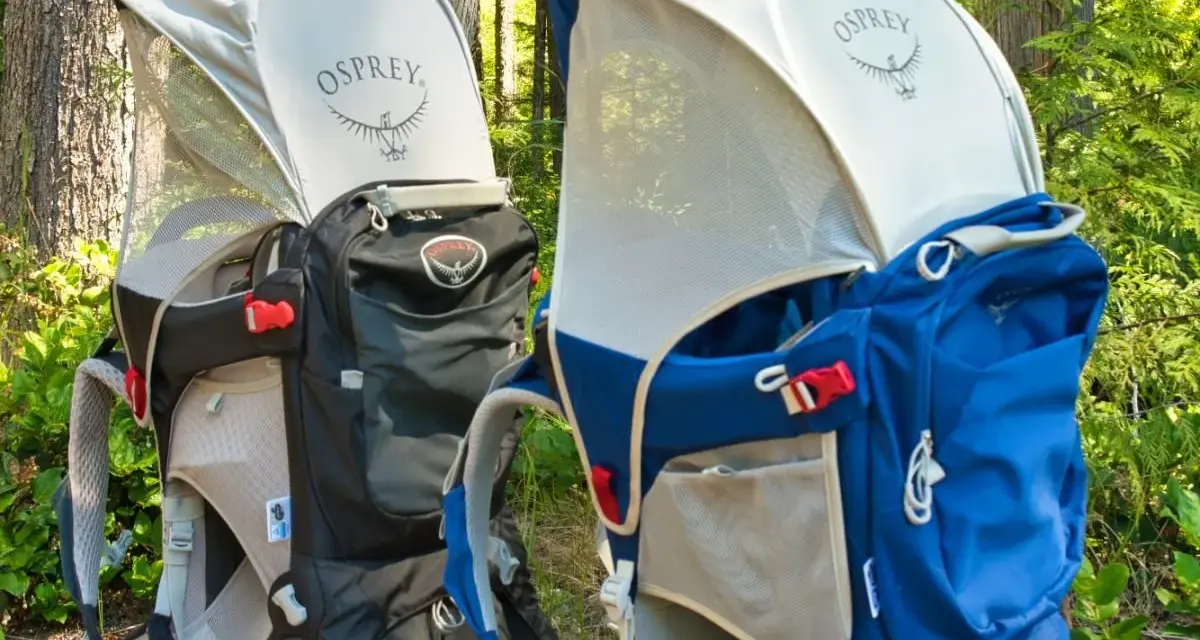
The Osprey Poco Plus weight limit is easy to misread, and that matters because the number affects both safety and how useful the carrier feels on the trail. The limit is not just about the child; it covers the child, the carrier, and the gear you pack inside it. In the sections below, I break down the exact figures, the child-size rules that matter, and how the carrier behaves on real family walks in the UK.
The key number is 22 kg combined, not 48.5 lb of child weight
- The maximum combined load is 22 kg / 48.5 lb.
- The child alone should stay under 18 kg / 40 lb.
- The carrier should only be used when the child can sit upright unassisted.
- The minimum child weight is about 7.25 kg / 16 lb.
- Once the child is near the upper limit, the remaining allowance for gear becomes very small.
What the 22 kg limit actually covers
Osprey's manual is clear on the part many people miss: the stated capacity is a combined load limit. That means the child, the carrier itself, and everything you put in the pockets or storage areas all count toward the same ceiling. I read that as a safety limit first and a packing limit second. If you treat it like a target to hit, you are already thinking about it the wrong way.
| Item | Limit | Why it matters |
|---|---|---|
| Minimum child weight | About 7.25 kg / 16 lb | Below this, the carrier is not appropriate. |
| Maximum child weight | 18 kg / 40 lb | The child must stay under this limit even if the total load has room left. |
| Maximum combined load | 22 kg / 48.5 lb | Child + carrier + gear together must stay under this figure. |
| Use condition | Child must sit upright unassisted | Weight alone is not enough; head and torso control matter too. |
That hierarchy matters because the child-only cap usually becomes the tighter limit first. The next question is when a child is actually ready to ride, because weight alone is not enough.
Why child readiness matters more than age alone
The safest way to read the Poco Plus rules is simple: weight, posture, and control all matter at the same time. A child who is technically heavy enough but cannot sit upright unaided is not ready for this kind of carrier. The manual also says not to use it with a child under six months old, which is a useful floor, but sitting control is the real test.
- Do not use the carrier before the child can sit upright without support.
- Do not use it under six months old, even if the child seems large for their age.
- Check buckles, straps, and the frame before every outing.
- Use it for walking and hiking, not for sport activities such as cycling.
- Remember that the child rides higher than your own head, so door frames, branches, and low obstacles matter.
I also think it is easy to underestimate how much the pack changes your balance. The child sits high, which shifts your centre of gravity more than a normal daypack would. On a gentle woodland path that may feel minor; on a steep descent or a narrow stile, it becomes obvious fast. Once those basics are clear, the real-world question becomes how much useful space the carrier leaves for gear.

How the limit feels on a real day out
In practice, the numbers become meaningful once you start packing actual family essentials. A day in the hills or on a coastal path rarely involves just the child. You add water, snacks, a spare layer, a rain cover, maybe sunscreen, and suddenly the allowance shrinks faster than most parents expect. A litre of water weighs about 1 kg, so even basic hydration eats into the ceiling quickly.
Here is the simplest way I think about it. If the child weighs 15 kg and you add 2 kg of kit, you are already at 17 kg before the carrier itself is counted. If the child is right at 18 kg, only 4 kg remain for everything else, including the pack. That is why the last part of the weight range is not especially generous in real life.
- Light day walks are fine when you keep the load lean.
- Long, steep routes feel noticeably harder when the carrier is near the top of the range.
- Wet UK weather usually adds more weight than people expect, especially with extra layers and a rain cover.
- If you need to carry a lot of water or cold-weather kit, the margin disappears quickly.
For me, this is the key practical lesson: the Poco Plus works best as a family hiking carrier, not as a mini trekking pack you try to max out. I would rather keep a little headroom and enjoy the walk than plan around the absolute ceiling. That leads naturally to the question of whether a different Poco version would change the equation.
Which Poco version makes sense if the weight limit is your concern
If you are comparing the Poco Plus with newer Poco models, the headline capacity does not get bigger. The current Poco family keeps the same combined load limit, so the differences are really about storage, features, and how much the empty carrier weighs on your back. That is useful to know, because it stops you from paying more for a model that does not actually let you carry a heavier child.
| Model | Combined load | Best fit for |
|---|---|---|
| Poco Plus | 22 kg / 48.5 lb | A sturdy all-round child carrier with practical storage for day hikes. |
| Poco Premium | 22 kg / 48.5 lb | Families who want more storage and a more feature-rich carry. |
| Poco LT / SLT | 22 kg / 48.5 lb | Parents who value a lighter carrier over extra pockets and volume. |
If weight capacity is your main concern, the model choice is mostly about comfort and how much you want to carry on the adult side. The lighter versions can feel easier on longer walks, but they do not change the child limit. Once you know that, the last step is making sure you pack and wear the carrier in a way that keeps the numbers comfortable rather than merely legal.
How I would pack it to stay within a safe margin
My rule is simple: measure the load at home once, then leave some slack. That slack matters more than many people think, especially if you are walking on uneven ground, climbing hills, or carrying extra water in changeable weather. A carrier that is technically under the limit can still feel awkward if it is crammed full and badly balanced.
- Weigh your usual day kit so you know what it really adds up to.
- Keep dense items low and close to your back.
- Do not guess at water weight if you plan a longer route.
- Leave a small buffer instead of planning around the exact maximum.
- Fit the hipbelt and shoulder straps properly so the load sits where it should.
- Re-check the buckles and frame before each walk, especially on second-hand gear.
I usually suggest keeping at least 1 kg or 2 kg of breathing room when possible, because comfort changes faster than the scale suggests. The moment the pack feels top-heavy, the adult feels it on climbs, steps, and narrow gaps. With that in mind, the final rule is simple: stay comfortably below the ceiling, not right on it.
The simple rule I would keep in mind before the next walk
If I were using a Poco Plus today, I would remember three figures before anything else: 22 kg combined, 18 kg for the child alone, and about 7.25 kg as the lower starting point. I would also remember that age is only a rough guide; the real requirement is that the child can sit upright unaided. That is what keeps the carrier useful for longer and avoids the common mistake of packing it like a small trekking backpack.
For UK family walks, the smartest approach is to treat the limit as a hard safety boundary and build some margin into your kit list. If you are buying second-hand, check the printed model name and the manual rather than relying on the seller's memory, then load it lightly enough that the walk still feels relaxed. That is the difference between a carrier you use often and one that only looks good on paper.
