
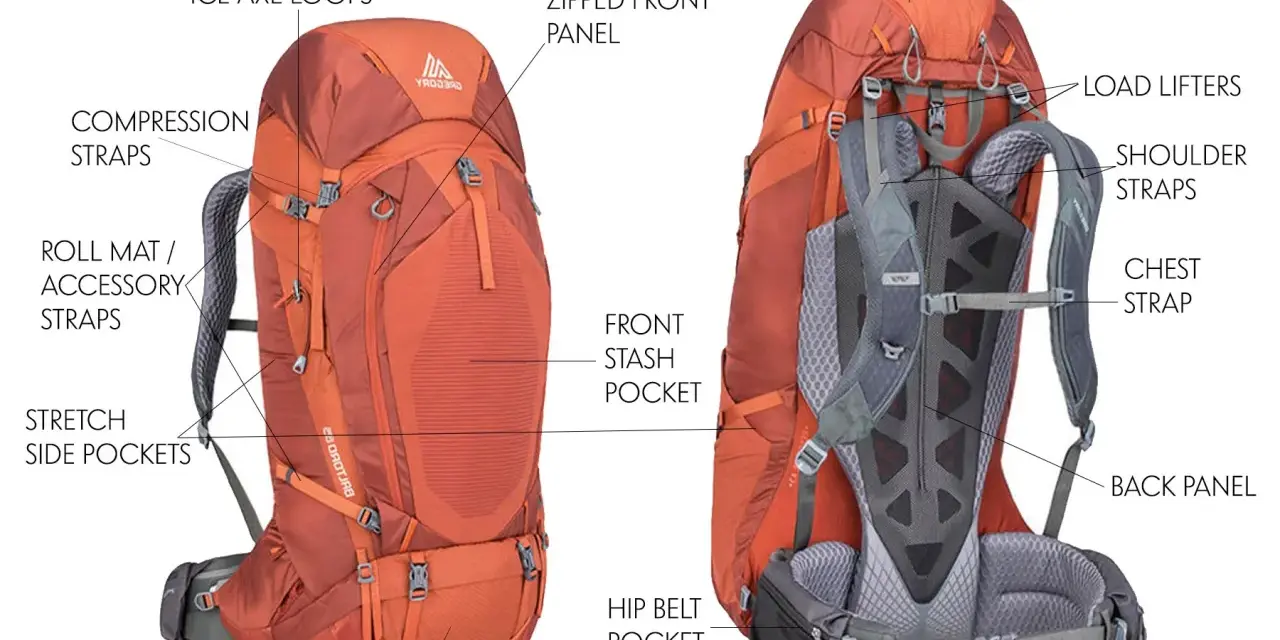
What matters most when choosing the right pack
- Hiking packs are built to carry weight comfortably over rough ground.
- Travel packs are built for easy packing, quick access, and smoother movement through airports, trains, and hotels.
- For most overnight or multiday hikes, 30-50L or 50-80L is the practical range depending on gear and season.
- For many city breaks and short European trips, 28-40L is often the sweet spot.
- The best pack is the one that fits your torso, your load, and your route, not just the largest volume on the shelf.

How they are built for different jobs
The clearest difference is not the logo or even the shape. It is the design bias. A hiking backpack is built to keep heavy gear stable and close to your body. A travel backpack is built to open easily, organise cleanly, and move through crowded transport without snagging on every seat, rail, and luggage rack.
| Aspect | Hiking backpack | Travel backpack | Why it matters |
|---|---|---|---|
| Support system | Stiffer frame, padded hip belt, load lifters | More compact harness, often with stowable straps | Trail carry needs better weight transfer; travel needs cleaner handling |
| Access | Top-load or limited front access | Clamshell or panel loading | Hikers prioritise stability; travellers prioritise fast packing |
| Organisation | Fewer, purpose-built pockets | More internal dividers, laptop sleeves, admin pockets | One style is easier on the trail, the other is easier in hotels and airports |
| Best volume | 30-50L for weekends, 50-80L for multiday trips | 28-40L for carry-on travel, 40-55L for larger trips | Trip length and transport mode set the useful size |
| Best use | Trekking, camping, uneven ground | City breaks, flights, rail travel, hostel hopping | Each one solves a different kind of friction |
That split sounds obvious once you see it, but in real life the best pack is the one that makes the hardest part of the trip easier. For a Lake District hike, that usually means load transfer. For a rail-heavy European break, that usually means access and compactness.
When a hiking backpack is the better fit
If the trip involves walking with real weight for hours, the hiking pack usually wins. I would choose it for overnight hikes, campsite weekends, trekking holidays, and any route where the trail itself is the main event. Once you start carrying food, water, shelter, sleep system, and a few layers, the way the pack handles weight matters far more than how neatly it opens.
These packs make sense when the load moves beyond casual day-hike territory. A rough rule I use is this: once the pack starts approaching 15-20% of your body weight, support becomes more important than convenience. That is where a proper hip belt, frame, and shoulder harness start earning their keep.
- Best for multi-day camping: You need room for a tent, sleeping bag, stove, food, and extra clothing.
- Best for uneven terrain: The closer, tighter fit helps the pack stay stable on climbs, descents, and rough ground.
- Best for bad weather: Hiking packs often include rain covers, tougher fabrics, and fewer exposed zips.
- Best for heavier loads: A supportive hip belt shifts weight off the shoulders and onto the hips, which is where you want it.
The downside is convenience. A top-loading pack can be annoying when you need to reach something quickly, and external straps can be awkward in trains, ferries, or hostel dorms. Still, for genuine outdoor use, that trade-off is usually worth it. A pack that feels slightly less convenient in a hotel can feel dramatically better on a steep, wet hillside.
When a travel backpack makes more sense
A travel backpack is the better choice when your trip is built around transport, accommodation, and quick access to your things. That includes city breaks, family holidays, one-bag travel, and rail-based trips through the UK or Europe. If you are moving from station to station, checking into rooms, and repacking often, the suitcase-style layout is a real advantage.
Most good travel packs are designed to open wide, usually with a clamshell or panel-loading design. Clamshell means the bag opens like a suitcase, so you can see most of the interior at once. That makes packing cubes, toiletries, chargers, and spare clothes much easier to manage than a deep top-loading hiking bag.
- Best for short to medium trips: Around 28-40L is often enough for a long weekend or a 3-5 day trip if you pack well.
- Best for easy access: You can get to a laptop, jacket, passport, or toiletries without digging through layers.
- Best for transport-heavy travel: Clean exteriors and stowable straps are easier in airports and on trains.
- Best for mixed use: A travel pack can handle everyday carry, work trips, and holiday use better than a pure hiking pack.
In the UK market, a solid travel pack often sits roughly around £170 to £200, while premium hiking packs commonly start around £180 and can climb to £300 or more. That price gap usually reflects the suspension system, materials, and durability rather than pure capacity. If your trip is mostly urban, you will feel the benefit of the travel layout immediately. If your trip includes steep climbs or long walks with a heavier load, you will probably miss the hiking harness just as quickly.
The features that actually change comfort
People often compare backpacks by litres first, but litres alone do not tell you how a bag will feel after three hours. I look at five features before I care about anything else.
- Hip belt and frame: A hiking pack should transfer weight to your hips, not leave it hanging from your shoulders. A travel pack may have a hip belt too, but it is often lighter or stowable.
- Torso fit: Torso length matters more than height when fitting a hiking pack. A tall person can still need a shorter torso size, and a shorter person may need a longer one.
- Load lifters: These are the small straps above the shoulders that pull the top of the pack closer to your body. They help keep the load balanced on hiking packs, and they matter much less on casual travel bags.
- Opening style: Top-loading packs are simpler and often better in rough weather. Clamshell packs are better when you need to live out of the bag and repack often.
- Fabric and weather resistance: Hiking packs lean toward trail toughness and weather protection. Travel packs lean toward abrasion resistance, cleaner silhouettes, and smoother handling.
One detail I would not ignore is weight. Extra padding, heavy frames, and overbuilt organisation all add grams. That is fine if the pack is going to ride in a car or on a plane, but it becomes a liability on long walking days. The right question is not “Which pack has more features?” It is “Which features will I actually use on this trip?” That leads straight into the question of whether a hybrid pack is worth it at all.
Where hybrid packs do work
Some backpacks sit between the two categories. They borrow hiking-style support but keep travel-style access, or they add a cleaner exterior to a hiking-inspired carry system. These hybrids can work well, but only when your load stays moderate and your trip has mixed demands.
For example, a 35-40L travel pack with a decent harness can be ideal for a weekend break, a short rail trip, or a one-bag flight where you want cabin-friendly dimensions and tidy organisation. On the hiking side, a pack with front access and a more streamlined silhouette can be useful for hut-to-hut walks or light trekking where you are not carrying a full camping setup.
- Good hybrid use case: City break first, short walk second.
- Good hybrid use case: Base-camp camping with day walks from the same site.
- Good hybrid use case: Light packers who want one bag for work, travel, and occasional trail use.
Where hybrids fail is under real hiking loads. Once you add a tent, extra food, wet layers, and enough water for a full day, compromise starts to show. The bag may still be usable, but it will not feel as controlled or as comfortable as a proper hiking pack. That is why I see hybrid models as a useful middle ground, not a universal answer.
The mistakes that make the wrong pack feel wrong
Most bad backpack choices are not about brand. They are about mismatched expectations. The pack is blamed, but the real problem is that the buyer picked the wrong tool for the route.
- Buying litres before fit: A 65L pack that does not match your torso will feel worse than a smaller, better-fitted one.
- Assuming more space is always safer: Oversized bags invite overpacking, which adds weight and makes every carry harder.
- Using a travel pack for heavy trail loads: It may be fine for light moves, but it usually lacks the suspension you want on a steep, all-day hike.
- Using a hiking pack for constant access: Great on the hill, annoying in a hotel room when you need your charger, jacket, and toiletries three times a day.
- Ignoring transport conditions: If you will be using UK trains, ferries, or narrow staircases, a bulky pack becomes a daily nuisance very quickly.
A practical way to avoid these mistakes is to picture the most annoying moment of the trip. If that moment is walking uphill with a full load, choose support. If that moment is digging for a passport at a station or repacking in a small room, choose access. That simple test removes a lot of guesswork.
What I would choose for UK trips and family adventures
If I were packing for a campsite in the Highlands, a multi-day trek, or a family outdoor trip where we were carrying shared gear between the car and the site, I would choose a hiking backpack first. The comfort and stability matter more once the route gets uneven or the load gets awkward.
If I were planning a rail-heavy break, a city-hopping European trip, or a one-bag holiday where most of the day is spent in transit and accommodation, I would choose a travel backpack. For many readers, that is the better all-rounder because it opens easily, packs cleanly, and fits modern travel better than a pure hiking design.
My rule is simple: pick the pack for the part of the trip that will be hardest on your body and your patience. If the challenge is the trail, buy the hiking pack. If the challenge is airports, trains, hotels, and frequent access, buy the travel pack. That is the choice that tends to age well after the first trip, not just the first unboxing.
