
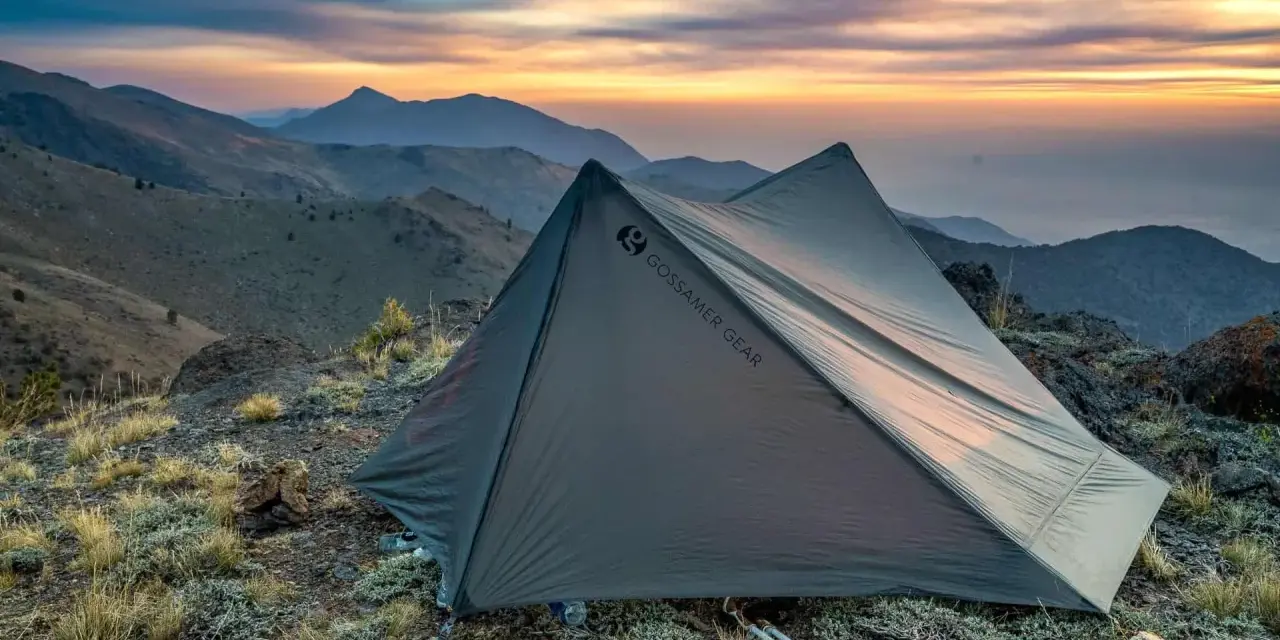
The Two is one of those shelters that only makes sense if you care about ounces and livability at the same time. This Gossamer Gear The Two review focuses on what matters on real trips: how it pitches, how much room it actually gives you, how it deals with condensation, and whether a trekking-pole shelter still makes sense in UK weather. I’ll also look at price, setup trade-offs, and the kind of camper who gets the most from it.
The Two is a lightweight shelter that rewards careful pitching
- Current official weight is 30.5 oz / 864 g total, with a 28.15 oz / 798 g shelter body.
- It is a non-freestanding trekking-pole tent, so you need poles or the brand’s pole set plus solid staking.
- Two doors and two vestibules make it far better for one person in comfort, or two light packers who do not mind a close fit.
- Its single-wall design needs good airflow management, especially in damp or still conditions.
- For the UK, the big questions are pitch space, wet ground, and whether you want ultralight convenience or maximum forgiveness.
What The Two actually is and who it suits
The Two is a single-wall, two-person trekking-pole tent, which means the structure comes from your trekking poles rather than a rigid frame. That is the whole point: less weight, less bulk, and a shelter that packs down very small, but also a tent that asks more from the pitch and the campsite.
In practice, I think of it as a roomy shelter for one and a disciplined shelter for two. Solo hikers get a generous amount of space for sleep, gear, and bad-weather downtime. Two people can use it comfortably enough, but only if they pack light and are happy sharing a fairly intimate footprint. At the current sticker price of $375, it sits in premium ultralight territory, so it needs to earn that cost through performance rather than gimmicks.
The biggest trade-off is simple: you are buying low weight by accepting more setup responsibility. If that sounds fair to you, the rest of the tent starts to look very sensible. If you want a shelter that behaves like a freestanding dome on awkward ground, this is not that tent, and that difference matters even more once you start looking at the specs.
Specs and design details that matter
Gossamer Gear lists the current version with updated fabric, a higher total carry weight than some older writeups, and a more refined venting setup. I prefer to judge it by the numbers you actually carry and pitch, not by stripped-down marketing weights.
| Spec | Figure | Why it matters |
|---|---|---|
| Total weight | 30.5 oz / 864 g | This is the number I use for buying decisions because it reflects the full shelter kit. |
| Shelter body | 28.15 oz / 798 g | Still very light for a two-person shelter, especially once you factor in liveability. |
| Floor area | 26 sq ft / 2.42 sq m | Plenty for one, workable for two, but not a sprawling palace. |
| Length | 84 in / 213.4 cm | Useful for taller sleepers who hate brushing fabric with their feet. |
| Width | 48 in / 121.9 cm at the head, 42 in / 106.7 cm at the foot | The taper helps weight, but it also means you do not get a perfect rectangle of usable space. |
| Peak height | 49 in / 124.5 cm | Enough to sit up comfortably, not enough to feel like a conventional tent. |
| Pitch requirement | Trekking poles or pole set at 125 cm | You need a support plan before you leave home. |
| Stakes | 6 included, 8 recommended in practice | On softer UK ground, a couple of spare stakes can make the pitch feel much more secure. |
The fabric update is worth noting too. Gossamer Gear now uses a recycled Robic blend with a SIL/PU coating and PFAS-free treatment, plus factory-taped seams. On paper, that is a strong waterproofing package; in the field, I still care more about how well the tent is pitched and ventilated than about the headline coating alone. The details are good, but the design still asks you to camp intelligently.
Those numbers explain why The Two is attractive to ultralight hikers but less appealing to people who want a roomy, rigid tent that stands up anywhere. That leads straight into the part most buyers underestimate: setup and site selection.
Setup, packing, and the learning curve
This is not a grab-it-and-go shelter. To get the best from it, I want a reasonably flat rectangle of ground, enough space to tension the guylines, and a bit of patience the first few times I pitch it. Once you know the shape, the process is straightforward, but the tent rewards precision more than a freestanding model would.
In real use, the main job is to build a clean pitch line from the start. If the corners are crooked or the ground is uneven, the whole shelter can feel fussy. When the pitch is right, it tightens up well and the interior feels better than the dimensions suggest. When the pitch is rushed, the compromise shows immediately.
- Lay the shelter out square before you touch the trekking poles.
- Stake the corners carefully rather than forcing the tent to fit a bad site.
- Set the poles to the correct height and keep the ridge line tension even.
- Use the extra tie-outs if the wind is up or if you want a roomier, more stable shape.
- Pack a little spare staking flexibility for soft British turf, where the first stake choice is not always the best one.
I also like the compact packed size. At roughly 14 inches when stuffed, it is easy to live with in a smaller pack and makes even more sense for bikepacking. The tent itself is compact enough that the bigger issue is often not storage, but whether you want to carry trekking poles or a dedicated pole set just to make the shelter work. That trade-off becomes more obvious once the weather starts to turn.

How it handles UK wind, rain, and condensation
In the UK, this is the section that decides whether the tent feels clever or merely light. Wind-driven rain, damp grass, muddy pitches, and cool overnight humidity expose the limits of any single-wall shelter quickly. The Two is better equipped than many minimalist tents, but it still lives or dies on airflow and site choice.
The good news is that the current design gives you more control than older single-wall shelters did. The top vents help air move through the tent, and the two-door layout makes it easier to balance protection with ventilation. On still nights, I would keep the vents working and avoid sealing the shelter up tighter than necessary. That little bit of discipline makes a real difference.
Condensation is still the thing to watch. A single-wall tent can manage moisture, but it cannot defeat physics. If you cook outside, keep the vents open, and avoid pitching in a cold hollow, The Two behaves much better than the stereotype suggests. If you pitch low in a wet valley with two warm bodies inside and no air movement, you should expect some dampness on the inner surface by morning.
For UK use, that means I would trust it more on breezy ridgelines, well-drained campsites, and open pitches than in still, humid woodland. It is perfectly capable in bad weather, but it is not forgiving in the way a heavier double-wall tent often is. The real skill is not whether the fly fabric can resist water; it is whether you can keep the shelter breathing while staying dry. That is where comparisons with other tents become useful.
How it compares with the tents most people cross-shop
If I were cross-shopping this tent, I would not compare it only with other ultralight two-person shelters. I would also compare it with the kind of tent that matches my patience level. That is the honest way to judge it.
| Option | Why you would pick it | Why I might pass |
|---|---|---|
| The Two | Very light, very compact, two doors, excellent for one person or a close two-person setup | Needs poles, stakes, and a decent pitch; not ideal on awkward ground |
| Freestanding double-wall tent | Easier on hard or cramped pitches, usually more forgiving in poor weather | Heavier, bulkier, and less exciting if weight matters a lot |
| Budget trekking-pole shelter | Lower upfront cost and often good enough for fair-weather trips | Usually less polished in fabric, stitching, or overall refinement |
| Weather-focused trekking-pole shelter | Often better airflow geometry and storm handling | May weigh more or feel less minimal once packed |
What this means in plain language is that The Two wins when weight, pack size, and livable space for one person are the top priorities. It is less compelling when you want maximum forgiveness, because a more weather-efficient or freestanding design can make a miserable pitch feel manageable. If you already know you value a clean, ultralight setup, The Two makes sense. If not, another shelter may be a calmer choice for British weather.
That comparison gets to the real decision: not which tent is technically best, but which one fits the way you actually camp. The final verdict is simpler than the spec sheet.
My verdict for UK buyers and when I would pass
My view is that The Two is a very good specialist tent, not a universal one. I would buy it if I mainly hike solo and want extra room, if I split the tent with a partner who is comfortable with a close fit, or if I want a shelter that disappears in my pack but still feels civilized inside. I would also consider it for bikepacking, where compact packing matters as much as trail weight.
I would pass if I regularly camp on cramped, hard, or awkward ground, if I hate staking out a large footprint, or if I want a tent that feels naturally forgiving in sustained wind and damp. For many UK trips, that last point matters more than people expect. A shelter can be technically excellent and still be the wrong tool for a muddy, exposed, or narrow pitch.
- Buy it if you want the best mix of low weight and usable interior space.
- Buy it if you are happy to learn a proper trekking-pole pitch.
- Skip it if you want the easiest possible setup on any surface.
- Skip it if you expect freestanding convenience from an ultralight shelter.
If I were recommending it to a friend in the UK, I would say this: The Two is worth serious attention when you already know that ultralight camping suits your style. It is less a general-purpose tent than a well-judged specialist shelter, and that is exactly why it works so well for the right camper.
