
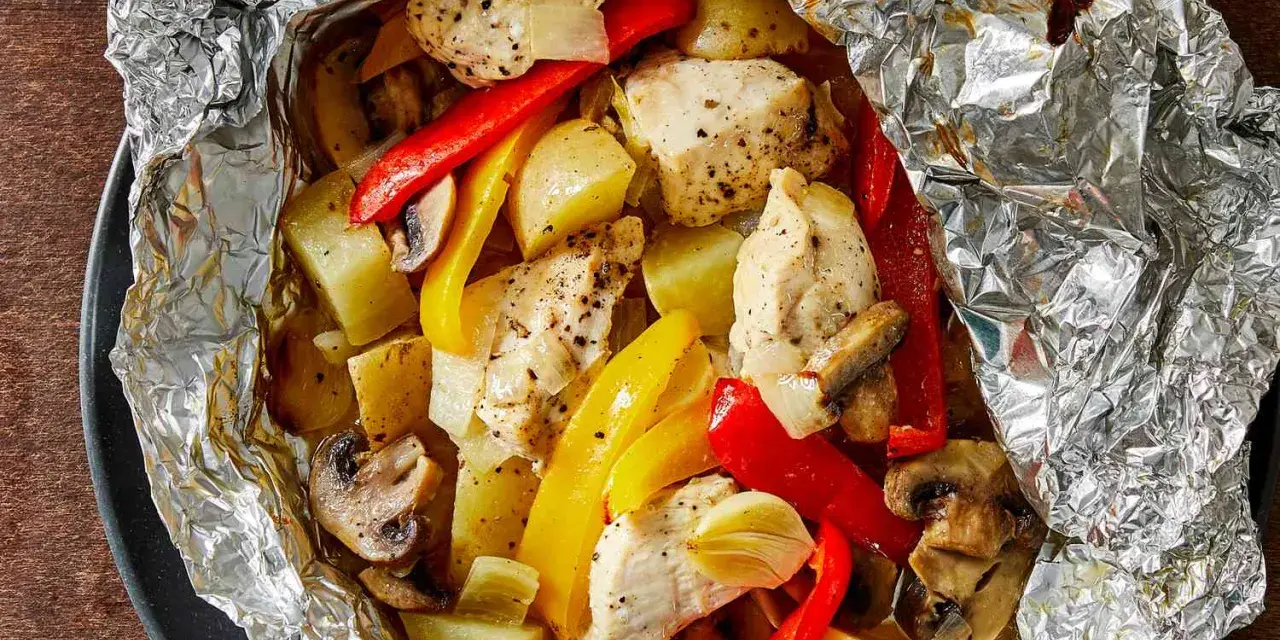
Foil dinners are one of the easiest camp meals to get right, but the timing only feels simple once the fire has burned down properly. In most cases, you are looking at 20 to 40 minutes over hot coals, with the exact time changing according to the ingredients, packet thickness, and heat of the fire. I’ll cover the practical timing, how to build the packet, and the checks that keep dinner from coming out half-raw or bitter from too much direct flame.
The most reliable answer is to cook foil dinners over hot coals for about 20 to 40 minutes
- Hot embers beat open flames. Steady heat cooks the centre more evenly and reduces burnt foil.
- Small, evenly cut ingredients finish faster. Big potato chunks are the main reason packets run long.
- Ground meat and sausage need 71°C, poultry needs 74°C. A thermometer removes the guesswork.
- Double-wrapped packets hold together better. They also leak less and are easier to turn.
- Start checking early if the packet is thin or small. Large, dense packets usually need the full time or more.
How long foil dinners usually take over a fire
The short version is this: if your packet contains raw meat and raw vegetables, plan on about 30 to 40 minutes over a bed of coals. If it is lighter, smaller, or built with pre-cooked ingredients, the time can drop to the low 20s. In my own camp cooking, I treat the first 20 minutes as the point where I start paying attention, not the point where I assume dinner is ready.
| Packet type | Typical time over hot coals | What should be done |
|---|---|---|
| Vegetables only | 15 to 20 minutes | Tender edges, soft centres, light steam when opened |
| Sausage with diced potatoes and onion | 20 to 30 minutes | Potatoes pierce easily with a knife |
| Raw minced beef with potatoes and vegetables | 30 to 40 minutes | Meat is fully cooked and juices run clear |
| Chicken with vegetables | 35 to 45 minutes | No pink at the centre, internal temperature is safe |
| Thick potato-heavy packet | 40 minutes or more | Potatoes are fully tender all the way through |
That range lines up with the practical advice you see from experienced camp cooks: the packet size, the cut of the ingredients, and the coal heat matter more than any single fixed clock time. Once you understand that, the next step is learning which variables slow a packet down and which ones speed it up.
What changes the cooking time the most
Three things usually decide whether a foil dinner finishes quickly or drags on: the heat of the fire, the size of the ingredients, and how tightly the packet is packed. A fire that still has visible flames is too aggressive for most dinners, while embers with a steady glow give you a much more controllable cook.
- Ingredient size matters more than people expect. A potato cut into 2 cm chunks cooks far better than one cut into uneven wedges, because the pieces finish at roughly the same time.
- Packet thickness changes the way heat moves through the food. A thin, flat packet cooks faster than a bulky one piled high in the centre.
- Starting temperature makes a difference. Cold ingredients from a cool box take longer than food that has been kept chilled but not icy cold.
- Moisture content affects steam. A little butter, oil, or sauce helps the packet cook evenly, but too much liquid can make the meal more like a stew than a roast.
- Where the packet sits matters. Directly in bright flames is unpredictable; beside or on top of coals is much steadier.
If I am cooking for a family campsite, I keep the packet simple on purpose: one protein, one starchy vegetable, one softer vegetable, and enough fat to stop sticking. That makes the timing easier to judge, which leads neatly into how the packet should be built in the first place.

How to build a packet that cooks evenly
The easiest way to improve the cook time is to make the packet consistent before it ever reaches the fire. I fold foil dinners so the food sits in a single, even layer as much as possible, with the dense ingredients cut small and spread out instead of piled up in one mound.
UNL Food recommends double-wrapping and sealing the packet securely, and that is exactly the approach I would use for camp cooking. It keeps moisture in, reduces leaks, and gives the foil more strength when you turn the packet with tongs.
- Cut potatoes, carrots, onions, and other firm vegetables into similar-sized pieces.
- Place meat in the middle or in a balanced layer so the packet does not lean to one side.
- Add a little butter, oil, or sauce so the food does not dry out or stick to the foil.
- Leave a small pocket of air inside the packet for steam, then crimp the edges tightly.
- Use a second layer of foil if the packet is heavy, sharp-edged, or likely to be turned more than once.
That extra bit of care pays off because evenly built packets are far easier to cook over coals than lumpy ones. Once the packet is ready, the fire setup becomes the next piece of the puzzle.
The safest way to cook them at the fire
For a dependable result, I wait until the fire has burned down to a bed of hot embers, then I cook on or near that heat rather than over open flames. That is the point where foil dinners behave predictably, which is exactly what you want when meat is involved.
- Use coals, not flames. Coals give a steadier temperature and help prevent blackened foil outside and undercooked food inside.
- Turn the packets once halfway through. If one side of the fire is hotter, this evens out the cooking.
- Check the meat properly. FoodSafety.gov lists 71°C for ground meat and sausage, and 74°C for poultry. Those are the numbers I trust, not the colour of the foil.
- Open carefully. Steam can burst out fast when the packet is unwrapped, so I always peel one corner back first.
- Let it rest for a couple of minutes. That short pause helps the heat finish the centre and makes the packet easier to handle.
If you do not have a thermometer, use time as a guide and then test the centre of the largest piece before serving. That is safer than guessing, but it still leaves room for a few common mistakes that can ruin the timing.
Common mistakes that waste time and fuel
The biggest error I see is trying to cook foil dinners like a grill steak, right in the flame. That usually burns the outside before the potatoes are tender, which is especially frustrating when the meal was meant to be easy.
- Cutting the vegetables too large. Big potato chunks are the main reason packets need extra time.
- Overfilling the packet. A packed packet traps steam unevenly and cooks more slowly in the centre.
- Using thin foil alone. It tears too easily when you turn it, especially if the filling has sharp edges.
- Opening it too soon. If you check after 10 or 15 minutes, you release heat and extend the cook.
- Forgetting to adjust for fire strength. A lively fire ring at a campsite in the evening can cool down fast after the first round of cooking.
Once those traps are avoided, the method becomes much more forgiving. That is why my final rule is simple: start conservatively, check early enough to course-correct, and let the packet finish in stages if it needs it.
The timing rule I trust when the evening gets busy
If I want a no-drama camp supper, I start with 30 minutes as the default for a medium packet over hot coals. Then I check at the 20-minute mark if the ingredients are small, or at 25 minutes if I know the packet is loaded with potatoes or raw meat. If it is not ready, I put it back for another 5 to 10 minutes and check again.
- Small vegetable packets: start checking at 15 to 20 minutes.
- Standard sausage or beef packets: expect 25 to 35 minutes.
- Chicken or very dense potato packets: budget 35 to 45 minutes.
- Always give the packet a short rest before opening fully.
That approach keeps camp cooking practical instead of hopeful, which is the difference between a relaxed evening and a pile of half-cooked foil on the fire ring. If you remember only one thing, make it this: steady coals, evenly cut ingredients, and a thermometer for the meat will tell you far more than any fixed timer ever will.
