
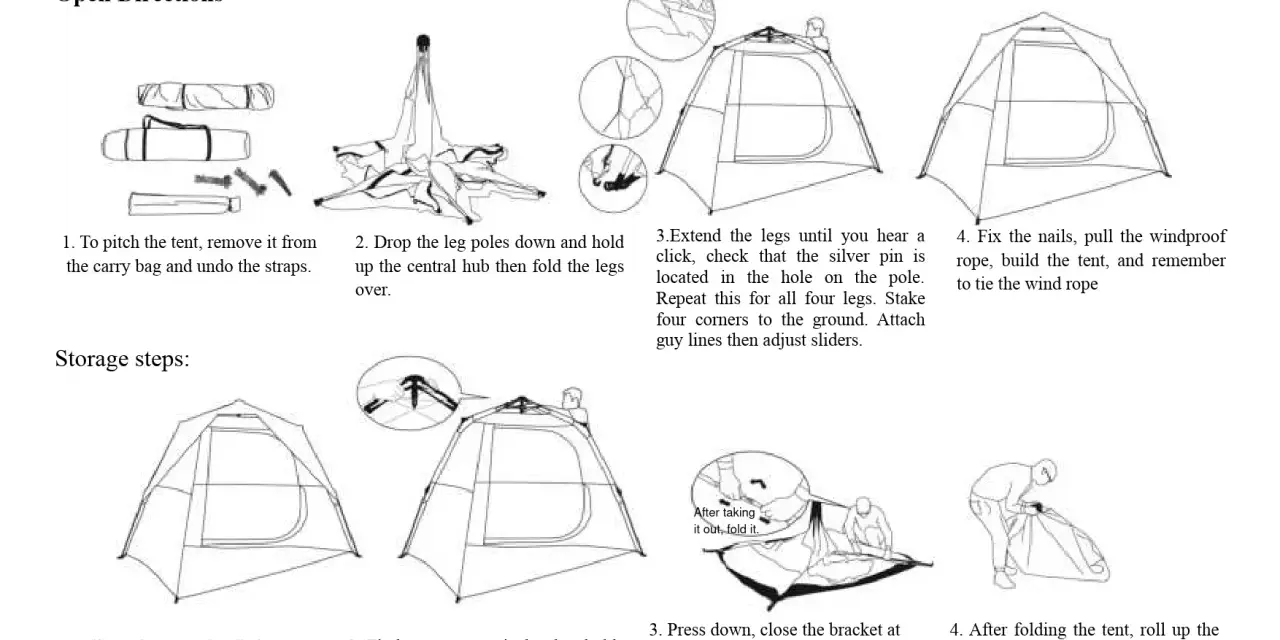
Folding a pop-up tent is less about brute force and more about rhythm. In this guide, I show the cleanest way to collapse the frame, dry it properly, and store it so the next trip starts without a fight. I’ll also cover the mistakes that cause most frustration, because a self-erecting tent is easy to pitch but much less forgiving when you rush the pack-down.
The essentials before you pack it away
- Unzip the door and vents first so trapped air can escape as the frame closes.
- Collapse the arches in the same order every time until the tent naturally forms a taco or figure-eight shape.
- Dry the fabric fully before storage, even if that means reopening it later at home.
- Shake out sand, grass, and grit before you twist the frame back into the bag.
- Do not force a stubborn fold; reset the arches and try again from a flatter position.
- Store it cool and dry so the coating, stitching, and frame keep their shape for longer.
Get the tent ready to fold
I always start by clearing the shelter completely. Take out sleeping bags, pillows, shoes, pegs, and anything else that adds bulk inside the frame, then unzip the main door and any vents. If the tent has picked up moisture or condensation, give it a quick wipe with a dry cloth before you begin.
That first minute matters more than most people expect. A pop-up tent folds more cleanly when air can escape and the fabric is not holding extra weight. On a damp campsite, especially after a changeable UK morning, this also stops you from packing in wet grit that will make the next setup messier.
Once the tent is clear and open, the actual collapse becomes much easier. That is the point where the frame can follow its own shape instead of fighting yours.
Collapse the frame into its natural shape
Most pop-up tents use spring steel or a similar flexible frame, which means the tent wants to close in a very specific way. I treat the fold as a sequence, not a tug-of-war.
- Hold the upper arches and bring the side sections inward so the frame starts narrowing from the top.
- Fold the back section toward the middle and keep the main contact points together with one hand.
- Bring the front arch inward, leaving the door unzipped so the trapped air can leave the shelter.
- Lift the tent upright and press down from the highest point so the frame closes in on itself.
- Twist the collapsed frame into two overlapping circles or a figure-eight, depending on the model.
- Secure the built-in strap, Velcro tab, or tie before sliding the tent into its bag.
The small detail that helps most is alignment. If the arches are not even, the tent will spring back at the wrong angle and feel impossible to finish. I find it easier to pause for a second, realign the frame, and then complete the twist than to force the fabric into place. That habit saves more time than wrestling ever will.
Once the fold is smooth, the next question is whether your tent follows the standard pattern or needs a slightly different sequence.
Not every pop-up tent folds the same way
There is a basic method that works for many beach-style shelters and compact instant tents, but not every design behaves identically. Larger family models, privacy tents, and some shower cubicles often add extra hubs, lock points, or longer side sections that change the order of the fold.
| Tent type | What usually matters | Why it matters |
|---|---|---|
| Classic pop-up shelter | Collapse the arches, twist into two loops, and secure the straps | This is the fastest style and usually the easiest to learn |
| Family instant tent | Release any locks or clipped supports before folding the frame | Extra structure can resist the twist if you skip a step |
| Privacy or shower pod | Keep the door open and fold vertically before twisting the frame | Tall panels trap air and can feel awkward if you rush them |
If your tent came with a printed diagram or a storage card, I would use that rather than a generic video. Even small differences in frame size or hinge placement can change the final fold. This is one of those cases where reading the model-specific instructions once saves a lot of guesswork later.
After the frame is down, the real problem becomes moisture, not mechanics.
Dry it before it goes back in the bag
This is the step people skip most often, and it causes the biggest long-term damage. A damp tent left compressed in a bag is asking for mould, unpleasant smells, and coating wear. I treat “fully dry” as non-negotiable, even if that means reopening the tent later at home and airing it out properly.
If the tent is wet, wipe it down first, then leave it open in a dry, shaded spot until every seam, corner, and floor panel feels dry to the touch. Sunlight can help for a short period, but direct heat is not the answer; it can be harsh on tent fabric and coatings. A garage, covered patio, or spare room with good airflow is usually a safer option.
- Shake out sand before it reaches the zipper track.
- Open the door and vents so air can move through the shelter.
- Pay attention to the floor and lower corners, where moisture lingers longest.
- Dry the underside as well as the top, especially after wet grass or muddy ground.
Once the fabric is genuinely dry, the tent packs flatter, smells cleaner, and is far less likely to stick to itself the next time you unfold it. That leads straight into the mistakes that make the fold harder than it should be.
The mistakes that usually cause trouble
Most pack-down problems come from the same handful of habits. I see people force the frame, leave the door zipped, or try to twist the shelter before the arches are even. Any one of those can turn a simple fold into a wrestling match.
- Folding too fast and skipping the reset when one side is higher than the other.
- Leaving the tent zipped shut, which traps air and stops the frame from closing cleanly.
- Ignoring sand and debris, which can scratch coatings and jam the zipper.
- Storing the tent in a hot car boot or damp garage for weeks at a time.
- Stuffing accessories loosely into the main shelter bag, where pegs or poles can damage the fabric.
If the frame feels twisted, do not keep forcing it. Lift it back up, flatten both arches, and start the closing motion again from a balanced position. That reset usually takes less time than fighting a fold that was never lined up properly in the first place. Once you stop forcing the structure, storage becomes much easier too.
Store it so the next camp starts faster
The best storage routine is simple: dry, cool, and not over-compressed. For short transport home, the original bag is fine, but for longer storage I prefer a place that stays dry and room-temperate rather than a cramped, damp corner of the house. A tent that lives in a sensible storage spot is easier to pack next time and tends to last longer.
| Situation | Best approach | Why it helps |
|---|---|---|
| Driving home after a wet weekend | Pack it for the journey, then air it out the same day | Prevents mildew and that stale damp smell |
| End-of-season storage | Keep it loosely folded in a cool, dry cupboard or gear bag | Protects the fabric coating and frame elasticity |
| Between back-to-back trips | Leave it lightly secured rather than tightly compressed for weeks | Makes the next setup quicker and less stressful |
For UK camping, that matters more than it first sounds. Weather changes fast, and a tent that is easy to air, dry, and repack will save time every time the forecast turns uncertain. Once you have a decent storage habit, the final piece is building a routine that makes the fold almost automatic.
A simple routine that makes the next fold easier
The easiest tents to pack are the ones handled the same way every time. I like to keep the process consistent: clear the tent, unzip it, flatten the frame, twist it into shape, dry it fully, and store it where I can reach it quickly before the next trip. That rhythm removes hesitation, which is usually what slows people down.
- Practise the fold once at home before your first real trip.
- Keep pegs, guylines, and repair bits in a separate pouch.
- Assign one person to hold the frame while the other guides the fabric inward on family trips.
- Check the tent after every wet outing so small issues do not turn into storage problems.
That is the practical answer to how to fold a pop up tent: release the air, follow the frame, dry it completely, and store it somewhere cool and dry so it is ready for the next camp without a fight.
