
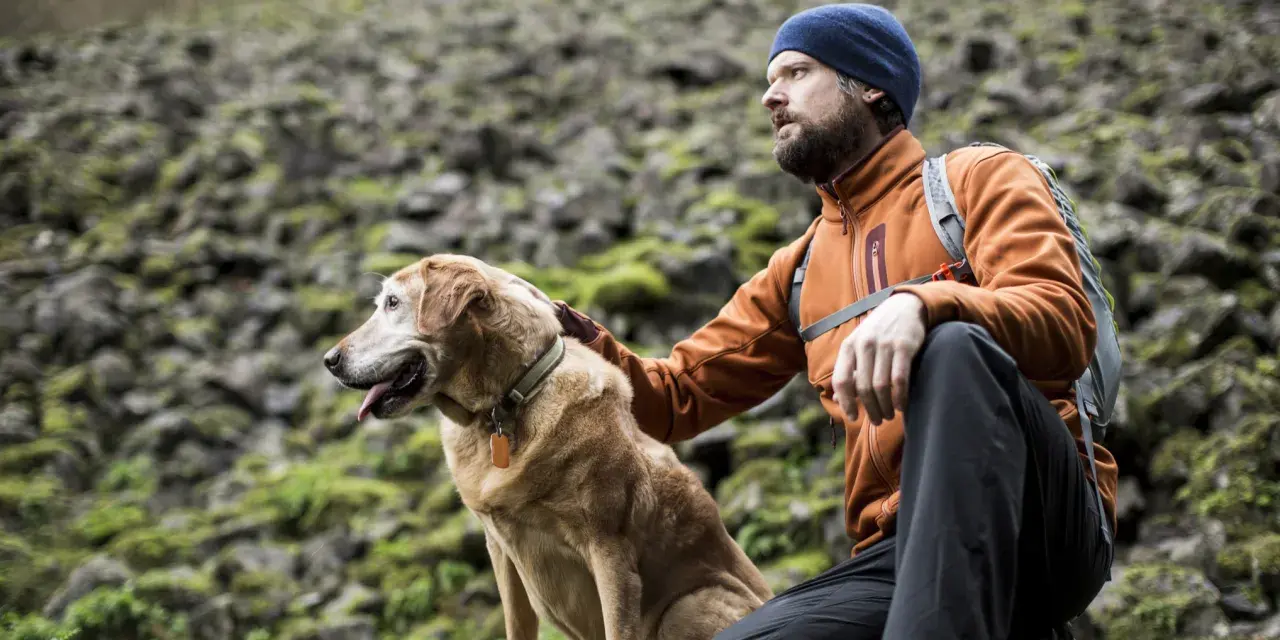
When I think about hiking with dogs, I start with the dog's condition, not the distance. A good day out depends on route choice, control, weather, water and whether the dog can actually cope with the terrain you have picked. This guide covers the practical bits that matter most: how to plan a UK-friendly route, what to pack, how to train for the hills and when to cut the day short.
What matters most before you head out
- Route first: access rules, livestock and surface conditions matter as much as distance.
- Kit first: a fitted harness, ID tag, water, bowl, lead and tick remover cover most outings.
- Control matters: a long line is often safer than off-lead freedom on the wrong route.
- Weather matters: heat, mud, ticks and adders are the UK hazards I plan around most often.
- Backpacking needs restraint: shorter days and quieter campsites usually work better than chasing big mileage.
Choose the route before you choose the scenery
I start with access rules and terrain, because the prettiest hill is useless if it sends you across livestock, narrow stiles or exposed ground your dog cannot manage. Public footpaths, bridleways and open access land are not the same thing, and that distinction matters when a dog is with you. In England and Wales, I keep a short lead on open access land between 1 March and 31 July, and I keep dogs on a lead around livestock at all times. Elsewhere in the UK, I still check local signs before I unclasp anything.
| Control option | Best used when | Main trade-off |
|---|---|---|
| Short lead | Livestock, narrow paths, road crossings and busy shared routes | Less freedom, but much better control |
| Long line | Recall training on open ground where a dog still needs a safety margin | Can tangle, so it is poor on steep or heavily wooded sections |
| Off-lead | Quiet routes where recall is already reliable and the area allows it | Only works if the dog genuinely comes back every time |
My rule is blunt: if the route depends on perfect off-lead behaviour, it is not a good route for an ordinary day out. Once the route is honest about the rules and the terrain, the next question is whether the kit is equally honest.

Pack for the dog you actually have
A dog-friendly pack is boring in the best way. I want a harness that fits, a lead that feels secure in wet hands, more water than I think I will need, and enough food to cover delays. I do not add gear just to look prepared; I add items that solve a real problem on the trail.
Dogs Trust suggests you should be able to fit one finger between the harness and your dog's body. If the harness twists, rubs or lets the dog back out, it is wrong for a hike.
- collar with ID tag and current contact details
- well-fitted harness and lead
- collapsible bowl and water
- spare lead or clip
- poo bags
- towel or drying layer if the weather turns wet
- tick remover
- high-value treats and a small food reserve
- paw wipe or booties if the dog already accepts them
- first-aid basics such as gauze and vet contact details
I also keep a spare lead or clip in the car because failures are rare right up until the day you really need one. Once the bag is sorted, the real work is training the dog to behave when the landscape gets interesting.
Train the basics before the first long ascent
A dog that walks nicely through the park can still fall apart on a mountain path. I build hiking behaviour in layers: short leads first, then quiet off-road spaces, then gradually longer sessions with more distraction. The aim is not perfect obedience; it is enough control that you can keep the dog safe when the trail narrows or wildlife appears.
- Practise recall in calm places with high-value rewards.
- Teach a stop cue for gates, bikes and sudden hazards.
- Use a long line before you trust off-lead freedom.
- Practise passing people, horses and other dogs without pulling.
- Finish while the dog still has energy left.
I use a long line as a bridge, not as a crutch. It gives freedom without pretending the dog is more reliable than it really is. That leads straight into the conditions, because even a well-trained dog can be caught out by heat, ticks or livestock.
Read the weather and trail hazards as part of the route
Heat, wet ground and wildlife can turn an easy route into a poor one fast. I pay the most attention to three things: surface temperature, hidden parasites and any place where a dog may meet animals that want space. On heathland and sandy ground, I am extra cautious in spring and summer because adders are a real UK risk.
| Hazard | What I look for | What I do |
|---|---|---|
| Heat | Heavy panting, slowing down, seeking shade | Stop, offer water, cool gradually and shorten the route |
| Ticks | Scratching after grass or woodland | Check the coat and remove ticks promptly |
| Adders | Curious investigation of heather, bracken or sandy banks | Keep the dog close and move away quickly if you spot one |
| Livestock | Fixation, barking or pulling toward sheep and cattle | Clip on the lead, create space and leave the field |
| Rough ground | Licking paws, limping or shortened stride | Inspect pads and turn back before a small issue becomes a day-ender |
If a route is hot, rough or full of deer and sheep, I shorten it before I blame the dog. If you are sleeping out, those same risks matter even more, which is why backpacking needs its own plan.
Make backpacking feel familiar, not novel
Overnight trips fail when people treat them like longer day hikes with a tent tacked on. I prefer to make the first night easy: a shorter approach, a calm campsite, a familiar sleeping mat or blanket and a routine the dog has already seen at home.
- Choose dog-friendly sites and check whether dogs are allowed on every pitch.
- Arrive early enough for the dog to sniff, settle and drink before dark.
- Keep food, stove and fire pit areas separate from the dog's resting spot.
- Pack a towel and a little extra food for delays, wet coats or a changed route.
- Keep the first day conservative; a dog that is still fresh when the tent goes up usually copes better the next morning.
I would rather finish a first backpacking trip with gas in the tank than prove a point on the map. The last piece is recognising when a good plan has stopped being a good idea.
Know when to turn back and protect the next outing
The smartest dog walk is the one you shorten early. I turn around when I see persistent panting, a change in gait, refusal to drink, paw licking, stiffness on descents or sudden disengagement from the trail. Those are not personality quirks; they are signals that the dog is done.
| What I notice | What it can mean | What I do next |
|---|---|---|
| Persistent panting | Heat stress or overexertion | Stop in shade, offer water and cool the dog gradually |
| Dragging behind | Fatigue, pain or simply too much distance | Shorten the route immediately |
| Paw licking or limping | Hot ground, grit or pad damage | Inspect the paws and head back if needed |
| Sudden fixation or stress | Wildlife, livestock or a route that is too busy | Put the lead on, create space and leave the area |
If the problem is heat, I stop in shade and cool the dog gradually. If it is a limp or sore pads, I do not bargain with distance. The best habit I have found is simple: make every outing one the dog could have done again tomorrow.
That is the standard I use for safer, more enjoyable days outside. Keep the route honest, the kit light but complete, and the pace flexible, and the walk becomes a shared experience instead of a test of endurance.
