
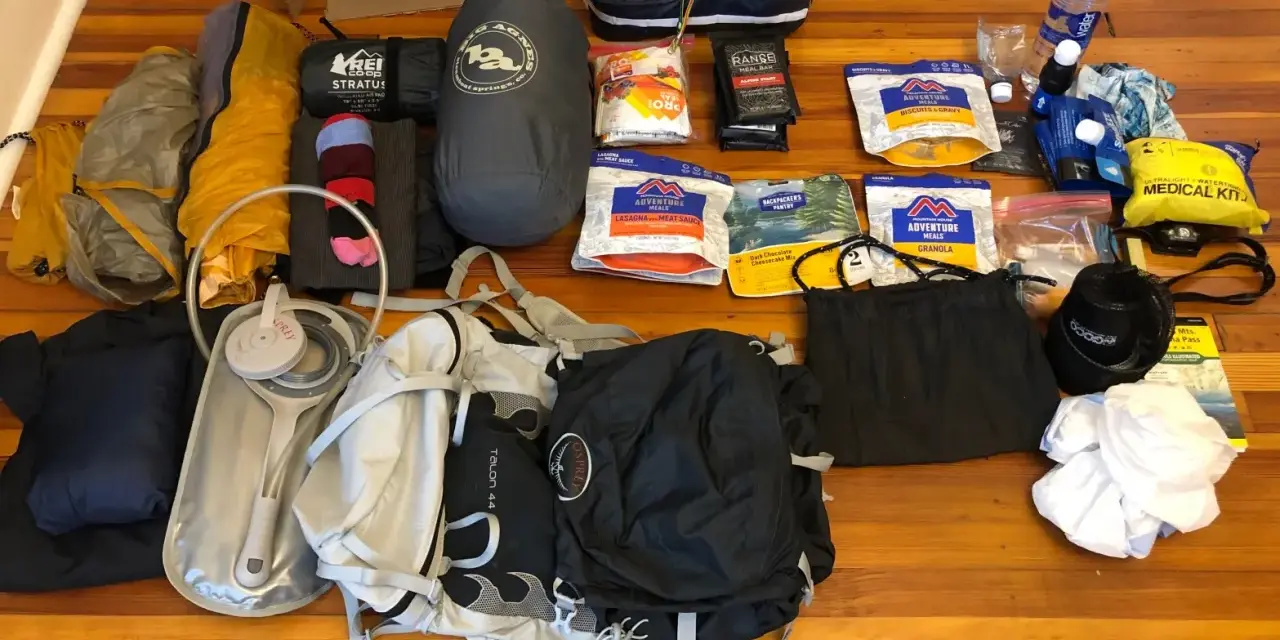
Backpacking is far easier when the first trip is treated as a controlled practice run rather than a test of toughness. For beginner backpacking, I focus on three things: a forgiving route, a sensible kit list, and a weather plan that works in the UK, where a dry forecast can change fast. In this guide I cover how to choose an achievable first walk, what actually belongs in the pack, and how to avoid the mistakes that make new hikers miserable.
The essentials that make a first trip work
- Start with a one-night route that feels easy on paper, not heroic.
- Keep the first pack simple: shelter, sleep system, waterproofs, navigation, food, water, and a head torch.
- Check a reliable mountain forecast before you leave; UK hill weather changes quickly.
- Use layers instead of heavy cotton so you can adapt to rain, wind, and temperature swings.
- Carry more food and warmer clothing than you think you will need.
- Turn back early if conditions worsen; confidence grows faster when the first trip ends safely.
How I choose a first route
The best first route is usually short, obvious, and slightly boring in the right way. I want a path I can follow without constant map checks, a sensible place to stop for the night, and a realistic escape route if the weather turns ugly. That usually means 8 to 12 km for a first overnight, with modest ascent and no technical ground.
| Route feature | What I want for a first trip | What I would save for later |
|---|---|---|
| Distance | Enough to feel like a proper walk, but still finish in 3 to 5 hours | Big all-day stages that leave no room for mistakes |
| Terrain | Clear paths, low navigation stress, and predictable footing | Boggy ground, rough moorland, scrambles, or ridge walking |
| Escape plan | A route that can be shortened if wind, rain, or fatigue builds | Remote loops with no practical way out once committed |
| Camping spot | Sheltered, legal, and close enough to the route to avoid a long tired end to the day | Exposed high camps that rely on perfect weather |
I like a route that feels ordinary on paper and pleasant on the ground. If the plan depends on heroic pace or perfect weather, it is too early for a first overnight. Once that is clear, the packing list becomes the next place where beginners can save money and stress.

What to pack and what to leave behind
Most new hikers overpack because they are trying to solve every possible problem in advance. That usually creates a heavier bag, slower walking, and more friction than necessary. I would rather see a beginner with a simple, well-chosen kit than a pile of niche gear that looks impressive and gets in the way.
| Carry it | Why it matters | Common beginner mistake |
|---|---|---|
| Backpack sized for one night | Large enough for essentials, small enough to discourage excess | Buying a huge pack and filling it because there is space |
| Sleep system | A sleeping bag or quilt that is warm enough for the forecast, plus a mat with real insulation | Assuming a cheap summer bag will cover all UK conditions |
| Waterproof jacket | Reliable rain protection matters more than fashion or ultralight bragging rights | Trusting a soft shell or an old water-resistant layer |
| Navigation tools | Paper map, compass, and an offline phone map give you options when signal disappears | Depending on phone battery and mobile data alone |
| Food and water | Enough calories to keep your head clear and your pace steady | Bringing just enough for the first hour of enthusiasm |
- Backpack: for a one-night trip, I usually look at roughly 30 to 40 litres, depending on season and sleep system.
- Clothing: one walking set, one dry layer for camp, spare socks, hat, gloves, and a waterproof shell.
- Sleep kit: sleeping bag or quilt, sleeping mat, and something dry to wear at night.
- Kitchen: keep it basic. A simple stove and one pot is enough for most first trips.
- Safety items: head torch, first-aid basics, map, compass, power bank, whistle, and a fully charged phone.
For a first overnight, my rough target is a pack that does not become annoying after the first hour. That often ends up around 8 to 12 kg before water, though the real number depends on the season and how much of the kit you already own. If in doubt, borrow before you buy, because the first trip is where you learn what actually earns space in the bag.
That is why beginner backpacking works best when the kit is stripped down to the items that genuinely solve problems on the trail, not the things that merely look useful in a shop. Once the load is under control, the next challenge is staying comfortable when the weather turns British.
How to stay comfortable in UK weather
In Britain, I plan for wind and rain first, sunshine second. The forecast may look calm at breakfast and feel very different by afternoon, especially on higher ground. I still check the Met Office mountain forecast and, when I am heading into upland terrain, I also look at MWIS because a normal town forecast can miss what matters on the hill.
- Base layer: choose something that moves moisture away from the skin. Cotton is a poor choice because it stays wet and cools you down.
- Mid layer: a fleece or light insulated layer adds warmth without too much bulk.
- Shell layer: a proper waterproof jacket with a hood is one of the few items I would not compromise on.
- Extras: spare socks, a hat, and gloves are useful even outside winter if the wind picks up.
I also think beginners underestimate how much comfort comes from timing. If I arrive at camp already cold, hungry, and wet, everything becomes harder: pitching the tent, cooking, and staying positive. I would rather keep walking a little longer while the light is still good, then stop early enough to set up camp without rushing. That small buffer makes a big difference when you are new to the routine.
Good clothing keeps the day manageable, but food and water decide whether you still feel human at the end of it.
Food, water, and energy on the trail
Most first trips go better when the food is simple, calorie-dense, and easy to eat while tired. I do not recommend complicated cooking on trip one unless you already enjoy it at home. The goal is not a gourmet camp meal; the goal is to keep moving, stay warm, and avoid the low-energy slump that makes every hill feel longer.
- Breakfast: porridge, instant oats, or a no-cook option if you want a fast start.
- Lunch and snacks: wraps, cheese, nuts, dried fruit, flapjacks, chocolate, and trail mix all travel well.
- Dinner: instant mash, noodles, couscous, or a dehydrated meal are all easy first-trip choices.
- Snacking rhythm: eat something every 60 to 90 minutes rather than waiting until you feel drained.
For water, I usually start with 1.5 to 2 litres on a normal day in cooler UK conditions, then adjust for heat, distance, and the chance to refill. If I am collecting water from a stream or spring, I treat cleanliness seriously and use a filter or purification method if there is any doubt. A little caution here is better than a ruined trip later.
If there is one thing new backpackers often miss, it is how quickly hunger and dehydration affect judgement. A tired hiker makes poorer route decisions, so the food plan is really part of the safety plan.
Safety habits that matter more than expensive gear
I have seen far more problems come from poor planning than from missing premium equipment. A modest pack, sensible route, and clear communication usually beat expensive kit every time. This is especially true in the UK, where visibility can drop and weather can change before you notice it.
- Tell someone your plan: share the route, campsite, and expected return time.
- Carry offline navigation: download maps before leaving and do not depend on mobile signal.
- Check sunset time: give yourself a real margin so you are not searching for a pitch in the dark.
- Know the emergency options: 999 and 112 both connect to emergency services in the UK.
- Turn back early if needed: if you are getting cold, wet, or uncertain, that is the moment to simplify the day, not push harder.
I also recommend learning a few basic navigation habits before your first overnight: orient the map, identify a handrail such as a river or clear path, and check distance against time rather than just guessing. Those habits sound small, but they keep a beginner from becoming dependent on guesswork. Once they are in place, the biggest risks are usually self-inflicted, which is the next thing worth clearing up.
The mistakes that slow down confidence
Most new backpackers do not fail because they lack fitness. They struggle because they make the trip harder than it needs to be. I see the same mistakes again and again, and they are all avoidable.
| Mistake | Why it causes trouble | Better move |
|---|---|---|
| Wearing brand-new boots | Blisters and hot spots can ruin a short trip quickly | Break footwear in on local walks first |
| Packing too much clothing | Extra weight slows you down and makes camp feel messy | Pick one set of walking layers and one dry camp layer |
| Assuming the forecast is enough | Weather changes faster in the hills than in town | Check the forecast again just before leaving and build in a margin |
| Choosing a dramatic route too early | Hard terrain magnifies every beginner mistake | Start with a straightforward route and add challenge later |
| Not practising at home | Even simple tasks feel awkward in fading light or rain | Pitch the tent, test the stove, and pack the bag before the trip |
My blunt rule is this: if you would not trust the item or the technique on a rainy evening in your garden, do not trust it on a hillside. A short practice session at home removes a lot of the uncertainty that makes first trips feel bigger than they are.
How I would build confidence over the first three trips
I like a slow progression. The fastest way to enjoy backpacking is usually to remove one unknown at a time rather than stacking several on the same trip.
- Trip one: one night, short route, simple pitch, familiar food, and a campsite or spot that is easy to reach before dark.
- Trip two: a slightly longer walk, a bit more ascent, and the same kit so you can see what really works.
- Trip three: only then do I add a new variable, such as a different route style, a lighter sleep system, or a more remote location.
If trip one feels too easy, that is usually a sign it was planned correctly. Confidence in the outdoors comes from repeating simple success, not from forcing a dramatic challenge too soon. Keep the first plan short, honest, and well within your comfort range, and the next trip will already feel less intimidating.
