
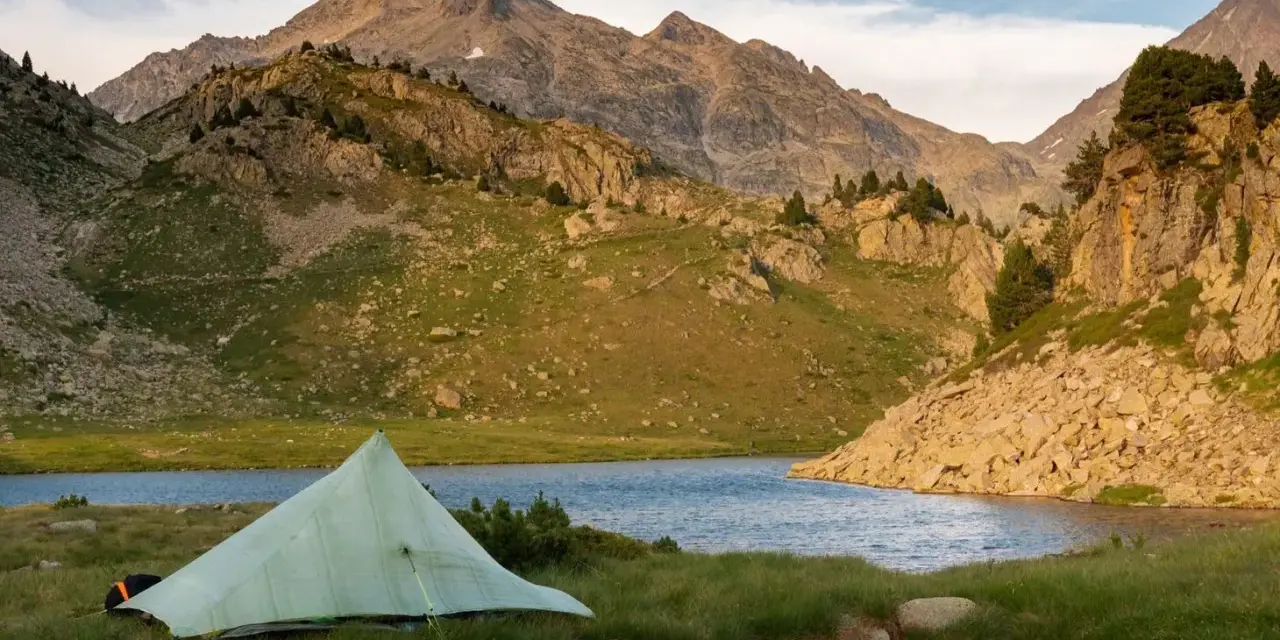
The Pyrenean Haute Route, often searched as the Pyrenees high route, is one of the clearest examples of why camping and long-distance mountain travel belong together. This guide focuses on the practical side of the route: where camping works best, which valleys make the strongest overnight bases, and how to handle the patchwork of bivouac rules that shape the trip.
What matters most before you start
- The route is roughly 748-750 km with more than 40 km of ascent, so camp planning matters as much as fitness.
- The best camping bases are the valleys and trail towns that let you reset food, water, and weather risk, not just the prettiest spots.
- French mountain areas often allow regulated bivouac, while some Spanish national parks set altitude limits and others forbid camping altogether.
- A hybrid plan usually works best: tents for flexibility, refuges for bad weather, and a few valley campsites for real recovery.
- The route is best treated as an experienced mountain trek, not a casual campsite-to-campsite stroll.
What the route really asks of a camper
I would not approach this as a normal point-to-point hike with random overnights. The HRP is a high mountain traverse with long climbs, exposed passes, and navigation that is far less straightforward than the signed GR alternatives. That means your sleeping plan has to do more than provide a bed for the night; it has to absorb weather, terrain, and the occasional forced change of plan.
For me, the biggest shift is mental. A refuge is a mountain hut, not a campsite, and on this route the two often work together. You might spend one night under canvas, the next in a hut if storms build, and the next in a valley campsite where you can dry gear and rest properly. That mix is normal here, not a compromise.
The key idea is simple: on the Pyrenean Haute Route, camping is most useful when it gives you freedom without pretending the mountains are forgiving. Once you accept that, the question becomes where the most useful overnight bases are, and that is where the route starts to open up.

The best camping destinations along the route
If I were building a camping-first version of the traverse, I would anchor it around valleys and trail towns that let me recover, resupply, and get back into the high ground efficiently. The strongest destinations are usually not the most remote ones; they are the places that make the next two or three days easier.
| Destination | Why I would camp here | Best use |
|---|---|---|
| Hendaye | A clean Atlantic start with easy logistics and a comfortable first night before the mountains take over. | Gear shakedown and last-minute packing. |
| Lescun | A strong western Pyrenees base after the first serious climbs, with a proper valley feel and good recovery value. | First mountain camp or a rest night after a hard section. |
| Gavarnie and Bujaruelo | One of the most useful central areas because the scenery is huge and the camping options around the valleys are practical. | Scenic stopovers and a smart alternative when the Ordesa side is restrictive. |
| Benasque | One of the strongest all-round bases on the route, with good resupply and access to classic high mountain terrain. | Mid-route reset and a natural place to dry out after bad weather. |
| Arties and the Val d'Aran | A flexible valley stop with enough services to turn a hard stretch into a manageable one. | Laundry, food, and a weather buffer. |
| Tavascan and the Espot fringe | Useful on the eastern central section when you want to stay practical rather than force high, exposed nights. | Lower-stress camping outside stricter park cores. |
| Andorra's high valleys | Good for a mid-route pause because the terrain stays serious but the logistics are easier than people expect. | Flexible camping mixed with refuge nights. |
| Banyuls-sur-Mer | A satisfying Mediterranean finish that gives the route a proper end point rather than a rushed exit. | Final night and coastal wind-down. |
If I had to choose only three anchors, I would start with Lescun, Benasque, and one of the eastern valley bases. Those give the best mix of mountain access, practical services, and recovery time. From there, the route becomes much easier to shape into a trip that feels organised rather than improvised, which leads straight into the legal side of where you can actually sleep.
Where bivouac works and where it doesn't
This is the part that trips people up. By bivouac, I mean a one-night stop with a small shelter, usually from evening to morning. That is not the same thing as setting up a camp for several nights, and the distinction matters because the Pyrenees are a patchwork of rules rather than one neat system.
| Zone | Practical rule of thumb | My takeaway |
|---|---|---|
| French national-park terrain | Regulated bivouac is often allowed from evening to morning, at least an hour from road access. | Workable if you travel light and leave no trace. |
| Ordesa and Monte Perdido | Only bivouac is allowed above specific altitude thresholds, with tight time limits. | Do not assume a convenient meadow is legal just because it looks remote. |
| Aiguestortes | Camping and bivouac are not allowed inside the park. | Plan your tent nights outside the park boundary or use refuges. |
| Outside protected cores | Rules vary by valley, landownership, and local regulation. | Often the easiest places for a more relaxed camping rhythm. |
My own rule is blunt: if a site is fragile, exposed, or obviously busy, I move on. I do not pitch on thin vegetation, I do not light fires, and I do not assume that a quiet-looking place is automatically legal. The route crosses too many sensitive areas for sloppy habits to be harmless.
- Keep a refuge backup for exposed sections and poor weather.
- Check whether you are inside a park core, not just on the map contour.
- Use a stove rather than open flame unless local rules clearly allow more.
- Pitch late, leave early, and move gently through grazing areas.
Once the rulebook is clear, planning stops being abstract and starts becoming about how to stitch the days together in a way that actually works on the trail.
How I would build a practical camping itinerary
My preferred approach is a hybrid one. I would book a few valley campsites in advance, keep one or two refuge nights as safety valves, and leave the rest flexible. That gives you a way out when a pass is snowy, a storm arrives early, or a long descent simply takes more out of you than expected.
- Pick a section first, not the full traverse. A week is enough for a rewarding camping trip if you choose the right stretch.
- Place hard days between easy sleep options. After a big pass day, I want a realistic lower valley or a hut nearby.
- Keep daily mileage honest. On this route, 15 km can feel like a full day once ascent, descent, and navigation are counted.
- Build in a weather buffer. One spare night is often worth more than one extra item of gear.
- Use refuges as pressure relief. A hut night is not a defeat; it is often what keeps the trip enjoyable.
For hikers coming from the UK, this usually means treating the Pyrenees as a fly-and-hike trip rather than a bolt-on weekend. Pack lighter than your instincts suggest, but not so light that wind or rain forces you into bad decisions. The more honest your itinerary is, the more likely you are to enjoy the camping rather than merely endure it.
The season, weather, and gear choices that matter most
Timing changes everything. In a normal summer, I would think of late June through early September as the main camping window, but that still depends on snow depth, storm patterns, and how quickly the high passes clear. Early-season trips can still feel wintry above the tree line, while late-summer trips often bring more water problems and more heat in the lower valleys.
Snow and cold
Early in the season, high passes can hold snow long after the valleys feel warm. That changes where I camp, because a high bivouac that looks idyllic on a map can become windy, cold, and slow to reach. I would not go without a proper three-season tent, a warm sleep system, and enough flexibility to change a line if a crossing looks poor.
Water and heat
Late summer creates a different problem. Springs can slow down, grazing can muddy water sources, and long, dry stretches become more stressful than the elevation profile suggests. I always carry enough water capacity to bridge a dry section, and I treat every refill as something to confirm on the day rather than assume from memory.
Storms and wind
Afternoon storms are one of the real hazards of the range. When I camp on this route, I avoid saddles, ridgelines, and shallow basins that can collect wind or runoff. A good campsite here is not just beautiful; it is sheltered, legally sound, and sensible if the weather turns at midnight.
That is why the best camping destinations are not only the prettiest ones. They are the places that let you react well when the mountains stop cooperating, and that brings me to the sections I would choose first if I were planning a shorter trip.
Three camping sections I would choose first
If I were turning this into a camping holiday rather than a full traverse, I would split the route into three especially strong pieces. Each one gives you a different balance of scenery, access, and sleeping options, and none of them requires you to drag the entire mountain range onto your back at once.
- Western Pyrenees from Hendaye into Lescun: the best place for a controlled start, easier logistics, and a gradual move into mountain camping.
- Central Pyrenees around Gavarnie, Bujaruelo, and Benasque: the most dramatic section if you want big ridges, classic bivouac nights, and the deepest mountain feel.
- Eastern finish through the Catalan valleys to Banyuls-sur-Mer: a rewarding final stretch with useful valley stops and a proper sea-level finish.
My honest view is that the route is at its best when camping gives the trip rhythm rather than turning it into a test of stubbornness. Choose the valleys that let you rest, respect the park rules, and let the high ground stay wild. That is the version of the Pyrenean traverse I would recommend every time.
