
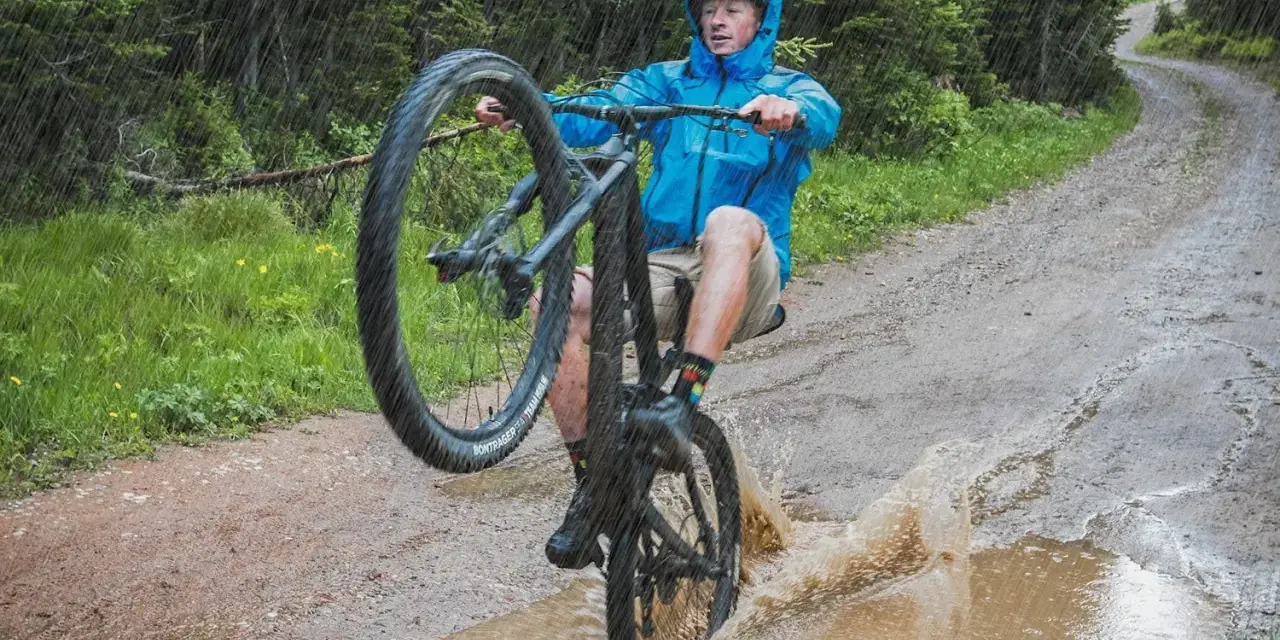
Wet-weather riding changes the ride from the first pedal stroke: tyres feel less forgiving, braking takes longer, and spray can turn a simple lane into a visibility problem. biking in the rain is perfectly manageable, but only if you plan for traction, clothing, luggage protection, and a slower rhythm than on a dry day. That matters even more on UK roads, where drizzle, standing water, and grime can arrive in the same ten-minute stretch.
The practical essentials for wet-weather cycling
- Use slightly lower tyre pressure, but keep it within the safe range for your tyre and rim.
- Fit mudguards where you can, because spray is what makes rainy rides feel miserable fastest.
- Wear layers that insulate when damp, not just fabrics that look waterproof on paper.
- Ride earlier, smoother, and more upright on wet corners, paint, metal, and leaves.
- On bikepacking trips, separate sleep kit and electronics into genuinely waterproof storage.
What changes when the road turns wet
Rain does not just make cycling uncomfortable. It changes the whole risk profile of the ride. Grip drops first, especially on painted lines, metal covers, drain grates, leaf mulch, and compacted mud at the edge of lanes. Braking also becomes less immediate, because the tyre and road surface have less friction to work with. In British weather, visibility is the third problem: spray, low cloud, and grey light can make you harder to see long before it is fully dark.
That is why I treat rainy riding as a different discipline, not just a normal ride with a waterproof on top. The surface tells the truth faster in wet weather. A pothole that you could ride around in the dry becomes a wheel-swallowing surprise once water hides its edges, and a corner that felt harmless yesterday can suddenly need a calmer line and less speed today. Once you see the risks in those four areas, the setup choices become much easier.

How I prepare the bike before I leave
If I know the roads will be wet, I start with the bike rather than the clothes. A dry rider on the wrong bike is still going to have a miserable day. The goal is not to make the bike waterproof, because that is impossible, but to make it predictable, durable, and easy to clean after the ride.
| Part | What I change | Why it matters |
|---|---|---|
| Tyres | Drop pressure slightly, often by about 5-10 psi on wider tyres, and check for cuts before I roll out. | That small change can improve grip without making the bike feel vague, as long as I stay within the tyre maker’s safe range. |
| Brakes | Check pad wear, test them before the first junction, and make sure they are clean. | Wet braking rewards preparation; if the pads are tired, the first stop of the day can be the worst stop. |
| Drivetrain | Use wet lube for extended rain and wipe the chain down after the ride. | Rain washes grit onto the chain and accelerates wear if you leave it dirty. |
| Mudguards | Fit full-length guards for touring when possible, or clip-ons if clearance is tight. | They keep spray off your feet, back, drivetrain, and luggage, which is a bigger comfort win than most riders expect. |
| Lights | Carry front and rear lights even for daytime rides if the weather looks gloomy. | Rain flattens contrast, so lights help you stand out in traffic and spray. |
| Luggage | Put sleep kit, electronics, and spare clothes into dry bags or waterproof liners. | Water-resistant fabric is useful, but it is not a guarantee when the rain lasts all day. |
For bikepacking, this preparation is even more important because a wet ride becomes a wet camp if you get the storage wrong. I would rather have a slightly heavier bike with a clear waterproof system than a lighter setup that leaves my sleeping bag damp by evening. Once the bike is ready, clothing becomes the next layer of defence.
What I wear when the forecast stays damp
I do not chase the single perfect rain outfit, because it does not exist. The right clothing depends on temperature, effort, and how upright the bike position is. A rain cape can be brilliant on a commuter bike or relaxed town ride, but it is less convincing once the wind picks up or the pace gets higher. On longer touring days, I usually prefer a more stable shell system that stays put and does not flap into a sail.
| Situation | My pick | Why I choose it |
|---|---|---|
| Cool drizzle | Wicking base layer plus a light shell | It breathes well, which matters more than perfect waterproofing on steady-effort rides. |
| Steady rain on a road or touring bike | Waterproof jacket and overtrousers | Better coverage for longer days, especially when spray is coming off the road as well as the sky. |
| Upright city riding | Rain cape or poncho | It covers rider and bags quickly and is easy to take off when the shower passes. |
| Cold day with spray | Merino layers, waterproof gloves, and overshoes if needed | Cold hands and feet end a ride faster than a wet jacket ever will. |
For fabrics, I lean toward merino or other moisture-managing base layers because they stay comfortable when conditions turn damp. A thin liner glove under a waterproof outer glove can work better than one heavy pair, and clear or lightly tinted lenses are often more useful than dark sunglasses in grey rain. The point is not to stay perfectly dry. The point is to stay warm enough, alert enough, and dexterous enough to handle the bike well. Once that is sorted, the last piece is how you actually move through the wet road.
How to ride more safely on slippery UK roads
The biggest mistake I see in wet weather is trying to ride as if the surface has not changed. It has. I brake earlier, steer more gently, and give myself more room everywhere. That does not make the ride timid; it makes it efficient, because I stop wasting energy correcting avoidable mistakes.
- Brake before the corner, not in the middle of it.
- Avoid sudden leaning on painted lines, drain covers, manhole lids, and metal bridge joints.
- Slow down for puddles because they hide potholes, gravel, and broken glass.
- Keep the bike as upright as possible through slick patches rather than yanking it across them.
- Use lights when visibility is poor, even if it is still daytime.
In the UK, the lighting rules are clear at night, but I prefer not to wait for darkness before turning lights on in heavy rain. The practical reason is simple: spray and grey skies reduce how early drivers can spot you. I also try to leave extra space around tramlines, polished stone, and wet leaves, because those surfaces can feel harmless until the front wheel slides. If the road looks questionable, I assume it is worse than it looks and commit to a calmer line.
That riding style matters even more when the bike is loaded for an overnight trip, because weight changes how quickly you can correct a mistake and how much damage a wet road can do to your momentum. For bikepacking, the packing system matters almost as much as the riding technique.
Bikepacking in the rain without letting the trip unravel
On a short ride, getting wet is annoying. On a multi-day trip, it can unravel the whole plan if your sleep system, spare clothes, and food are not protected. That is why I separate items by importance instead of by bag space. The essentials stay dry even if the outer bags get dirty, wet, or half-submerged in a muddy verge.
My rule is simple: the kit I must use tonight gets the best protection. Sleeping bag, insulating layers, phone, charger, and any medication go into waterproof storage first. Less critical items, like a damp shell or a stove bag, can live in the more exposed parts of the setup. I also like to keep one small dry sack just for tomorrow’s riding clothes, because nothing makes an early start feel heavier than pulling on a cold, damp jersey.
- Pack sleep kit and spare layers in dry bags, not loose inside a water-resistant frame bag.
- Store wet outerwear outside the main dry storage if it has to stay damp.
- Carry a small cloth or towel for wiping the cockpit, saddle, and brake levers before camp.
- Choose campsites or stops with drainage and some shelter from wind if the forecast is poor.
- Plan a backup food stop, because rainy days often burn more energy than you expect.
I also think rainy bikepacking works better when the daily target is realistic. In dry weather I might happily stretch a route to chase a scenic pass or a longer detour. In a wet British day, I would rather keep the schedule slightly shorter, arrive with some energy left, and have time to dry the important kit properly. That approach protects the trip itself, which is the part people usually want to remember.
The small routines that keep wet rides easier all season
The riders who handle rainy weather well are rarely the ones with the fanciest kit. They are the ones who build a few boring habits into every ride. I rinse grit off the bike soon after a wet day, dry the chain before storage, and check brake pads more often than I would in summer. Those small actions keep the bike quieter, cleaner, and less likely to fail on the next muddy outing.
- Keep a dedicated wet-weather bag ready so you are not scrambling before every shower.
- Reproof or replace a rain shell when water stops beading properly.
- Test your full wet-weather setup on a short ride before a long tour.
- Air-dry gloves, shoes, and socks as soon as you get home instead of leaving them in a pile.
- Give the drivetrain extra attention if the ride involved grit, road salt, or mud.
If you build those habits into your routine, rainy rides stop feeling exceptional and start feeling routine. That is the real goal: not to defeat the weather, but to make it just another condition you know how to ride through well.
