
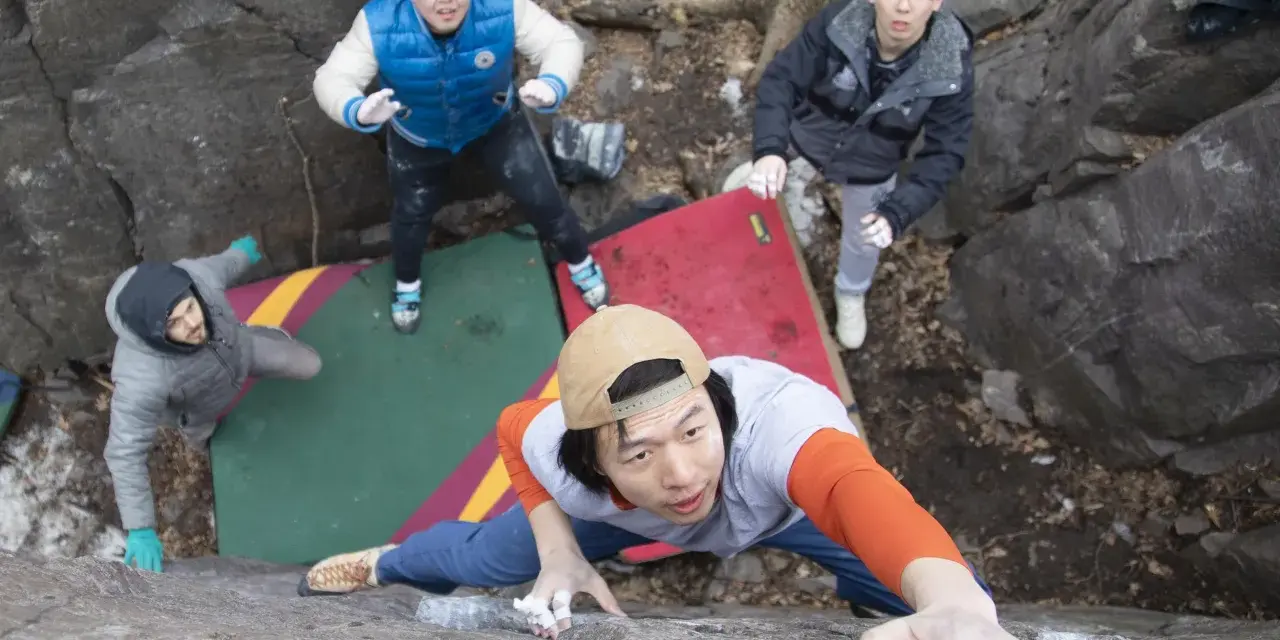
The simplest way to understand the 4 types of rock climbing is to look at how protection is used, how much commitment each style demands, and how much gear you need to carry. In practical terms, that usually means bouldering, top rope climbing, lead climbing, and trad climbing. I’ll break down what each one feels like, where it fits in a UK climbing journey, and how to choose the right style for your next session.
The short version is that each style trades simplicity for a different kind of challenge
- Bouldering is short, rope-free climbing that focuses on power, movement, and problem-solving.
- Top rope climbing keeps the rope above you, which makes it the most forgiving rope style for beginners.
- Lead climbing adds clipping, rope management, and bigger consequences if you fall.
- Trad climbing means placing your own protection, so judgment and route-finding matter more.
- In the UK, the best starting point depends on whether you want indoor convenience, outdoor confidence, or mountain-style independence.

The four styles most climbers mean
Some guides define climbing styles a little differently, and that is where the confusion starts. A few include free soloing, while others treat top rope and lead as rope setups rather than separate disciplines. For a practical overview, I think the clearest four are bouldering, top rope, lead, and trad, because each one changes how you move, how you manage risk, and how much equipment you need.
I also separate them this way because single-pitch and multi-pitch are route formats, not styles. You can have a single-pitch trad route or a multi-pitch lead climb, so those labels answer a different question. Once you see that difference, the whole topic becomes much easier to read.
| Style | How protection works | Main focus | Biggest advantage | Main trade-off |
|---|---|---|---|---|
| Bouldering | No rope; crash pads and spotters are used | Power, movement, short hard sequences | Fast feedback and low gear demand | Short problems can still be intense and repetitive |
| Top rope | Rope runs through an anchor above the climber | Technique, confidence, and movement | Very forgiving for learning | Less independence than lead or trad |
| Lead | Climber clips the rope into fixed protection while ascending | Endurance, clipping, route reading | Real progression into outdoor rope climbing | Falls are longer and clipping mistakes matter |
| Trad | Climber places removable gear for protection | Judgment, route-finding, self-reliance | Classic outdoor adventure, especially in the UK | Slower, more complex, and gear-heavy |
That table is the cleanest way I know to compare the styles without getting lost in jargon. Once the structure is clear, the real question becomes how each discipline feels on the wall or the crag.
Bouldering is the shortest route to hard moves
Bouldering is climbing in its most stripped-down form. There is no rope, no belayer, and usually no long route to manage. Instead, you get short problems that ask for body tension, balance, footwork, and a bit of nerve. In the UK, it works especially well for indoor sessions, quick evening training, and short outdoor days when weather or time is limited.
I like bouldering because the feedback is immediate. If a foot is wrong, or your hips are too far out, you feel it instantly. That makes it brilliant for learning movement, but it can also trick beginners into over-repeating the same hard move until they are too tired to climb cleanly.
- Best for: climbers who want fast progression, short sessions, and hard individual moves.
- Typical gear: shoes, chalk, and often a crash pad outdoors.
- Common mistake: trying the same problem too many times without resting properly.
- What matters most: precise feet, relaxed grip, and the ability to read sequences quickly.
If you enjoy a strong physical challenge with minimal setup, bouldering is the easiest style to plug into your week. Once those short, explosive efforts start to make sense, the next step is learning to climb with a rope above you, which is where top roping comes in.
Top rope climbing builds confidence fast
Top rope climbing is the most forgiving rope style for beginners because the rope runs from the climber, up through an anchor, and back down to the belayer. That means the rope is already above you, so the system is simpler and falls are usually short. For many new climbers, this is the point where the sport stops feeling abstract and starts feeling genuinely enjoyable.
It is also a useful style for families, mixed-ability groups, and anyone who wants to focus on movement without the extra stress of clipping while pumped. In practice, top rope climbing gives you time to work on balance, pacing, and breathing, which are easy to neglect when you are trying to survive a harder style.
- Best for: beginners, nervous climbers, and anyone building rope-handling habits.
- Typical gear: harness, rope, belay device, helmet outdoors, and climbing shoes.
- Common mistake: treating the system as automatic and skipping partner checks.
- What matters most: clear communication, solid belay technique, and good anchor setup.
If I were introducing someone to outdoor climbing for the first time in the UK, top rope would often be my first roped recommendation. It teaches confidence without demanding that you solve too many variables at once, and that makes the move to lead climbing much less intimidating.
Lead climbing adds commitment and rope management
Lead climbing is where the sport starts to feel more serious. Instead of hanging safely below an anchor, you climb with the rope attached to your harness and clip it into protection as you go. That changes everything: your rhythm, your breathing, your route reading, and the consequences of a mistake.
The big shift is not just physical, it is mental. You have to manage pump, clip efficiently, and keep making decisions while your forearms are filling up. I think that is why lead climbing teaches composure as much as it teaches technique. You are not only climbing the holds in front of you; you are handling the situation as a whole.
- Best for: climbers who already trust their movement and want a clear next step after top rope.
- Typical gear: rope, harness, quickdraws, belay device, and usually a helmet outdoors.
- Common mistake: clipping too late, which can create unnecessary risk and panic.
- What matters most: route reading, clipping efficiency, and staying calm when the pump arrives.
Lead climbing is also the bridge between gym climbing and more serious outdoor rope work. Once clipping becomes natural, the final major step is learning to place your own protection, which is where trad climbing stands apart.
Trad climbing is the most self-reliant of the four
Trad climbing, short for traditional climbing, means you place your own removable protection in the rock as you ascend. That might include cams, nuts, and slings, all carried on a rack. A rack is simply the collection of protection devices clipped to the harness so you can build your own safety system on the route.
This is the style that has a particularly strong place in British climbing culture. Many UK sea cliffs, mountain crags, and gritstone edges are strongly associated with trad, and that history still shapes how people talk about adventure climbing today. It is more complex than sport climbing, but it also offers a deeper sense of independence.
- Best for: climbers who want outdoor judgment, route-finding, and a bigger adventure feel.
- Typical gear: a rope, harness, helmet, and a rack of protective devices.
- Common mistake: underestimating how much time and mental energy protection placement takes.
- What matters most: reading the rock, judging placements, and staying honest about your limits.
I would not recommend trad as a rushed next step. It rewards patience, mentorship, and repetition far more than bravado. That is exactly why it remains such a respected part of the sport, especially for climbers who want the full outdoor experience rather than a managed gym environment.
How to choose the right style for your next climb
If you are trying to decide where to start, I usually reduce it to a simple question: what do you want most from the session? The answer changes the right style more than your strength level does. A short indoor evening, a family day out, and a serious outdoor goal all point to different choices.
- Choose bouldering if you want short sessions, powerful moves, and easy access to indoor training.
- Choose top rope if you want a safe rope system and a clean focus on movement.
- Choose lead if you want to progress into real rope climbing and improve clipping, endurance, and route reading.
- Choose trad if you want classic UK outdoor climbing and you are ready for gear placement and more judgment calls.
In the UK, weather often influences the choice as much as skill does. Wet rock, strong wind, or short daylight can make indoor bouldering or top rope the most sensible plan, while a stable forecast opens the door to lead or trad outside. That flexibility is one reason climbing is such a strong year-round outdoor activity here.
Whichever style you pick, the same habits keep the day smooth and safe: check equipment carefully, warm up properly, communicate clearly with your partner, and respect the conditions. Those fundamentals transfer across every discipline and matter more than most beginners expect.
The habits that make every style safer and more rewarding
No matter which style you prefer, the skills that travel well are the ones that make climbing feel controlled instead of chaotic. Footwork, balance, breathing, and honest self-assessment all matter across the board. I would even say they matter more than raw strength once you move beyond the first few sessions.
- Footwork first because good feet save energy in every discipline.
- Warm up properly so your fingers, shoulders, and core are ready for the load.
- Check systems every time because small errors on ropes or harnesses have outsized consequences.
- Learn to fall and rest well so fear does not take over your decision-making.
- Respect conditions and access because damp rock, loose stone, and poor visibility can change a climb fast.
If I were building a progression from scratch, I would use bouldering to learn movement, top rope to build rope confidence, lead to develop clipping and endurance, and trad to learn real outdoor judgment. That sequence is not the only path, but it is a sensible one for most climbers in the UK, and it keeps the learning curve honest without rushing the parts that deserve patience.
